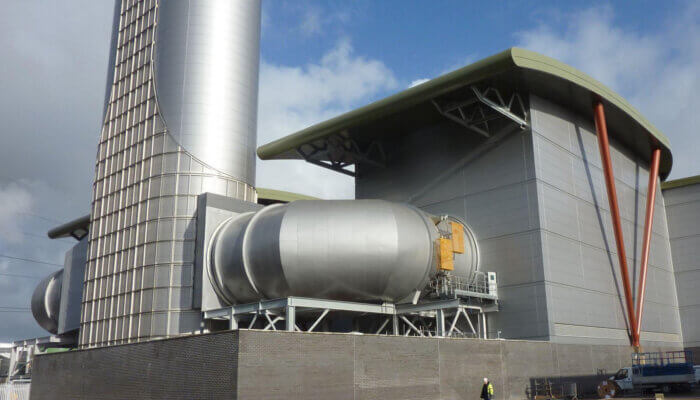
As the mechanical and electrical loads of buildings have increased – particularly in data centres – the specification and installation of service riser penetrations has become even more complex.
While many advancements have been made in building design with regards weatherproofing, moisture management and safety, several myths persist about weatherproofing best practices and methods for achieving a weathertight finish around service riser penetrations. For example, there’s the ongoing reliance on “dog-kennel” or “dogbox” style enclosures and the belief that they are the only weatherproofing option for service risers.
Jones Weatherproofing has extensive experience in designing and installing modern weatherproofing systems that offer benefits over traditional dog-kennel detailing – such as reduced space requirements, a more straightforward installation and increased design flexibility. In this blog, we’re going to address some of the outdated assumptions and myths about weatherproofing service risers.
Myth 1: Services must come through horizontally, so dog boxes are the only reliable option
For many years, a common approach to weatherproofing service risers was to place a dog-kennel-style enclosure around the roof penetration, then have the services make a 90-degree bend and exit horizontally through the side.
While this method can create a reliable seal, it also has drawbacks. For example, services don’t just go in a straight line and may need to bend around other fixings, the enclosures can take up a lot of space, and the clustered layout of cabling, pipework and conduits can make future access and maintenance more difficult.
Modern weatherproofing techniques and materials mean that dog kennels and horizontal services are no longer the only option.
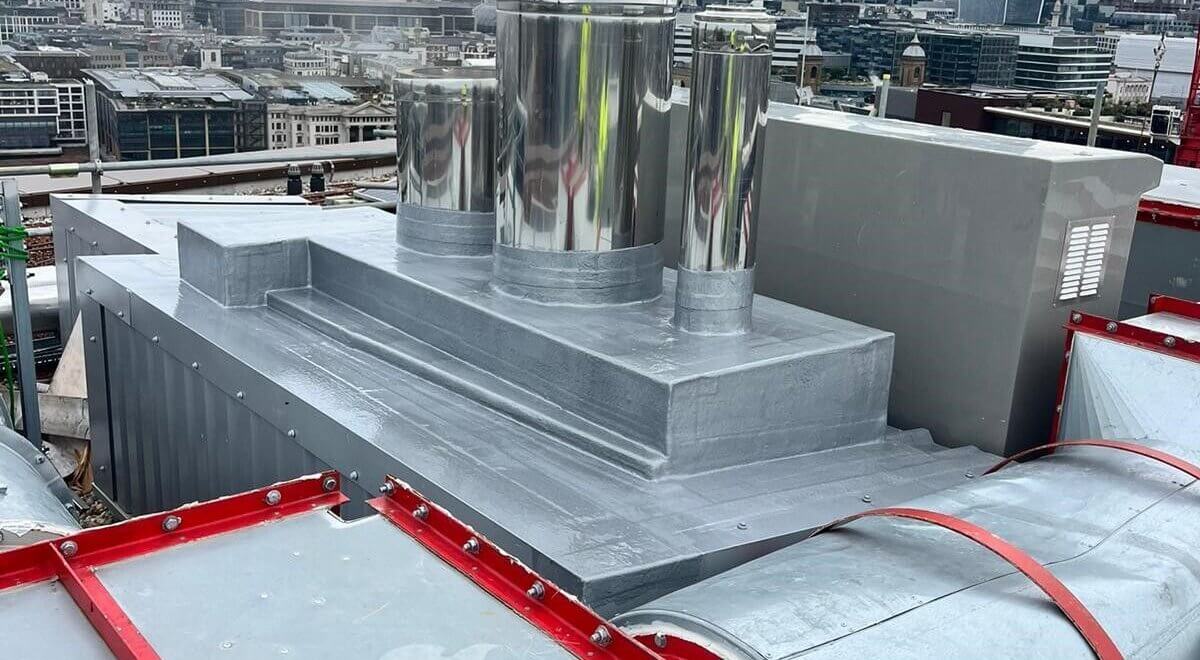
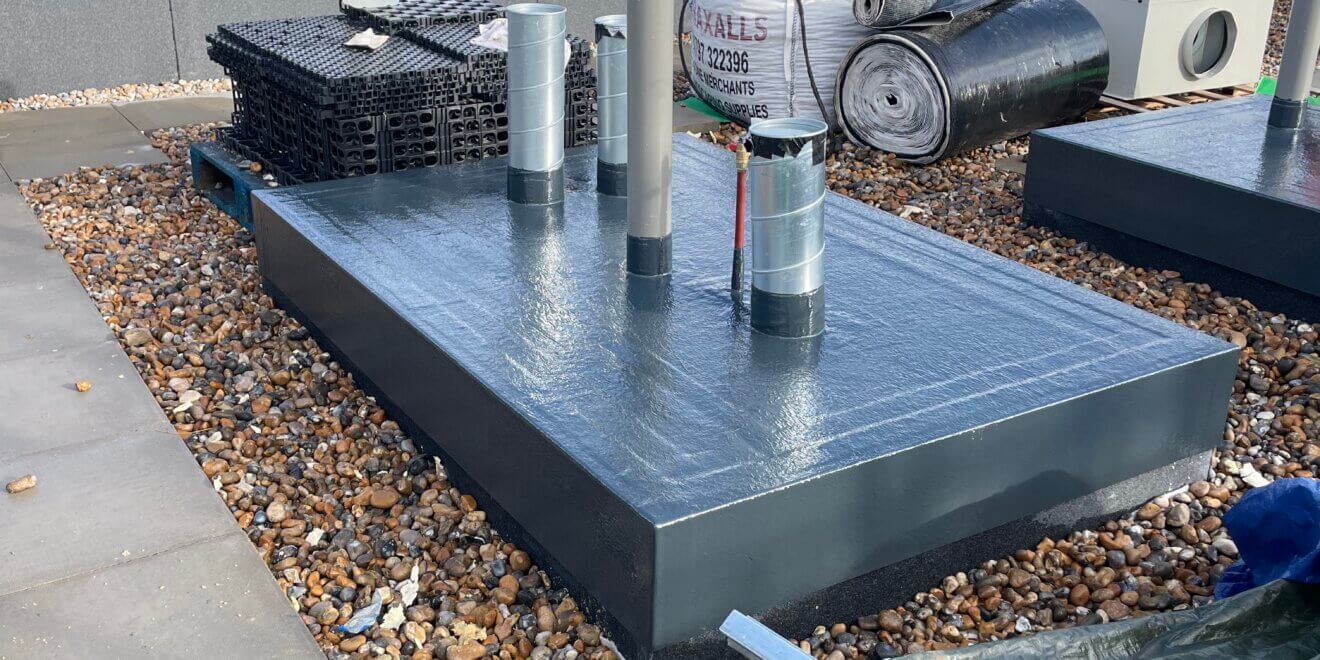
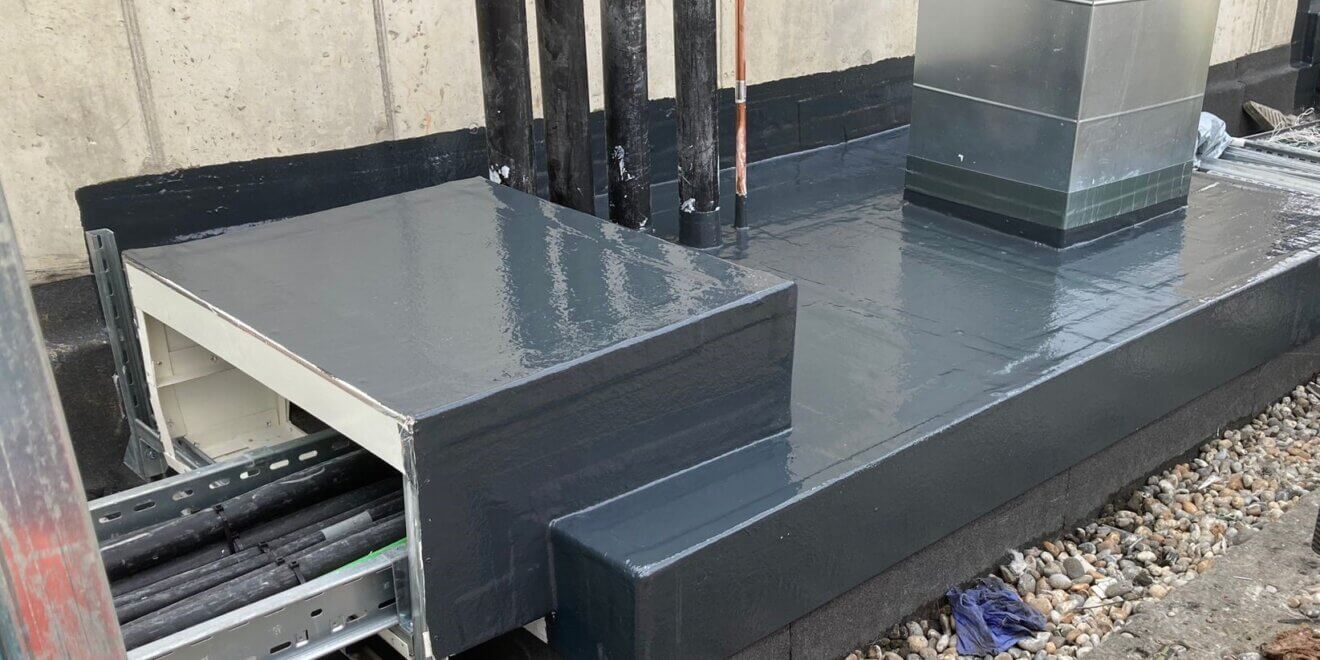
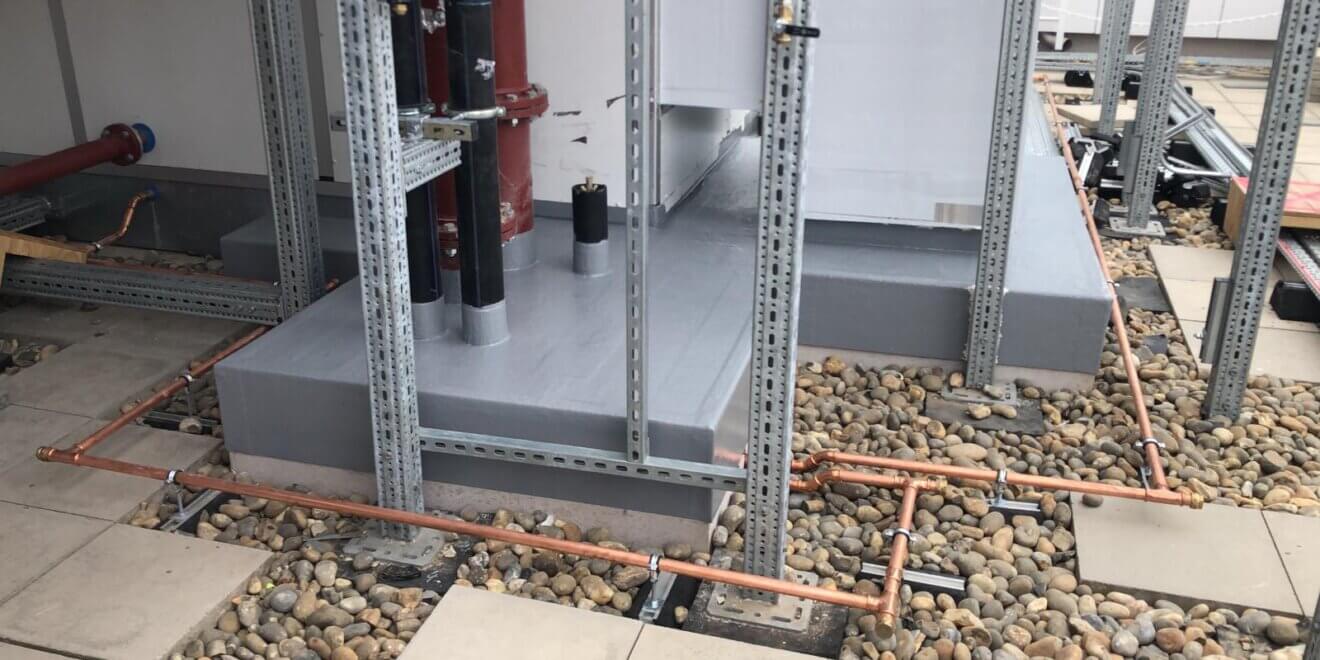
With the Jones Weatherproofing system, service risers can be effectively weatherproofed in vertical or horizontal configurations. This simplifies detailing, streamlines installation sequencing and saves space on the roof. It also offers a more flexible approach and can more easily accommodate last-minute changes on site.
Myth 2: Dog boxes are “best practice” for weatherproofing service risers
Dog kennel enclosures are robust, familiar and have been used for decades. It’s understandable that they are often considered best practice by default.
However, there is no single best practice approach, and familiarity should not be the reason for specification.
Dog boxes take up a large amount of roof space, which can affect the layout and maintenance access. Being fixed structures, they also don’t offer flexibility if services need to change, move or be increased on site.
Jamie Sporcic, senior sales manager at Jones Weatherproofing, explains that specifying a dog-kennel type system isn’t wrong, but it’s important to remember that there are other options. “For example, the weatherproofing methods offered by Jones Weatherproofing can achieve the same level of weather-tightness while also offering adaptability and reduced space requirements,” he says.
“Our system uses a cold-applied liquid solution that is compatible with any cladding or roof type, including GRP. It creates a joint-free weatherproof layer, saves space, adapts easily to layout changes or variations in service quantity and is backed by a 25-year warranty,” he adds.
Myth 3: A large weatherproofing enclosure provides better protection
Dog-kennel-style enclosures are typically provided in standard sizes, which can lead to over specification. The thinking is that a too-big box is better than a too-small one, as it leaves space for additional services or future layout changes.
The problem is that large enclosures take up valuable roof space. They can increase wind load, restrict access routes and make future maintenance more complicated. Economically oversized specifications can also be money wasted if the box isn’t utilised to its maximum.
The Jones Weatherproofing method achieves effective weatherproofing without requiring bulky housings. Jamie explains that because the weatherproofing is applied directly around the services, they can be more evenly spaced, rather than bunched together. “This saves space, improves maintenance accessibility and makes it easier to add or adjust services during construction or later in the building’s life,” he says.
Myth 4: Weatherproofing service risers is something to think about at the end of a project
Service riser penetrations are a common failure point in roof systems. Late-stage planning and poor detailing are common culprits that can lead to water ingress, complicated maintenance and invalidated warranties.
Leaving weatherproofing decisions until the end of the programme often results in defaulting to dog-kennel enclosures, simply because they are familiar. In the late stages of a project, there may not be time to consider alternatives – and potentially more effective – options, such as the weatherproofing methods provided by Jones Weatherproofing.
Another problem with leaving the weatherproofing of service risers to the end of a project is access.
Weatherproofing is often treated like finishing work, and teams sometimes assume that it can be addressed after the services are installed – but this can lead to difficulties.
“If you wait until the end of a project to think about weatherproofing, it may become more challenging to access the penetration – particularly if other building elements have been layered above it. There may also be difficulty in accessing the penetration because other trades are also working in the same space,” Jamie warns.
He recommends planning the weatherproofing strategy as early as possible, as this can help to:
- Determine the size and layout of service riser openings, avoiding the need to re-work them later.
- Ensure that the penetrations are accessible when the weatherproofing team arrives.
- Reduce disruption caused by removing or rerouting existing installations.
- Avoid last-minute delays near the end of the project when the site is busy and schedules are tight.
- Prevent late-stage delays when space and time are limited
- Maintain a consistent standard of weatherproofing detailing and quality.
- Allow time to consider various weatherproofing methods, including Jones Weatherproofing’s cold-applied liquid weatherproofing.
Vertical service penetrations from Jones Weatherproofing
Dog-kennel detailing has its place, and the team at Jones weatherproofing has extensive experience in installing and weatherproofing these types of products, but it’s not the only option for weatherproofing service risers or necessarily the most effective. The Jones Weatherproofing method accommodates vertical service risers with ease, offering on-site flexibility, saving space and providing dependable performance – all at a comparable cost.
Get in touch to find out how we can support the specification of weatherproofing for any upcoming projects.