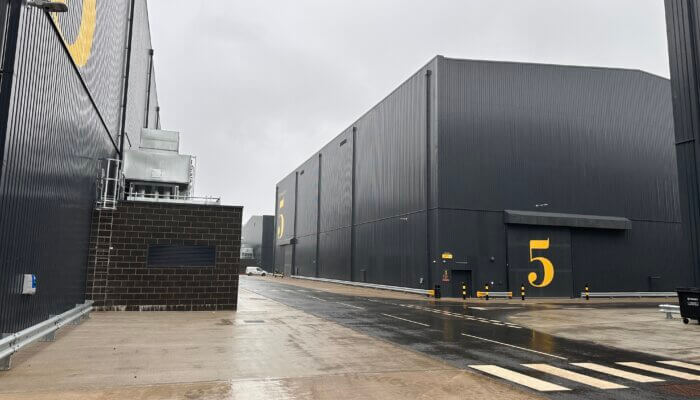
In mission-critical buildings, effective penetration weatherproofing is crucial. From data centres and healthcare facilities to transport hubs, power stations, water treatment works, emergency services, military facilities and government buildings, there is zero tolerance for failure.
These structures must protect occupants, as well as the systems, services and specialist equipment they contain – supporting commercial continuity, public safety and national security. That’s why effective and reliable liquid waterproofing is key. Even a small amount of water ingress can cause issues, compromising the building fabric, disrupting operations and, in the worst cases, posing safety risks or causing loss of service.
In this guide, we will take a comprehensive look at liquid waterproofing – or liquid weatherproofing, which is a more accurate description – covering what it is, why it’s important and how to ensure that a building’s penetrations are fully protected from the elements.
Beyond waterproofing – what liquid weatherproofing really means
Liquid waterproofing or liquid weatherproofing? The two terms seem like they mean essentially the same thing. However, in mission-critical buildings, treating them as interchangeable could mean the difference between a dry, reliable facility and one where water ingress causes operational disruption, safety risks and costly damage.
Matt Jones, commercial director at Jones Weatherproofing, explains the difference between liquid weatherproofing and liquid waterproofing: “Liquid waterproofing typically aims to protect a single element of a building from water ingress, stopping water under standard conditions.
In contrast, liquid weatherproofing takes a more holistic approach, considering how water can move across surfaces, as well as through joints and – particularly relevant to Jones Weatherproofing – building penetrations. The purpose of liquid weatherproofing is to protect the building, its occupants and its systems, helping to ensure performance and continuity over the long term.”
Liquid weatherproofing vs liquid waterproofing
Liquid waterproofing
- Applied to a single surface or building element
- Prevents water from permeating the surface it’s applied to
- Stops water at the point of application
Liquid weatherproofing
- Accounts for complex wall or roof build-ups, including penetrations
- Considers rain, wind-driven rain, snow, thermal fluctuations and building movement
- Takes a holistic approach to stopping water ingress
Why liquid weatherproofing is essential for mission-critical buildings
Mission-critical buildings must be resilient, reliable and continuously operational. They often contain high-tech and highly sensitive equipment that cannot tolerate water ingress. In addition, occupant safety and wellbeing are critical – poor working conditions such as damp, draughts and poor air quality can undermine operational continuity.
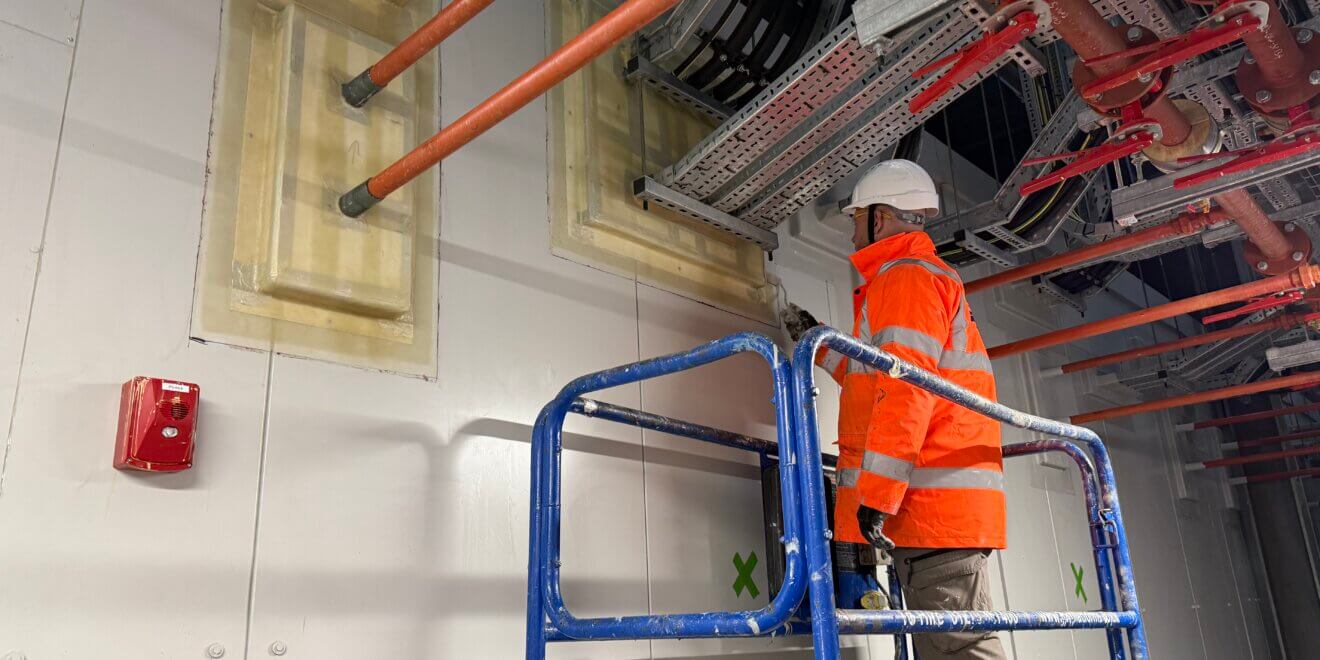
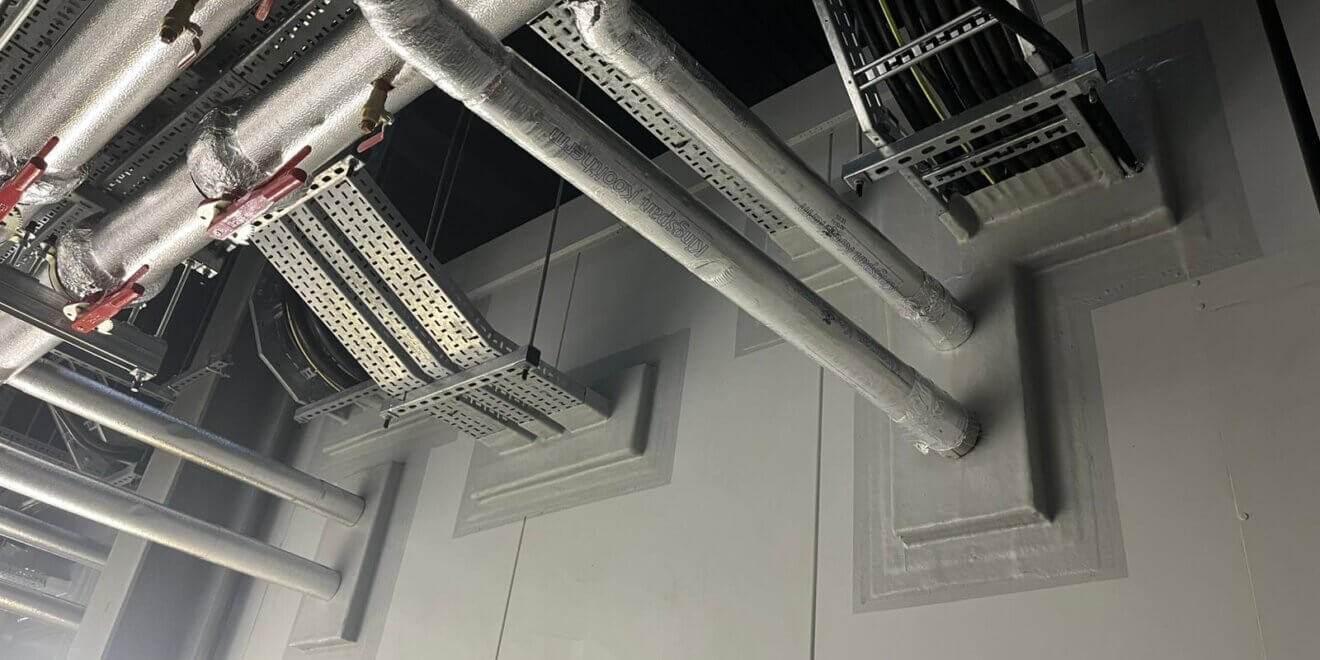
Liquid weatherproofing addresses these risks by forming a seamless and reliable barrier across the building penetrations – including service risers, cable trays, pipes, ductwork, ventilation shafts and access hatches. This provides long-term protection against water ingress and helps mission-critical buildings perform safely and reliably for years to come.
The potential consequences of poorly weatherproofed buildings
Matt notes that in any building, minor leaks can quickly escalate into serious issues such as interior damage, rot and deterioration of the building fabric. He adds: “In mission-critical buildings, water damage cannot be allowed to start or escalate. Even minor water ingress can disrupt essential services, damage equipment and compromise the building’s ability to operate safely.”
When a building and its penetrations are not suitably weatherproofed, the problem goes far beyond physical damage. In mission-critical buildings, operational disruption can cause downstream problems for customers and users while also damaging the facility’s reputation.
There are safety hazards caused by poor indoor air quality, water on the floor causing slip hazards, and the potential for damaged elements of the building to fall and cause damage to property or people. Inadequate weatherproofing and leaks may also reduce the energy efficiency of the building envelope, making it more expensive to maintain a comfortable temperature.
In addition, the cost of repairs, including the long-term damage caused by undetected leaks, should be considered. For example, if a leak goes unnoticed in a wall, riser or roof, it can lead to hidden corrosion, rot or deterioration. By the time these issues are discovered, repairs are often even more complex, disruptive and expensive than addressing the weatherproofing risk properly from the outset.


Effective liquid weatherproofing and the benefits of early engagement
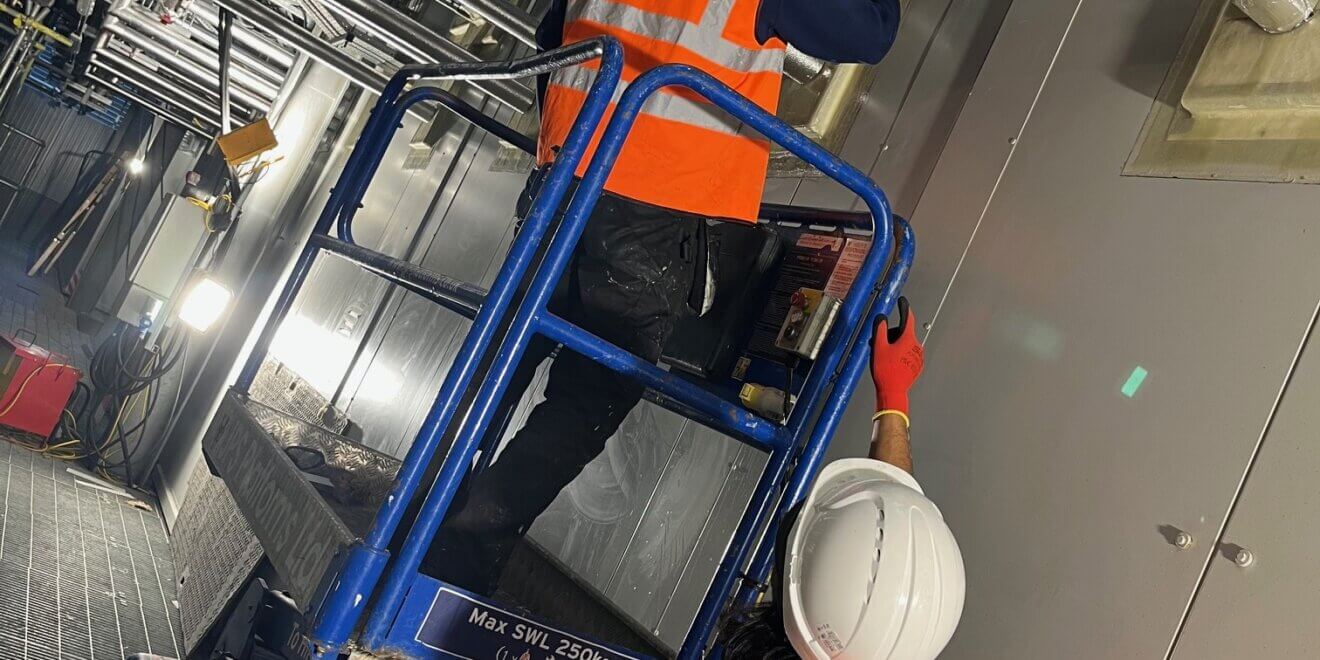
For mission-critical buildings, the most effective approach to weatherproofing is to start at the very beginning. Bringing a specialist such as Jones Weatherproofing into the project at the planning stage means better detailing, smoother programme coordination and reduced risk, helping to avoid last-minute design changes or costly remedial works further down the line.
Matt explains: “Early engagement with the weatherproofing team allows for thorough surveys and site reviews, as well as improved coordination between the design team and on-site trades.”
That said, architects and contractors shouldn’t feel like all hope is lost if weatherproofing issues are discovered later in a project. While earlier involvement offers many advantages, the most important step is to involve specialists as soon as a potential risk is identified.
Matt continues: “We’ve had many projects where we were invited to site late in the project. Often, in those cases, water damage had already started, and layers of the structure or external fittings had to be removed so we could access the penetration. That adds cost and causes delays. While those issues could have been avoided with earlier involvement, we were still able to assess the situation and carry out the liquid weatherproofing before further damage occurred.”
When weatherproofing expertise is brought in early, it becomes part of the overall construction strategy rather than a problem-solving exercise near the end of the build. This supports the building’s long-term performance and reduces avoidable disruption.
Bespoke vs traditional approaches to penetration weatherproofing
Many penetration weatherproofing methods fall under the “traditional’ heading. These include metal flashings, banding and caulking, mortar, mastic sealants and ‘dog-kennel’ style enclosures.
Traditional weatherproofing is typically applied reactively, and they often rely on standard products to address each penetration on an individual level. They may not accommodate the large or complex penetrations that are common in mission-critical facilities, and they may not perform reliably where there is building movement or thermal fluctuations. Regular inspections are essential to identify failures early, while maintenance and repairs are often required.
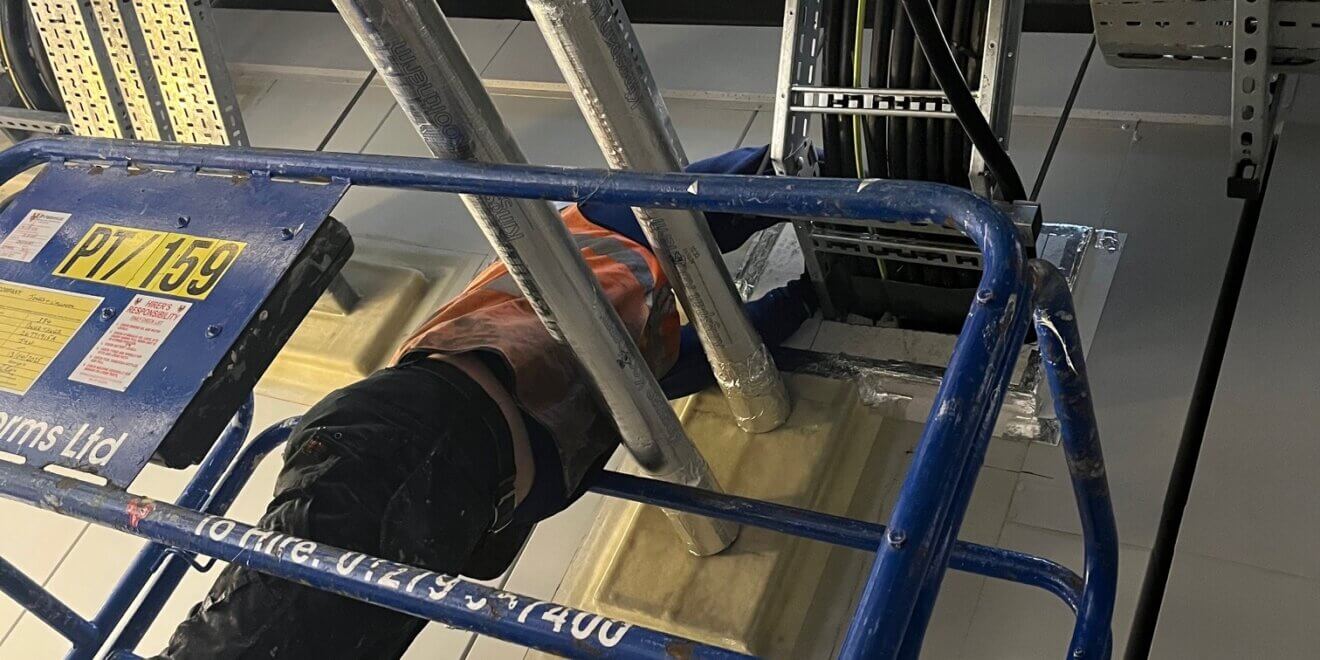
In contrast, Jones Weatherproofing’s bespoke liquid weatherproofing uses a liquid-applied solution that is applied directly to and around building penetrations. It is cold-applied, UV-stable and solvent-free, making it compatible with most roofing materials, including GRP.
Because it is applied as a liquid, our liquid weatherproofing can be used around complex details and irregular openings, forming a continuous and fully bonded layer once cured, meaning that minimal maintenance is required.
Instead of forcing standard details to fit in traditional weatherproofing materials, bespoke liquid weatherproofing is designed to suit the building and its specific requirements. Penetrations can be effectively integrated into the overall building strategy, and changes to layouts and services can be accommodated more easily – both during construction and throughout the building’s lifespan.
Comparing bespoke liquid weatherproofing and traditional approaches
Bespoke liquid weatherproofing
- Liquid-applied resin that is cold-applied, UV-stable and solvent-free
- Can work around complex shapes and irregular openings
- Treats penetrations as part of the whole building system
- Can be proactively coordinated from early design to avoid problems
- Designed for long-term performance with minimal maintenance
Traditional approach
- Includes metal flashings, banding and caulking, mortar, mastic sealants or ‘dog-kennel’ style enclosures
- Relies on standard details and generic products
- Often addresses each penetration individually
- Typically applied late in a build as a reaction to an identified problem
- Requires regular inspections and may require ongoing repairs and maintenance
How liquid weatherproofing helps prepare for the changing climate
In the UK and around the world, we are already experiencing the effects of climate change. In July 2025, the Met Office warned that weather records and extremes are now the norm for the UK climate. The State of the UK Climate report highlights how the UK’s climate has warmed steadily from the 1980s onwards, and how heavy rainfall has also increased.
For buildings, heavy rainfall, extreme weather events and wider temperature fluctuations all place greater strain on the envelope, particularly around penetrations, joints and interfaces.
Mission-critical buildings are especially vulnerable to these conditions due to their complexity and large number of building penetrations. Increased rainfall and heavy winds increase the risk of water being driven into the building fabric. Meanwhile, temperature changes can cause building materials to expand and contract, putting stress on seals and increasing the risk of water ingress.
Liquid weatherproofing can help prepare mission-critical buildings for climate extremes, creating a barrier against moisture that is resilient to temperature fluctuations and movement. This contributes to the operational continuity of the building and its operations.
Establishing an effective liquid weatherproofing strategy
An effective liquid weatherproofing strategy combines specialist knowledge, on-site coordination and careful installation. To ensure best results, architects, specifiers and main contractors should consider penetration weatherproofing as early as possible, proactively treating weatherproofing as part of the building design rather than a reaction to a problem.
Jones Weatherproofing works closely with project teams to provide effective liquid weatherproofing for building penetrations. From early-stage surveys and design guidance through to professional installation and excellent customer support, we tailor our weatherproofing to the specific requirements of mission-critical buildings. All work is covered by our 25-year warranty.
To learn more about how Jones Weatherproofing can support penetration weatherproofing on a current or upcoming project, please get in touch with the team to start the conversation early.