Fire safety is a critical consideration for all buildings. As regulations and specifications have tightened in recent years, so has the need to demonstrate compliance. For roofs, fire safety standards have taken several forms, including the BROOF(t4) classification.
What is BROOF(t4)?
BROOF(t4 )is a fire classification that assesses a roof’s resistance to external fire sources, including burning embers and nearby fires. It is the highest classification for UK roof performance. It indicates that a complete roofing system – the combination of deck, vapour control layer (VCL), insulation, underlay, finishes and other treatments – has passed stringent testing.
What does BROOF(t4) testing involve?
External fire performance of roofs is assessed using test methods defined in CEN/TS 1187, with results classified in accordance with BS EN 13501-5. Testing must be carried out by an accredited third-party organisation.
There are four different tests defined by CEN/TS 1187. These tests use a burning brand – a standardised burning object – as the flame source. During each test, samples are exposed to realistic fire scenarios that simulate external fire conditions, such as airborne embers or flames from adjacent structures.
- t1: Burning brands
- t2: Burning brands with wind
- t3: Burning brands with wind and supplementary radiant heat
- t4: A two-stage exposure incorporating burning brands, wind and supplementary radiant heat
Classification is based on a range of performance criteria observed during testing under defined conditions. These include flame spread, fire penetration and burn characteristics.
The t4 test is commonly used in UK guidance, with BROOF(t4) being the highest classification achievable under EN 13501-5 for the external fire performance of roofs. This indicates that the roof system has demonstrated a high level of resistance to external fire spread under the specified test conditions. C, D, E and F classifications may also be granted to a roof system. FROOF(t4) is the lowest rating and indicates that no performance was determined.
Systems must be tested as a complete build-up. Any changes to the specification will require the complete roof system to be re-tested.
Is BROOF(t4) a requirement in the UK?
BROOF(t4) is the classification most commonly referenced in UK guidance and specifications. BROOF(t1) is often used in other countries or for specific applications.
A classification of BROOF(t4) demonstrates compliance for applications where roof coverings must meet specific performance standards. It is commonly used within fire safety guidance across the UK, including Approved Document B: Fire Safety (England).
Requirement B4 of Approved Document B (Volumes 1 and 2) states that the external envelope of a building should not:
- Contribute to undue fire spread from one part of a building to another part.
- Provide a medium for the spread of fire to adjacent buildings.
- Be readily ignited by fires in adjacent buildings.
For a roof system to be considered “unrestricted” in use, Approved Document B states that it must achieve the BROOF(t4) classification. This applies across most building types, particularly those where proximity to other properties or increased fire risk requires the highest level of fire performance.
Similar guidance exists for the rest of the UK, including Approved Document B: Fire Safety (Wales), the Technical Handbooks (Section 2: Fire) in Scotland and Technical Booklet E: Fire Safety (Northern Ireland).
Is BROOF(t4) the same as a Euroclass or Class 0 rating?
It is a common misconception that BROOF(t4) is interchangeable with the Euroclass B rating. However, they are not the same.
- Euroclass B is a product classification under BS EN 13501-1. It measures the reaction to fire of individual materials.
- BROOF(t4) is required by BS EN 13501-5 and assesses the external fire resistance of a complete roof system.
As has been demonstrated in real-world fire events and full-scale testing, an individual product’s fire performance does not always reflect how a complete system will behave in a fire. The interaction of materials is a critical consideration – and that is why BROOF(t4) testing is so important.
Class 0 is an older fire classification based on testing methods in BS 476. It was used to assess surface spread of flame and fire propagation characteristics on individual building materials and was widely referenced in earlier guidance. However, it does not assess reaction to external roof fire exposure, and it has largely been superseded by other fire classification systems.
What does BROOF(t4) mean for localised weatherproofing?
As already discussed, BROOF(t4) classification applies to a complete tested roof system, rather than to individual components or localised detailing.
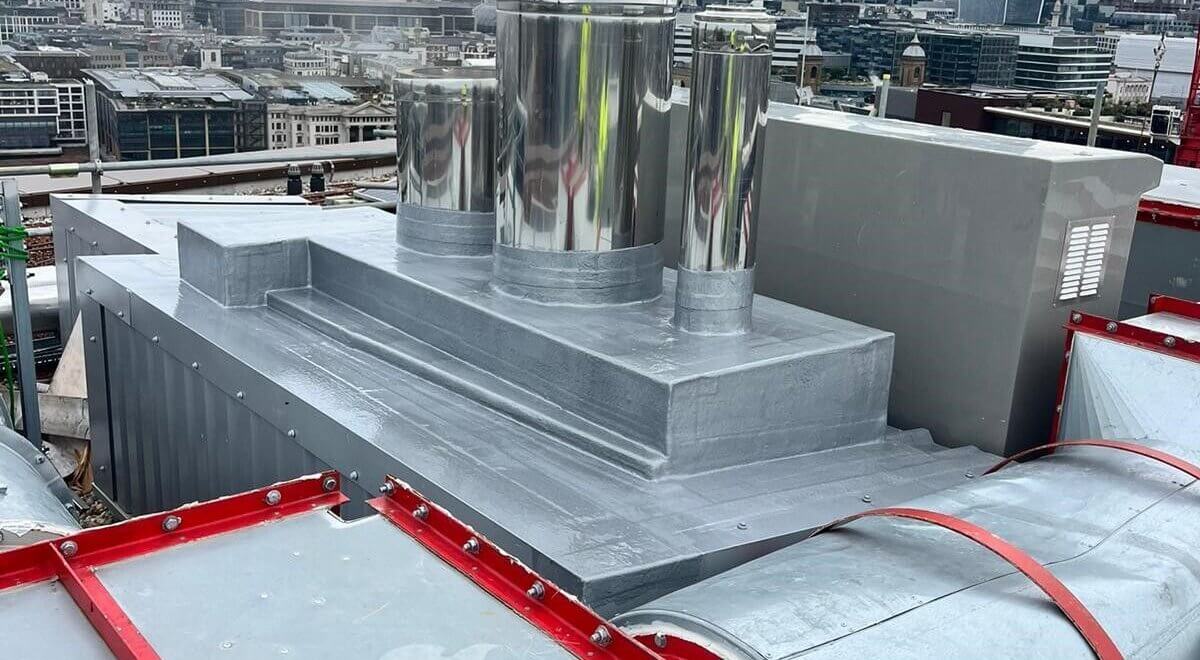
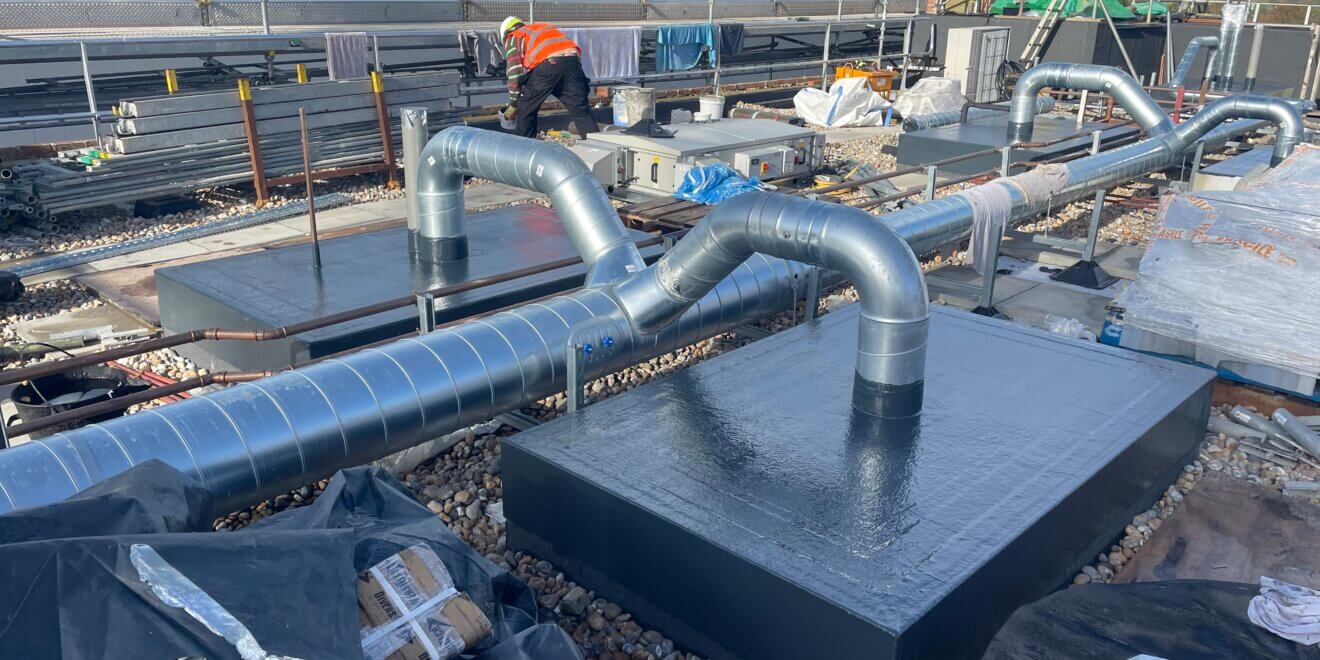
Penetrations, joints and interfaces, along with their weatherproofing treatments, are therefore not typically assessed during fire testing. Instead, they must perform in a way that is compatible with the overall roof build-up.
Products used for detailing, such as liquid-applied weatherproofing systems, should be selected to ensure they are compatible with the wider roof assembly and do not negatively impact its external fire performance.
One way to do this is to use products that have been used within roof assemblies that achieve BROOF(t4) classification. This provides confidence that the detailing is compatible with compliant roof systems, provided it is installed in accordance with the tested build-up and relevant application guidance.
Does the Jones Weatherproofing system have BROOF(t4) classification?
As fire performance depends on the complete roof system, including the substrate, insulation and configuration, each application must be considered individually.
Jones Weatherproofing systems have been tested as part of complete roof assemblies that have achieved BROOF(t4) classification in accordance with BS EN 13501-5:2016.
These test results demonstrate that Jones Weatherproofing systems can form part of roof assemblies achieving BROOF(t4) when installed as part of a tested configuration.
For complex environments such as data centres, where high service densities and late-stage design changes require adaptable detailing, Jones Weatherproofing can help ensure appropriate specification and integration with the wider roof system.
To discuss the fire performance of the Jones Weatherproofing system in more detail, review our test reports or learn how we can support the weatherproofing of an upcoming mission-critical projects such as data centres, please get in touch.