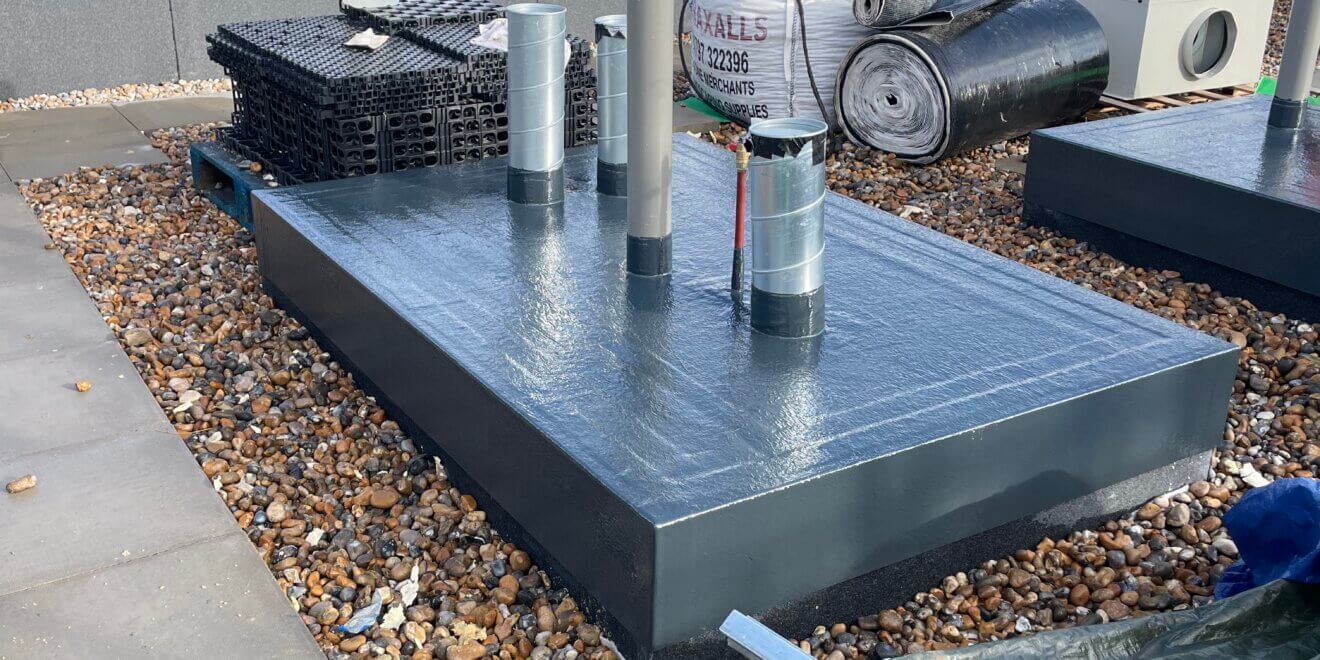
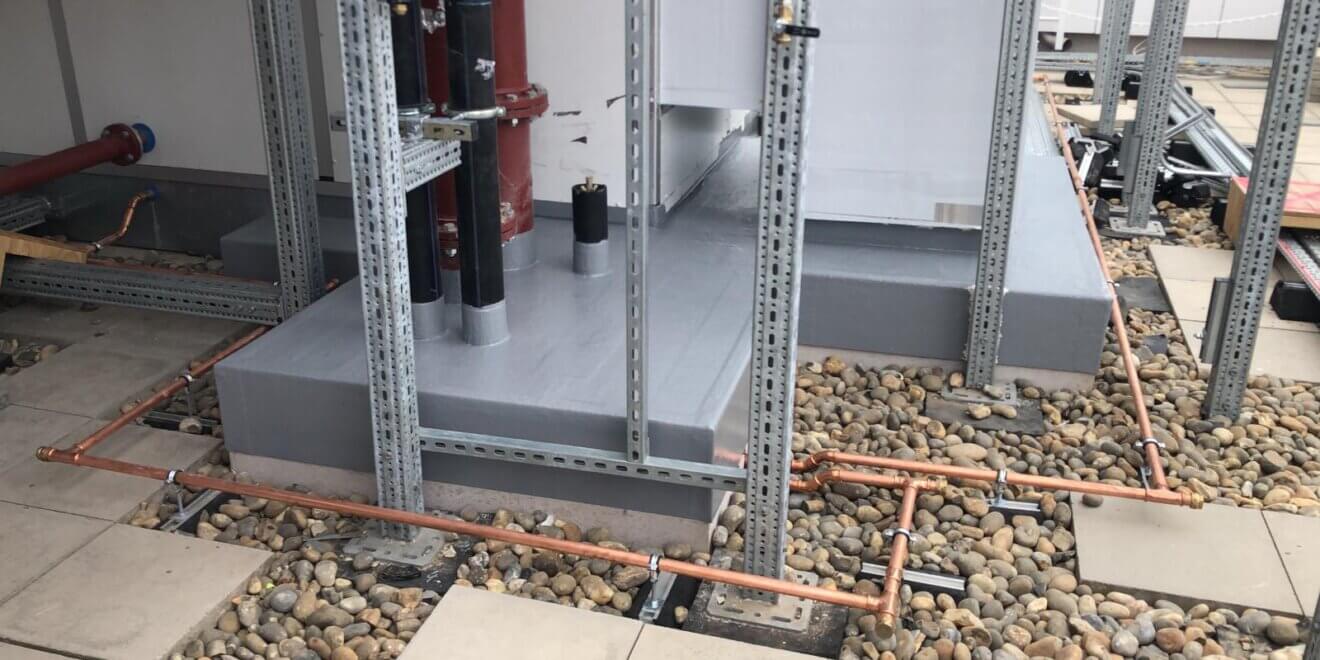
Service risers are a common feature in modern buildings, carrying electrical, mechanical and communications services from one level to another, or through the roof.
Jones Weatherproofing offers a liquid-applied system for weatherproofing service risers and other types of building penetrations. It is suitable for all kinds of roof build-up and allows services to run vertically without compromising watertightness. It also simplifies access and can be easily adapted as service requirements or layouts change.
Below are the answers to frequently asked questions about our service riser weatherproofing.
Are there any types of penetrations that can’t be used with riser systems?
Question: Are there any types of penetrations that can’t be used with riser systems?
Answer: No. The Jones Weatherproofing system provides effective weatherproofing for all standard service riser penetrations. It can be used to weatherproof around cable trays, HVAC ductwork, exhaust vents, water pipes, gas pipes, electrical supplies and mechanical services. It also offers complete design flexibility and can be adjusted to suit any roof layout.
Can different services be run through the same building penetration?
Question: Can different service types be run through the same penetration?
Answer: Yes. With the Jones Weatherproofing system, different service types can be run through the same penetration. For example, electrical and mechanical services can run together, as long as the requirements for separation, fire stopping, thermal performance, safety and other compliance considerations are met.
Are service risers more prone to water ingress due to ponding or other flat-roof phenomena?
Question: Are service risers more prone to water ingress due to ponding or other flat-roof phenomena?
Answer: No. When correctly detailed, service risers should not be prone to water ingress due to ponding or any other flat-roof phenomena.
The Jones Weatherproofing system provides effective rainwater management for flat and pitched roofs. Where appropriate, falls can be incorporated into the build-up, helping rainwater drain away from the penetration more quickly. The liquid-applied system also creates a continuous layer with no seams or joints where water could collect or penetrate.
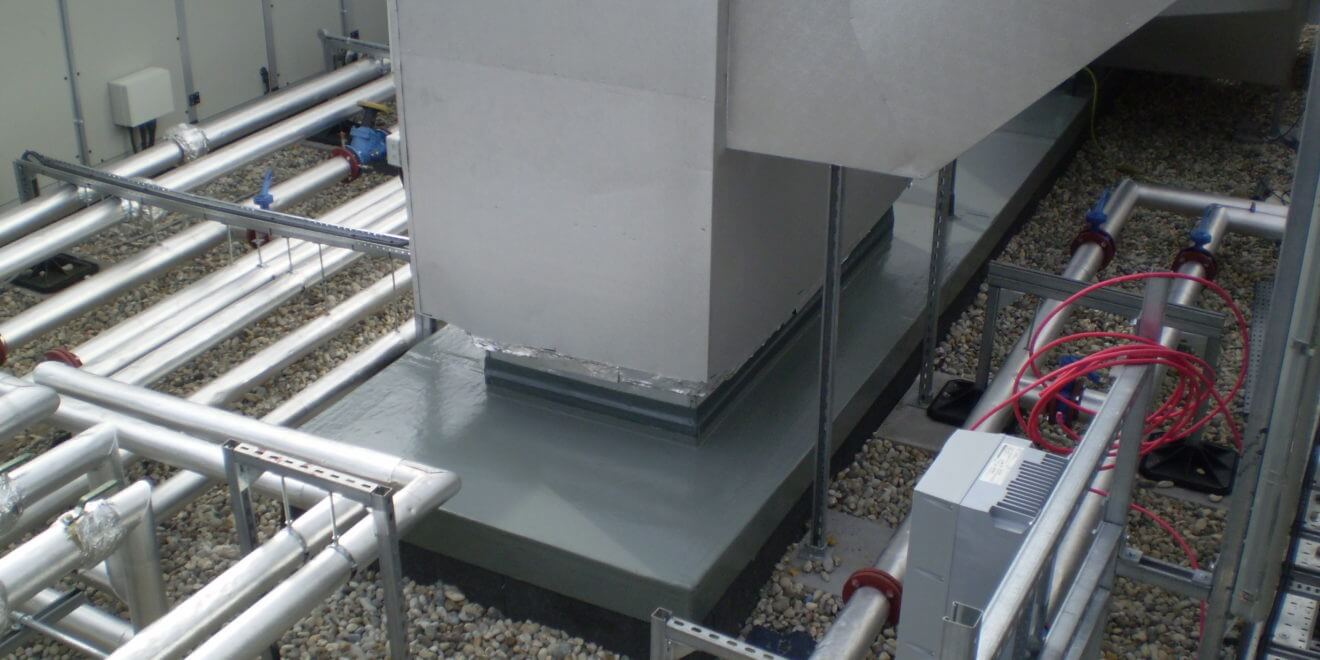
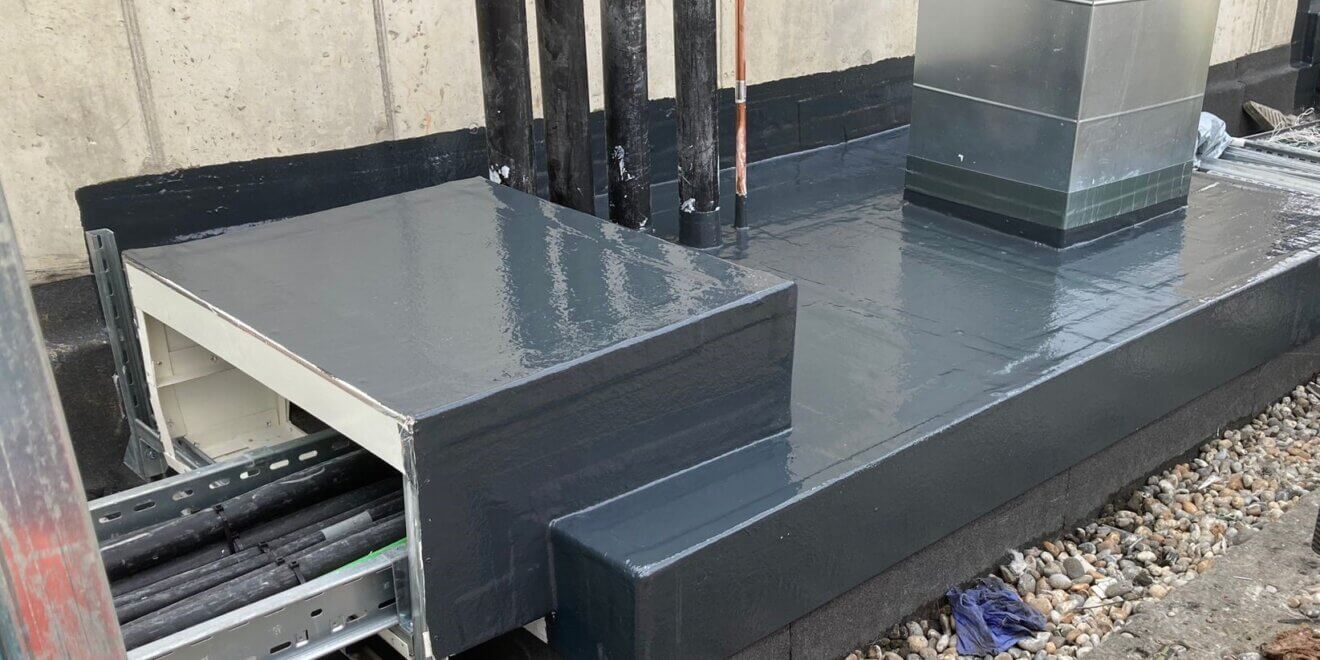
How does the Jones Weatherproofing system work?
Question: How does the Jones Weatherproofing system work?
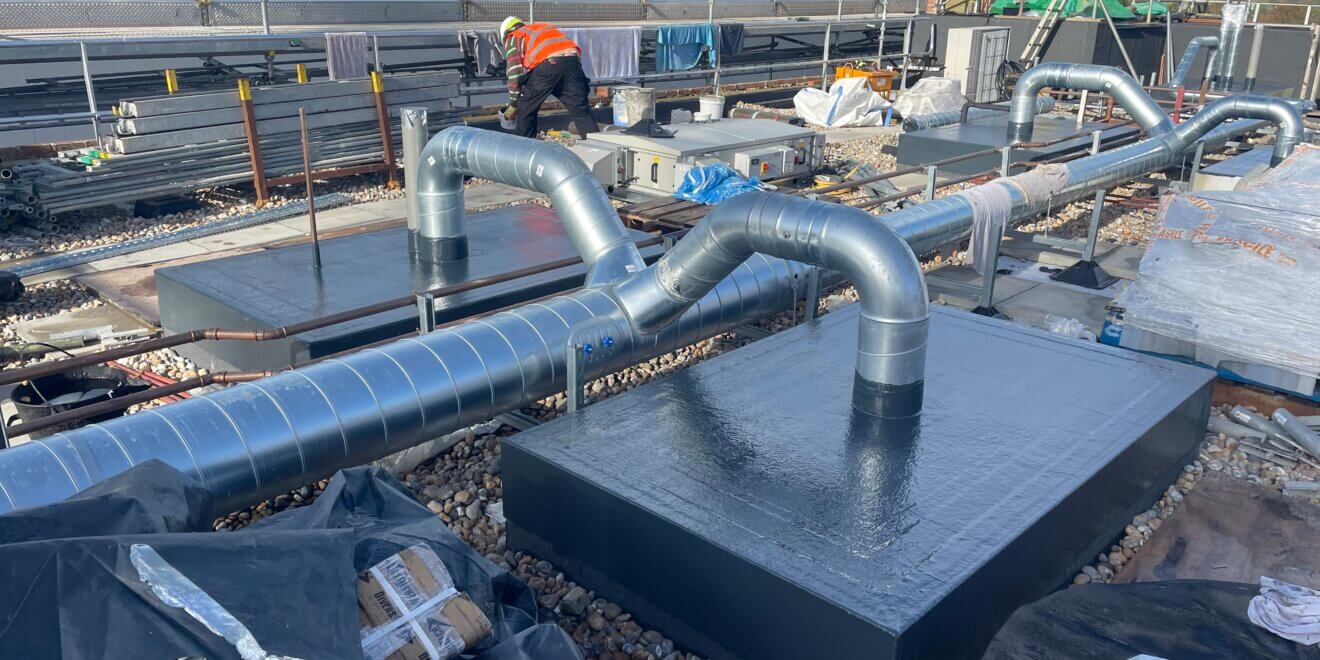
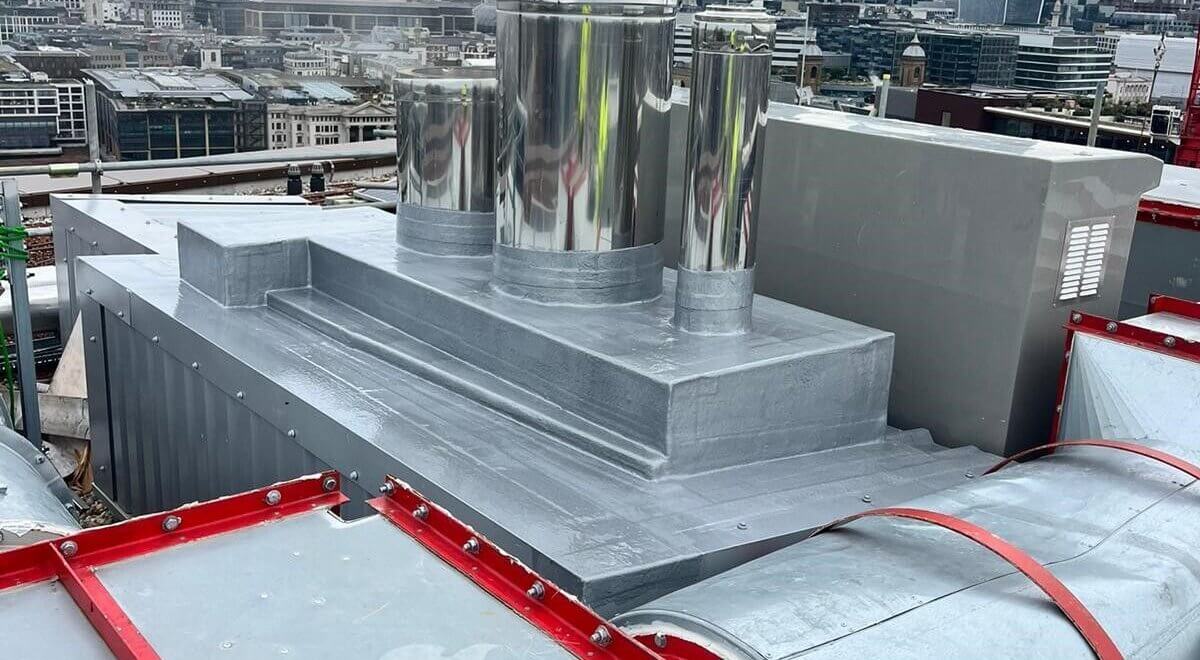
Answer: Jones Weatherproofing uses a cold-applied liquid to create a durable, continuous and weather-tight seal around service risers.
In contrast to dog-kennel-style weatherproofing, which uses rigid enclosures around the roof penetration, the Jones Weatherproofing method allows services to run vertically. It also uses less roof space, simplifies maintenance access, can more easily adapt to changes in roof layout or service requirements and can be colour matched to specific project requirements.
When should weatherproofing service risers be considered during a project?
Question: When should weatherproofing service risers be considered during a project?
Answer: As early as possible. For best results, the weatherproofing of service risers and other building penetrations should be planned from the early design stages.
In many cases, weatherproofing isn’t considered until a project is nearing completion. However, this can lead to poor detailing and an increased risk of water ingress.
Leaving weatherproofing to the end of a project can also make access more difficult. Penetrations may be under other building elements or otherwise inaccessible and some elements may need to be removed to gain access, causing delays and additional costs.
Early planning can help determine the best layout for service riser openings; ensure service risers are accessible when the weatherproofing team arrives, reduce on-site disruption and limit the risk of water ingress.
Where can I find out more about service riser weatherproofing?
For more information about service riser weatherproofing, including specification advice and installation considerations, contact the Jones Weatherproofing team. We can answer technical queries, advise on project programming and arrange site visits to determine the best weatherproofing strategy for your project.