A guide to liquid weatherproofing penetrations on mission-critical buildings

Share page here

In mission-critical buildings, effective penetration weatherproofing is crucial. From data centres and healthcare facilities to transport hubs, power stations, water treatment works, emergency services, military facilities and government buildings, there is zero tolerance for failure.

These structures must protect occupants, as well as the systems, services and specialist equipment they contain – supporting commercial continuity, public safety and national security. That’s why effective and reliable liquid waterproofing is key. Even a small amount of water ingress can cause issues, compromising the building fabric, disrupting operations and, in the worst cases, posing safety risks or causing loss of service.

In this guide, we will take a comprehensive look at liquid waterproofing – or liquid weatherproofing, which is a more accurate description – covering what it is, why it’s important and how to ensure that a building’s penetrations are fully protected from the elements.

Beyond waterproofing – what liquid weatherproofing really means

Liquid waterproofing or liquid weatherproofing? The two terms seem like they mean essentially the same thing. However, in mission-critical buildings, treating them as interchangeable could mean the difference between a dry, reliable facility and one where water ingress causes operational disruption, safety risks and costly damage.

Matt Jones, commercial director at Jones Weatherproofing, explains the difference between liquid weatherproofing and liquid waterproofing: “Liquid waterproofing typically aims to protect a single element of a building from water ingress, stopping water under standard conditions.

In contrast, liquid weatherproofing takes a more holistic approach, considering how water can move across surfaces, as well as through joints and – particularly relevant to Jones Weatherproofing – building penetrations. The purpose of liquid weatherproofing is to protect the building, its occupants and its systems, helping to ensure performance and continuity over the long term.”

Liquid weatherproofing vs liquid waterproofing

Liquid waterproofing

  • Applied to a single surface or building element
  • Prevents water from permeating the surface it’s applied to
  • Stops water at the point of application

Liquid weatherproofing

  • Accounts for complex wall or roof build-ups, including penetrations
  • Considers rain, wind-driven rain, snow, thermal fluctuations and building movement
  • Takes a holistic approach to stopping water ingress

Why liquid weatherproofing is essential for mission-critical buildings

Mission-critical buildings must be resilient, reliable and continuously operational. They often contain high-tech and highly sensitive equipment that cannot tolerate water ingress. In addition, occupant safety and wellbeing are critical – poor working conditions such as damp, draughts and poor air quality can undermine operational continuity.

Liquid weatherproofing addresses these risks by forming a seamless and reliable barrier across the building penetrations – including service risers, cable trays, pipes, ductwork, ventilation shafts and access hatches. This provides long-term protection against water ingress and helps mission-critical buildings perform safely and reliably for years to come.

The potential consequences of poorly weatherproofed buildings

Matt notes that in any building, minor leaks can quickly escalate into serious issues such as interior damage, rot and deterioration of the building fabric. He adds: “In mission-critical buildings, water damage cannot be allowed to start or escalate. Even minor water ingress can disrupt essential services, damage equipment and compromise the building’s ability to operate safely.”

When a building and its penetrations are not suitably weatherproofed, the problem goes far beyond physical damage. In mission-critical buildings, operational disruption can cause downstream problems for customers and users while also damaging the facility’s reputation.

There are safety hazards caused by poor indoor air quality, water on the floor causing slip hazards, and the potential for damaged elements of the building to fall and cause damage to property or people. Inadequate weatherproofing and leaks may also reduce the energy efficiency of the building envelope, making it more expensive to maintain a comfortable temperature.

In addition, the cost of repairs, including the long-term damage caused by undetected leaks, should be considered. For example, if a leak goes unnoticed in a wall, riser or roof, it can lead to hidden corrosion, rot or deterioration. By the time these issues are discovered, repairs are often even more complex, disruptive and expensive than addressing the weatherproofing risk properly from the outset.


Effective liquid weatherproofing and the benefits of early engagement

For mission-critical buildings, the most effective approach to weatherproofing is to start at the very beginning. Bringing a specialist such as Jones Weatherproofing into the project at the planning stage means better detailing, smoother programme coordination and reduced risk, helping to avoid last-minute design changes or costly remedial works further down the line.

Matt explains: “Early engagement with the weatherproofing team allows for thorough surveys and site reviews, as well as improved coordination between the design team and on-site trades.”

That said, architects and contractors shouldn’t feel like all hope is lost if weatherproofing issues are discovered later in a project. While earlier involvement offers many advantages, the most important step is to involve specialists as soon as a potential risk is identified.

Matt continues: “We’ve had many projects where we were invited to site late in the project. Often, in those cases, water damage had already started, and layers of the structure or external fittings had to be removed so we could access the penetration. That adds cost and causes delays. While those issues could have been avoided with earlier involvement, we were still able to assess the situation and carry out the liquid weatherproofing before further damage occurred.”

When weatherproofing expertise is brought in early, it becomes part of the overall construction strategy rather than a problem-solving exercise near the end of the build. This supports the building’s long-term performance and reduces avoidable disruption.

Bespoke vs traditional approaches to penetration weatherproofing

Many penetration weatherproofing methods fall under the “traditional’ heading. These include metal flashings, banding and caulking, mortar, mastic sealants and ‘dog-kennel’ style enclosures.

Traditional weatherproofing is typically applied reactively, and they often rely on standard products to address each penetration on an individual level. They may not accommodate the large or complex penetrations that are common in mission-critical facilities, and they may not perform reliably where there is building movement or thermal fluctuations. Regular inspections are essential to identify failures early, while maintenance and repairs are often required.

In contrast, Jones Weatherproofing’s bespoke liquid weatherproofing uses a liquid-applied solution that is applied directly to and around building penetrations. It is cold-applied, UV-stable and solvent-free, making it compatible with most roofing materials, including GRP.

Because it is applied as a liquid, our liquid weatherproofing can be used around complex details and irregular openings, forming a continuous and fully bonded layer once cured, meaning that minimal maintenance is required.

Instead of forcing standard details to fit in traditional weatherproofing materials, bespoke liquid weatherproofing is designed to suit the building and its specific requirements. Penetrations can be effectively integrated into the overall building strategy, and changes to layouts and services can be accommodated more easily – both during construction and throughout the building’s lifespan.

Comparing bespoke liquid weatherproofing and traditional approaches

Bespoke liquid weatherproofing

  • Liquid-applied resin that is cold-applied, UV-stable and solvent-free
  • Can work around complex shapes and irregular openings
  • Treats penetrations as part of the whole building system
  • Can be proactively coordinated from early design to avoid problems
  • Designed for long-term performance with minimal maintenance

Traditional approach

  • Includes metal flashings, banding and caulking, mortar, mastic sealants or ‘dog-kennel’ style enclosures
  • Relies on standard details and generic products
  • Often addresses each penetration individually
  • Typically applied late in a build as a reaction to an identified problem
  • Requires regular inspections and may require ongoing repairs and maintenance

How liquid weatherproofing helps prepare for the changing climate

In the UK and around the world, we are already experiencing the effects of climate change. In July 2025, the Met Office warned that weather records and extremes are now the norm for the UK climate. The State of the UK Climate report highlights how the UK’s climate has warmed steadily from the 1980s onwards, and how heavy rainfall has also increased.

For buildings, heavy rainfall, extreme weather events and wider temperature fluctuations all place greater strain on the envelope, particularly around penetrations, joints and interfaces.

Mission-critical buildings are especially vulnerable to these conditions due to their complexity and large number of building penetrations. Increased rainfall and heavy winds increase the risk of water being driven into the building fabric. Meanwhile, temperature changes can cause building materials to expand and contract, putting stress on seals and increasing the risk of water ingress.

Liquid weatherproofing can help prepare mission-critical buildings for climate extremes, creating a barrier against moisture that is resilient to temperature fluctuations and movement. This contributes to the operational continuity of the building and its operations.

Establishing an effective liquid weatherproofing strategy

An effective liquid weatherproofing strategy combines specialist knowledge, on-site coordination and careful installation. To ensure best results, architects, specifiers and main contractors should consider penetration weatherproofing as early as possible, proactively treating weatherproofing as part of the building design rather than a reaction to a problem.

Jones Weatherproofing works closely with project teams to provide effective liquid weatherproofing for building penetrations. From early-stage surveys and design guidance through to professional installation and excellent customer support, we tailor our weatherproofing to the specific requirements of mission-critical buildings. All work is covered by our 25-year warranty.

To learn more about how Jones Weatherproofing can support penetration weatherproofing on a current or upcoming project, please get in touch with the team to start the conversation early.

The 4 most complex weathering details for data centres

Share page here

When it comes to data centres, continuity is key – they need to keep running no matter what’s happening outside. Heavy snow, heatwaves, driving rain or hurricane-force winds, it doesn’t matter: data centres can’t stop, or the results could be terrible for the businesses and services that rely on them. That’s why ensuring reliable and durable weathering for data centres is so important.

So, what needs to be done to keep the British weather outside so the servers inside can keep running? Let’s look at the four most complex waterproofing details for data centres.

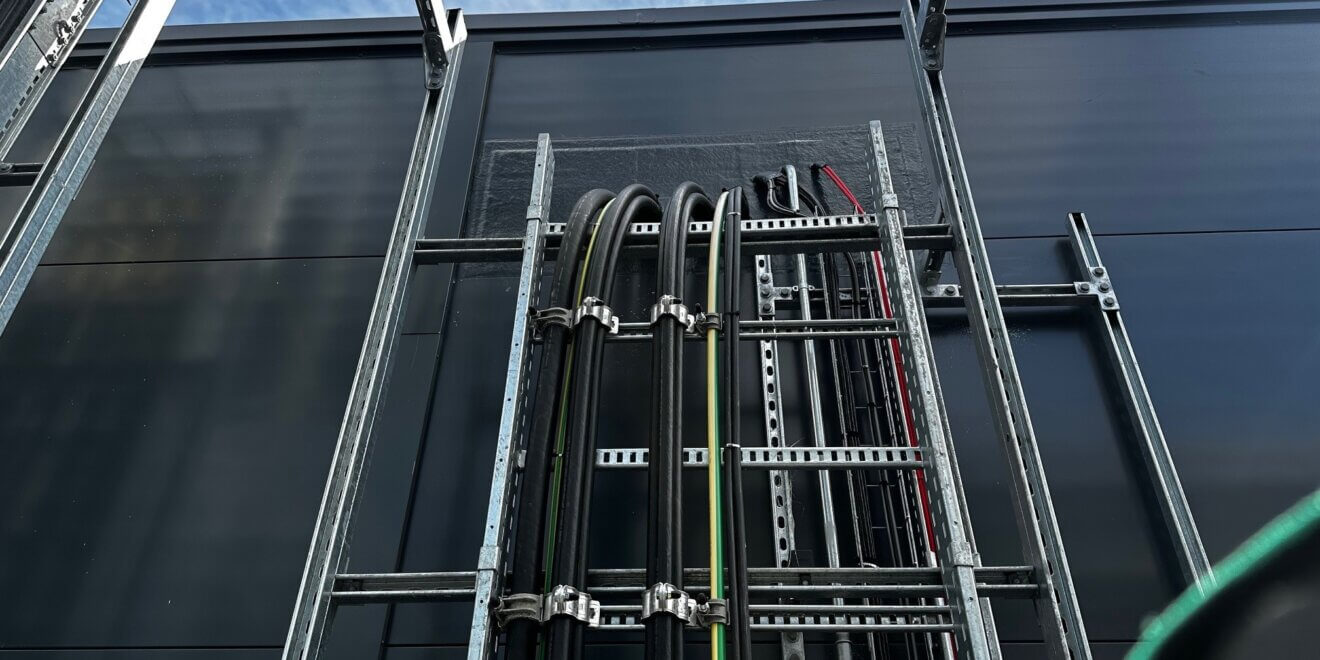
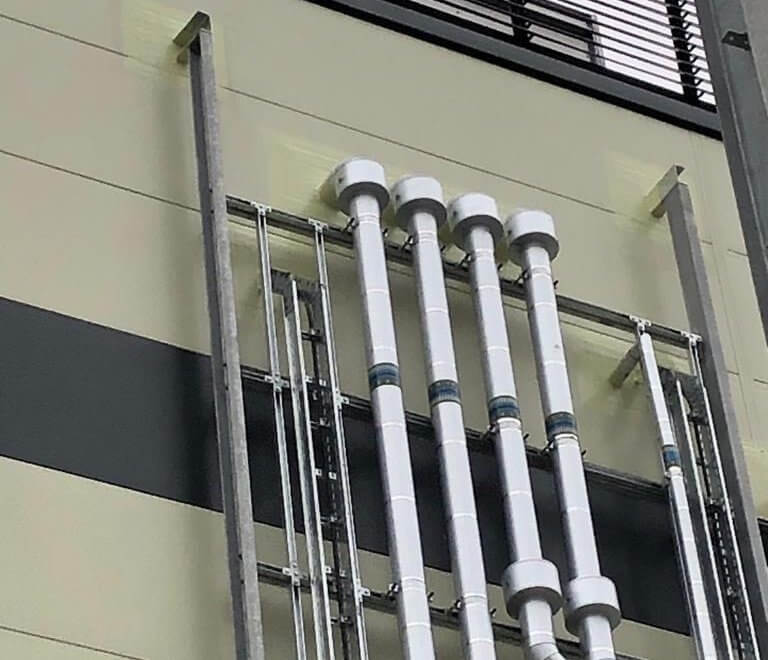
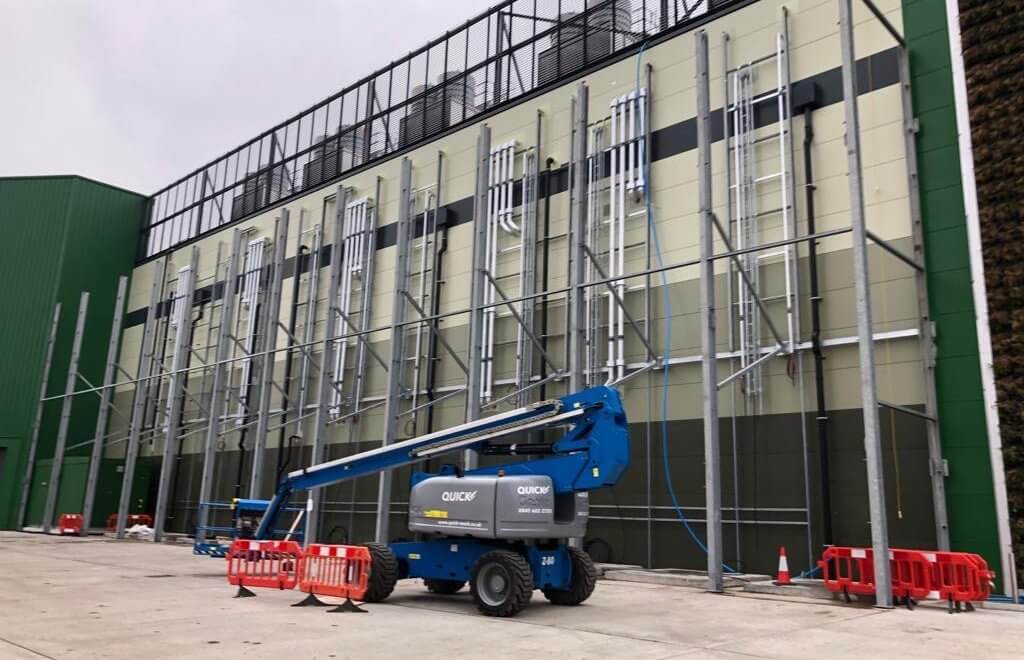
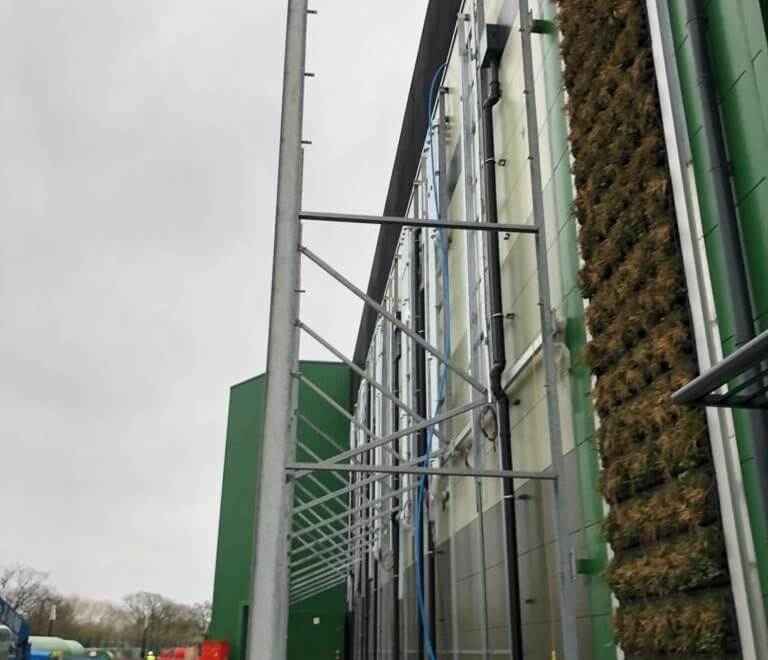
Weatherproofing of vertical penetrations installed on a data centre
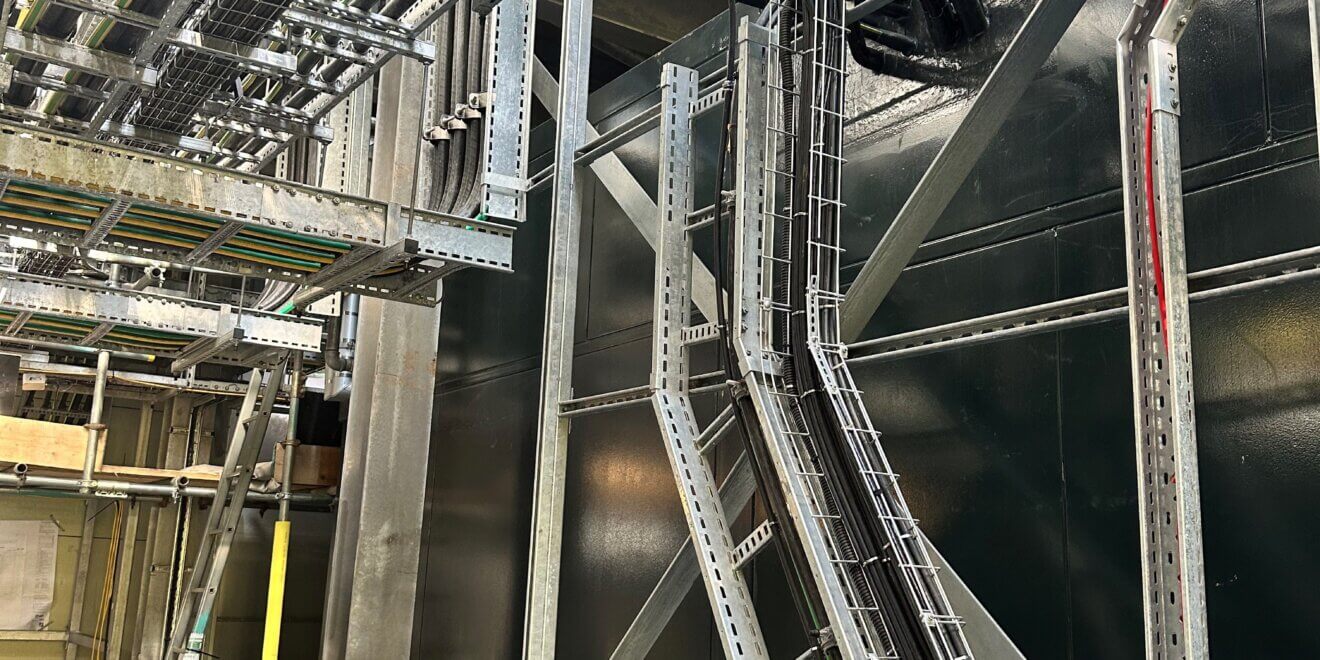
Weatherproofing of external cable trays installed on a data centre
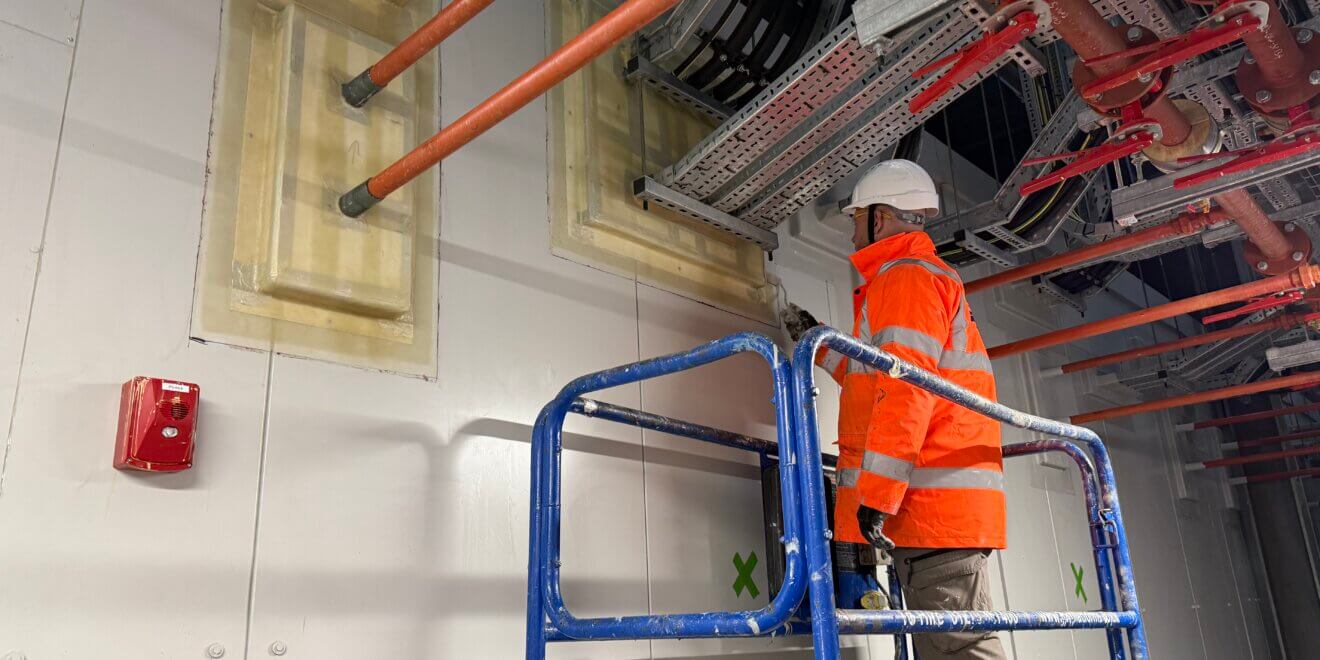
Weatherproofing of cable trays installed on data centre
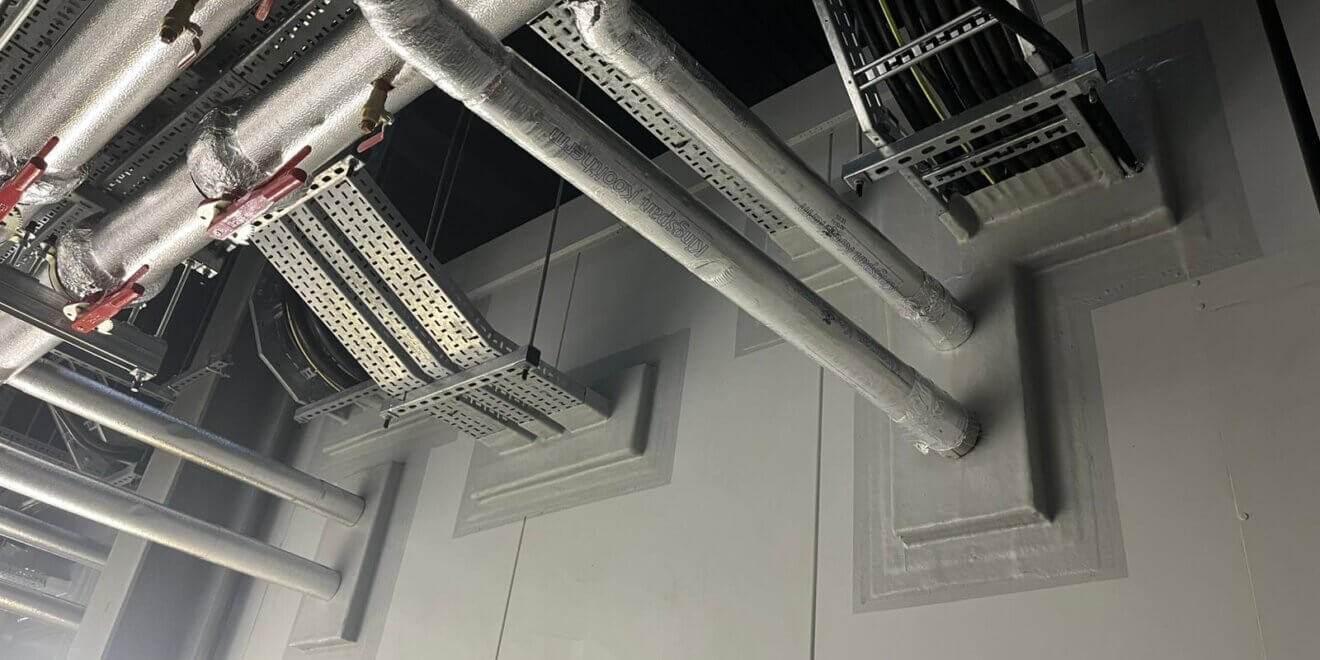
Weatherproofing of external structure installed on data centre

1. Roof penetrations for cable trays

Between electrical distribution and data, there are a lot of wires and cables that go into and come out of a data centre. These are typically run on cable trays and often enter the building through a roof penetration.

Due to the open nature of them, weatherproofing cable trays can be tricky. It usually requires a combination of upstands and access risers, along with careful waterproofing and expert knowledge to ensure that wind uplift does not become a problem.

2. Vertical wall penetrations for cable trays

If the cable trays don’t enter the building through the roof, they probably enter through a vertical wall penetration. As mentioned above, weatherproofing cable trays is difficult, since the trays are open and the bundles of cables they hold can be oddly shaped.

Depending on project requirements, the penetration can be protected using weatherstop units – these are box-like structures on the outside of the building that create a protected entrance for the cable trays. In other situations, a weatherproof seal may be applied to the area around the cables to prevent any rain or wind ingress.

3. Service risers for HVAC equipment

Cooling and climate control are hugely important for data centres – all those servers are pumping out a lot of heat and keeping everything cool requires a lot of HVAC equipment and ductwork, as well as ventilation terminals. That equipment is typically found on the data centre roof, using service risers to connect them to the building below.

HVAC plant for data centres is usually very large and heavy, so the roof penetrations will need to be structurally sound. Custom-made upstands can provide support and improve drainage around the machinery. Reliable seals around the ductwork and vents are also essential to prevent leaks or potential damage caused by rainwater ingress or heavy winds.

Safe access to the HVAC must also be carefully considered, and any weatherproofing should be durable enough to withstand foot traffic.

4. Roof access hatches

Speaking of access, roof access hatches are another important area of consideration for data centre weatherproofing. These hatches make it easy for workers to access the roof, either to attend to the HVAC equipment and other machinery found up there, or to carry out other maintenance.

The complex detailing around access hatches typically involves an upstand for structural support, as well as weatherproofing where the upstand and roof surface come together. The roof access hatch must also be structurally sound and reliable, as workers will be passing through it, with the added hazard of them working at height. This means that the overall structure and its weatherproofing should be free from trip hazards, and, again, capable of withstanding foot traffic.

Complex detailing for data centres: Jones Weatherproofing

At Jones Weatherproofing, our team has extensive experience in carrying out all sorts of building penetration and roof weatherproofing projects, including several data centres. We can provide a comprehensive range of services, from site surveys to design, build, installation and maintenance, and we can also carry out commercial roof repairs where required.

To learn more about complex detailing for data centres, and how we can help ensure your facility is fully weatherproofed, please get in touch here or call us on 01922 712111.

Why is effective weatherproofing crucial for cable tray installation?

Share page here

In today’s highly connected and electrified world, cable trays play a hugely important role in how we power our buildings and share information, so protecting them with effective weatherproofing is key to mitigating risk and keeping operations running smoothly.

What is a cable tray?

From data centres to factories, shopping centres to office buildings, cable trays are everywhere. Often, they go unnoticed, but as soon as you start looking for them, cable trays are easy to spot on the walls and roofs of buildings. They are also likely to be hidden from view, weaving their ways through interior walls and roof spaces.

Cable trays are support systems, creating a rigid route for cables and wires to travel from one point to another. As an alternative to conduits, cable trays are preferable as their open nature makes it easier to change wiring or install new cables, as they can simply be laid in place, rather than fed through conduit pipes. However, this can also pose a challenge for weatherproofing.

Weatherproofing cable trays

The point where cable trays enter a building can be vulnerable to wind and rainwater ingress, so careful planning and effective weatherproofing of the building penetration are critical.

The effective weatherproofing of cable trays helps to keep weather out, preventing damage to the building envelope, avoiding thermal breaks, maintaining the indoor environment and helping to keep the various cables and wires protected. It can also help to keep out birds, rodents and insects. Fire safety and the preservation of fire walls are also important considerations.

The best method for weatherproofing cable trays will depend on whether the cables are entering the building through a vertical wall penetration or a roof penetration. Other factors such as how the building is constructed, exposure, and how many cables there are. Aesthetics may also play a role in determining the best solution.

In vertical wall penetrations, weatherproofing cable trays is often carried out using a weatherstop sealing system. From the outside, this looks like ductwork or a series of boxes attached to the side of the building. These create a sealed entrance for the cables to make their way inside, and must be carefully weatherproofed. In some cases, sealants such as GRP weathering systems may be used, enabling a cable tray to penetrate a wall without ductwork or other protective structures.

For roof penetrations, service risers are used to ensure a weatherproof seal around cable trays as they enter the building. As well as being waterproof and windproof, these must also be structurally sound. Upstands and other supporting structures may be used, along with products such as GRP sealants, to create a suitable solution.

Cable tray weatherproofing from Jones Weatherproofing

With so much to think about when weatherproofing cable trays, it’s easy to see the benefits of getting expert help when dealing with cable trays and building penetrations.

With more than 45 years of experience, Jones Weatherproofing have extensive experience in weatherproofing roof and wall penetrations. We offer a complete range of services from design and installation through to maintenance, and have worked on a wide range of projects including data centres, offices, shopping centres, airports and factories.

Our GRP weathering system comprises a fibre-reinforced, cold-applied liquid that can be used with any type of cladding and single-ply membrane roofs. The system is versatile and reliable; it can be adjusted to suit penetrations of any size or shape, and it can also be tinted to match the rest of the building design.

To find out more, visit our dedicated page about data centre weatherproofing. You can also contact us to discuss your project in more detail – or call 01922 712111.

What is a cable tray?

Share page here

A cable tray is a support system that creates a rigid structure for wires and cables to travel along. An alternative to open wiring or electrical conduit systems, cable trays are easy to install and maintain. Their open designs also make it simple for new cables to be added or for wiring to be changed since the new cables can simply be laid in the trays, rather than fed through conduit pipes.

Cable trays are often used on external walls and roofs, before cables enter the building through a roof penetration or vertical wall penetration – and effective weatherproofing of cable trays is critical to prevent wind or rainwater ingress. They may also be found within ceilings and internal walls, under floors, and they may also be used to support wires and cables as they cross open spans.

Typical uses include supporting electrical distribution cables, control and signal instrumentation and data and telecommunications cables, including both copper and fibre-optic cables. Cable trays are found in all types of buildings, including commercial, office, and retail spaces, as well as factories, schools, hospitals, and leisure facilities. They are also extremely important for data centres, as these applications rely so heavily on the electricity supplies and data that flow through the cables that enter the buildings.

Many different types of cable trays are available. GRP cable trays are a popular choice due to being non-metallic, lightweight, and easy to install. Metallic cable trays are also commonly found; these are usually made from galvanised steel, stainless steel, or aluminium.

Various designs and formats are also available, including channel-type, single rail, ladder-type, trough-type, and mesh/basket types. The right choice will depend on project requirements and client preferences.

As experts in custom GRP mouldings and weatherproofing, we can provide a complete service for all your cable tray and building penetration requirements. You can find out more by visiting our data centre solutions page, or submit an enquiry through the get help with your project form.