In mission-critical buildings, weatherproofing plays an important role in preventing unplanned downtime and reducing risk. Whether it’s a data centre, hospital, telecommunication hub or another building where continuity of service is essential, the building envelope must effectively protect the structure and its contents from the elements.
Reliable weatherproofing around building penetrations seals the structure, preventing rainwater ingress and potential damage to equipment, building infrastructure and the building fabric. Specifying liquid weatherproofing, applied by a skilled professional, provides long-term performance, durability and reduced risk.
Below are the answers to some frequently asked questions about weatherproofing mission-critical buildings with liquid weatherproofing:
What is liquid weatherproofing?
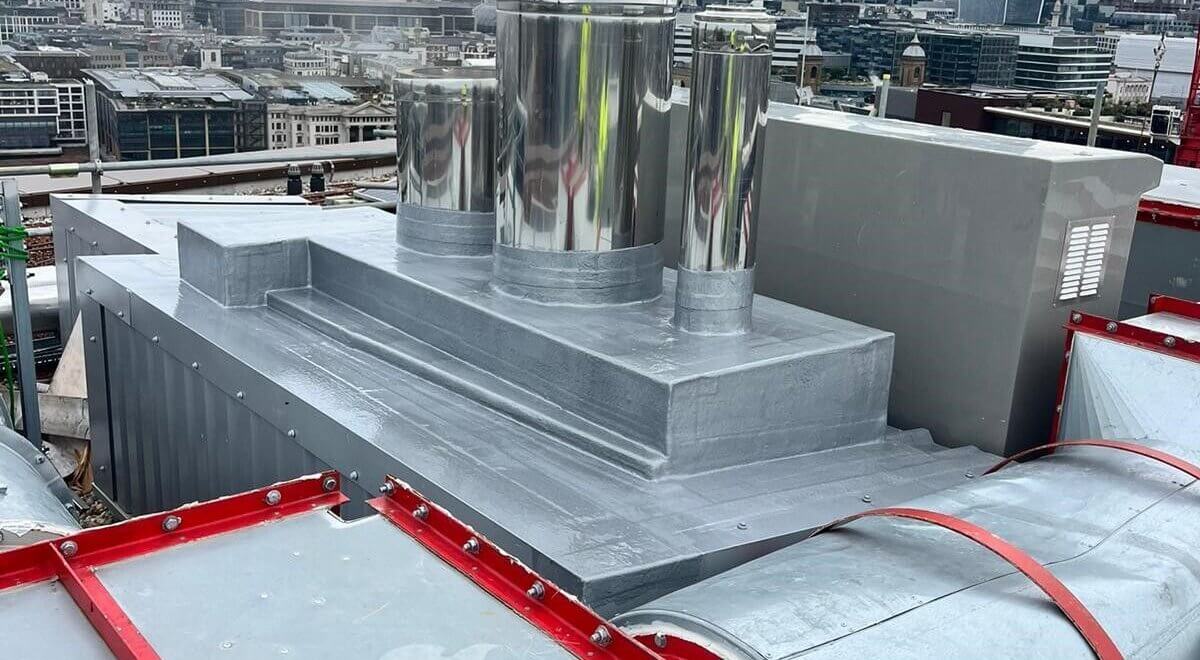
In liquid weatherproofing, a liquid is applied in situ to create a seal around building penetrations. It can also be used at junctions or over damaged areas. Being a liquid, the weatherproofing solution can be worked into tight spaces and around complex shapes. It then cures to create a resilient seal that helps prevent water ingress at some of the building envelope’s most vulnerable points.
At Jones Weatherproofing, we use a tried-and-tested liquid weatherproofing resin that is cold-applied and solvent-free. This makes it suitable for all roof types, including GRP roofs. It requires no heat to apply or cure and hardens quickly – in less than an hour.
Why is liquid weatherproofing the best choice for protecting penetrations in mission-critical buildings?
For mission-critical buildings, protecting penetrations is especially important because these are often the most vulnerable points for water ingress. In these locations, even minor leaks can lead to costly disruption, damaged equipment or unplanned downtime.
Liquid weatherproofing is particularly suited to these applications because it is a versatile material that can be easily adapted to suit last-minute changes to penetration configurations. This flexibility helps to ensure that vulnerable details can be precisely sealed, even where service layouts are complex or have changed since initial installation.
At Jones Weatherproofing, our liquid weatherproofing material is based on unsaturated polyester resins and is solvent-free, making it suitable for use on all roof types, including GRP flat roofs. It is permanently resilient, UV-stable and, when it cures, it is open for vapour diffusion, helping to provide long-term protection at building penetrations.
What makes penetrations in mission-critical buildings so vulnerable to water ingress?
Mission-critical buildings typically have a very high number of building penetrations. These allow services such as electricity, data, water and waste to move in and out of the building effectively, while HVAC services, manufacturing plant, chimneys, structural elements and other elements may also penetrate the building fabric. Each of these penetrations is a potential source of water ingress and weather-related damage.
In mission-critical buildings, water damage isn’t just an inconvenience – it can be catastrophic. These buildings house essential services, from financial data in a data centre and life-saving hospital equipment to one-of-a-kind laboratory research. A leak can damage expensive equipment or the building fabric, cause delays or put occupants at risk.

How does liquid weatherproofing compare with off-the-shelf weatherproofing products?
Traditional weatherproofing systems, such as dog-kennel-style detailing, factory-made cabinets and metal flashings, are rigid and typically rely on pre-formed materials that fit around penetrations. They can take up a lot of valuable roof space, and there is a large risk of gaps, joints or weak points. In addition, the layout of penetrations when using these systems cannot be easily changed once they are installed.
In contrast, Jones Weatherproofing’s liquid-applied weatherproofing incorporates building penetrations as part of the building fabric. It is applied directly to building penetrations and can be used around complex shapes and irregular openings. Layout changes can be easily accommodated, resulting in a continuous, fully bonded layer that requires minimal maintenance.
How does liquid weatherproofing compare with off-the-shelf weatherproofing products?
Traditional weatherproofing systems, such as dog-kennel-style detailing, factory-made cabinets and metal flashings, are rigid and typically rely on pre-formed materials that fit around penetrations. They can take up a lot of valuable roof space, and there is a large risk of gaps, joints or weak points. In addition, the layout of penetrations when using these systems cannot be easily changed once they are installed.
In contrast, Jones Weatherproofing’s liquid-applied weatherproofing incorporates building penetrations as part of the building fabric. It is applied directly to building penetrations and can be used around complex shapes and irregular openings. Layout changes can be easily accommodated, resulting in a continuous, fully bonded layer that requires minimal maintenance.
Can liquid weatherproofing be applied around complex or non-standard roof details?
Yes. One of the main benefits of liquid weatherproofing is its ability to be applied around complex or non-standard roof details.
Because the material is a liquid, it can be applied in any configuration and around penetrations of any shape or size. It then cures to form a tight, resilient layer that is fully bonded to the substrate and the penetrating element, creating a continuous seal, regardless of shape or complexity.
How can weatherproofing risk be further reduced for mission-critical buildings?
For mission-critical buildings, long-term reliability is just as important as initial performance. At Jones Weatherproofing, our fully bonded liquid weatherproofing system offers long-term reliability and protection from water ingress. It’s also backed by a 25-year warranty, which can help to reduce risk and provide peace of mind that the penetrations will be supported long after project handover.
When should weatherproofing be considered during the construction programme of a mission-critical building?
The responsibility of weatherproofing building penetrations is often passed along from stakeholder to stakeholder throughout a building programme. This can mean that contractors are left to deal with it at the end of a project, when problems such as water ingress and damage to the building fabric become apparent. In these cases, access to the substrate may be difficult, requiring certain elements to be removed and later reinstalled. Remedial works may also be required to repair damage to the building structure.
With so much at stake in mission-critical buildings, early engagement with a weatherproofing specialist is highly recommended.
While the Jones Weatherproofing team can take on weatherproofing work at any stage of a project, the best results are achieved when we are consulted from the very early planning stages. We can carry out site surveys, review the building penetration requirements and advise on programming and coordination, helping to avoid last-minute design changes and remedial works and reducing overall risk.
How can I find out more about using liquid weatherproofing to protect mission-critical buildings from water ingress?
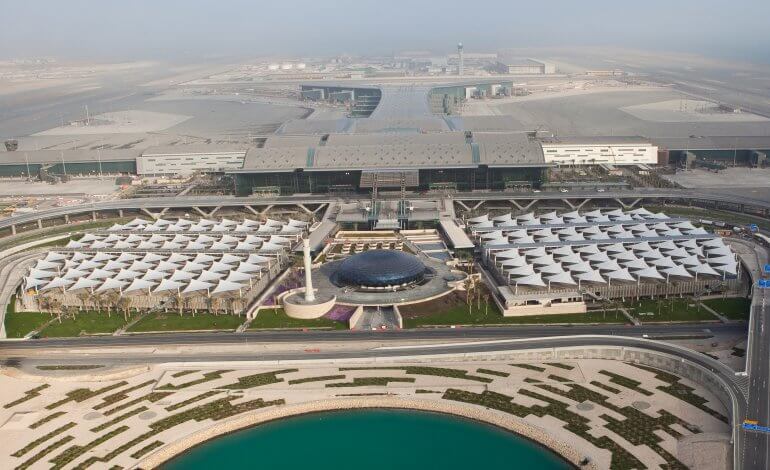
As experts in weatherproofing building penetrations, Jones Weatherproofing has worked on a wide range of mission-critical buildings – from data centres, energy facilities, hospitals and research labs to airports and transport hubs.
To learn more about our liquid weatherproofing system, or to discuss how we can support the weatherproofing for any upcoming mission-critical projects, please get in touch.