Common service riser FAQs

Share page here

Service risers are a common feature in modern buildings, carrying electrical, mechanical and communications services from one level to another, or through the roof.

Jones Weatherproofing offers a liquid-applied system for weatherproofing service risers and other types of building penetrations. It is suitable for all kinds of roof build-up and allows services to run vertically without compromising watertightness. It also simplifies access and can be easily adapted as service requirements or layouts change.

Below are the answers to frequently asked questions about our service riser weatherproofing.

Are there any types of penetrations that can’t be used with riser systems?

Question: Are there any types of penetrations that can’t be used with riser systems?
Answer: No. The Jones Weatherproofing system provides effective weatherproofing for all standard service riser penetrations. It can be used to weatherproof around cable trays, HVAC ductwork, exhaust vents, water pipes, gas pipes, electrical supplies and mechanical services. It also offers complete design flexibility and can be adjusted to suit any roof layout.

Can different services be run through the same building penetration?

Question: Can different service types be run through the same penetration?
Answer: Yes. With the Jones Weatherproofing system, different service types can be run through the same penetration. For example, electrical and mechanical services can run together, as long as the requirements for separation, fire stopping, thermal performance, safety and other compliance considerations are met.

Are service risers more prone to water ingress due to ponding or other flat-roof phenomena?

Question: Are service risers more prone to water ingress due to ponding or other flat-roof phenomena?
Answer: No. When correctly detailed, service risers should not be prone to water ingress due to ponding or any other flat-roof phenomena.
The Jones Weatherproofing system provides effective rainwater management for flat and pitched roofs. Where appropriate, falls can be incorporated into the build-up, helping rainwater drain away from the penetration more quickly. The liquid-applied system also creates a continuous layer with no seams or joints where water could collect or penetrate.

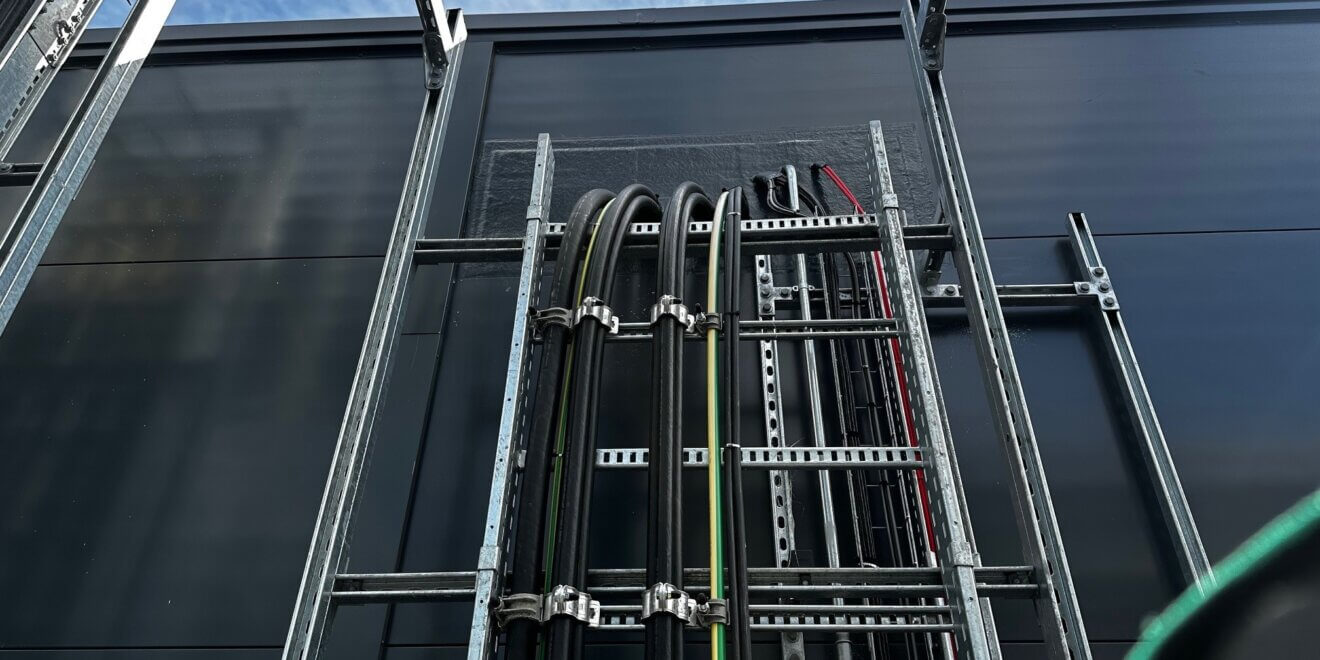
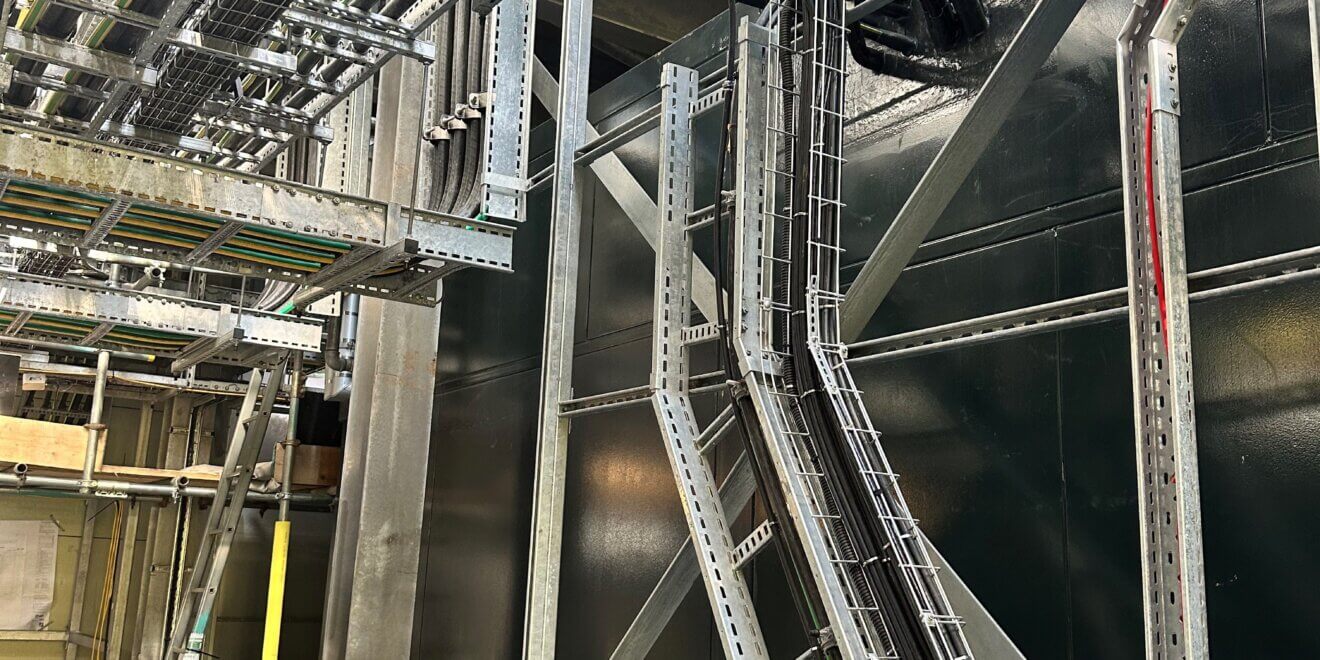
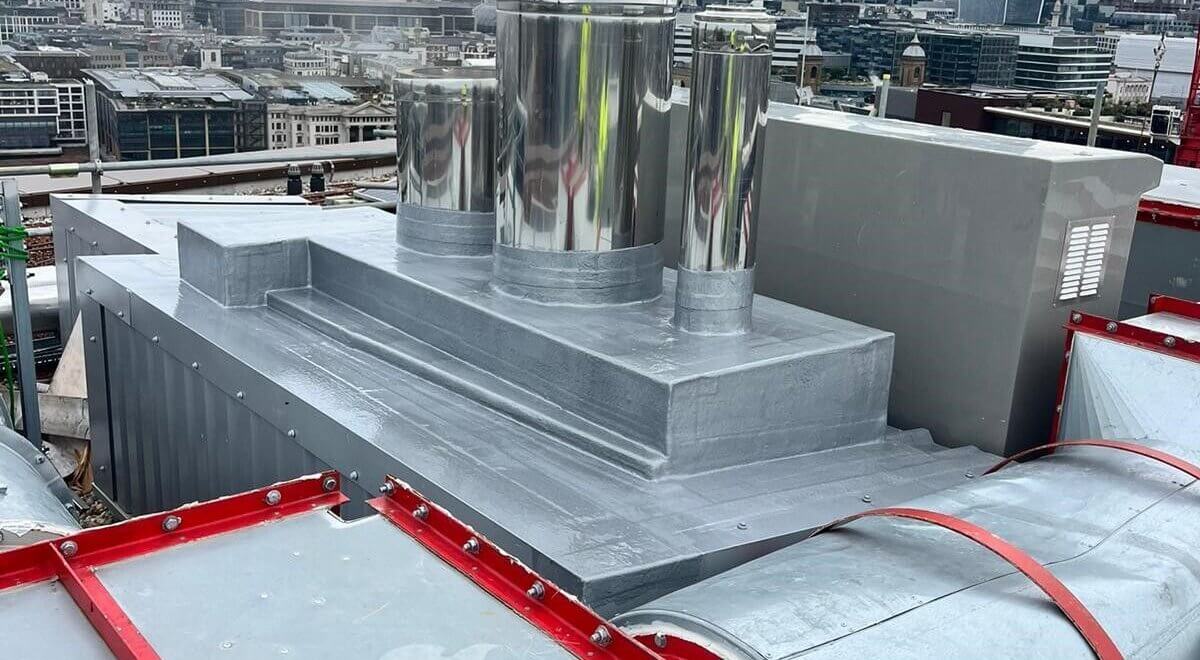
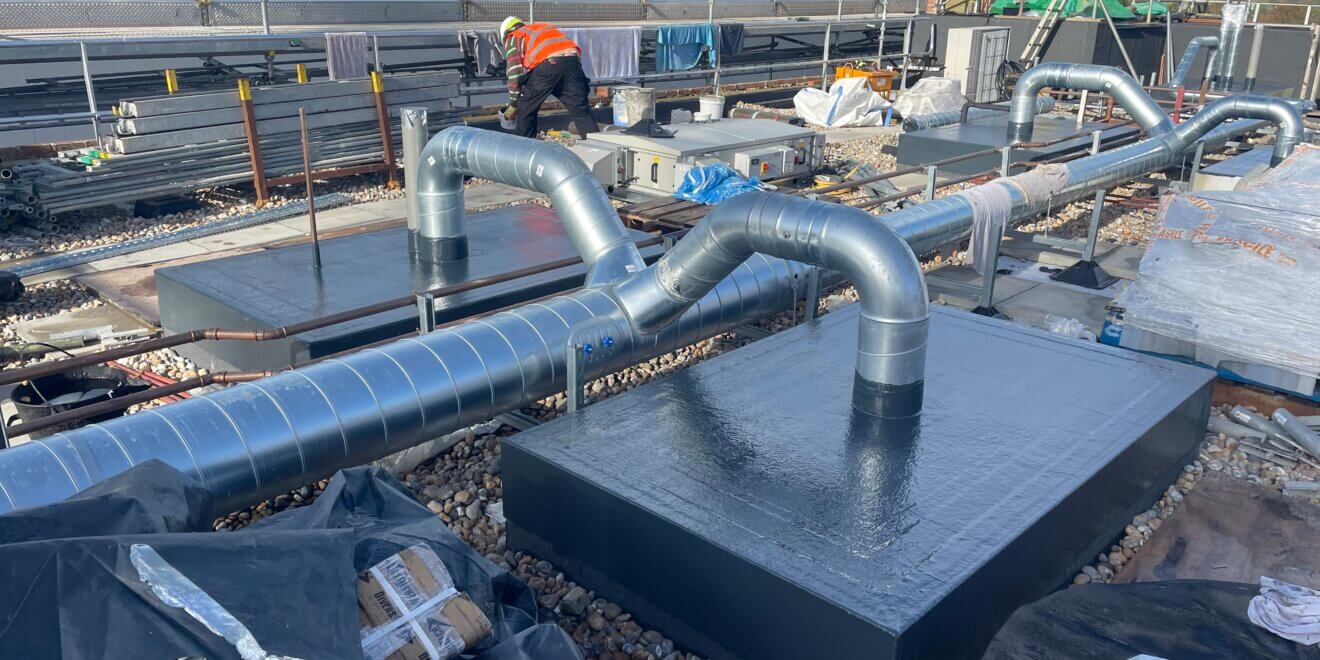
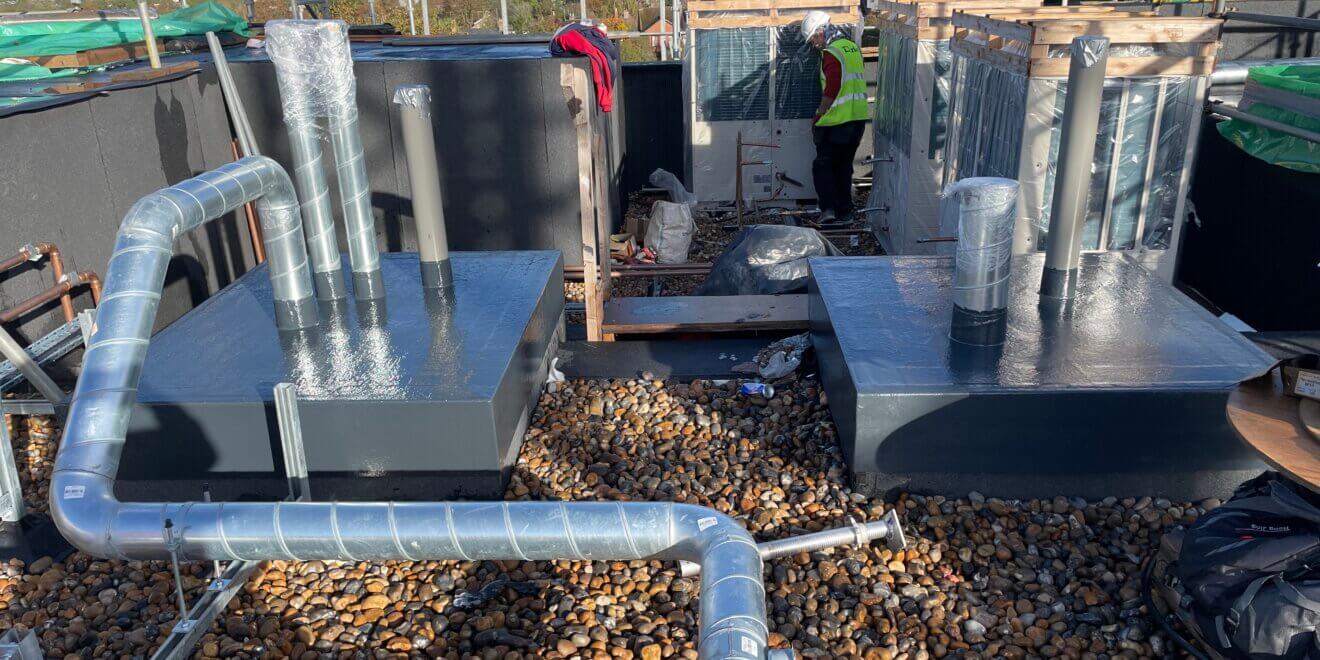
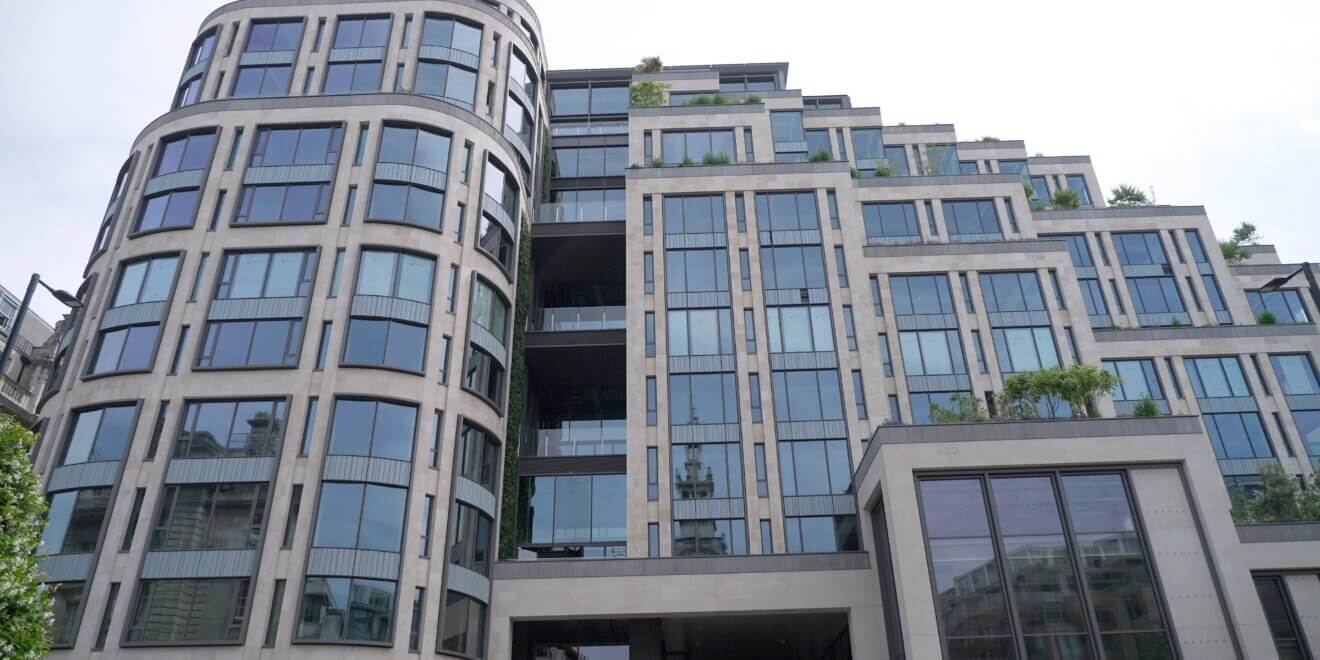
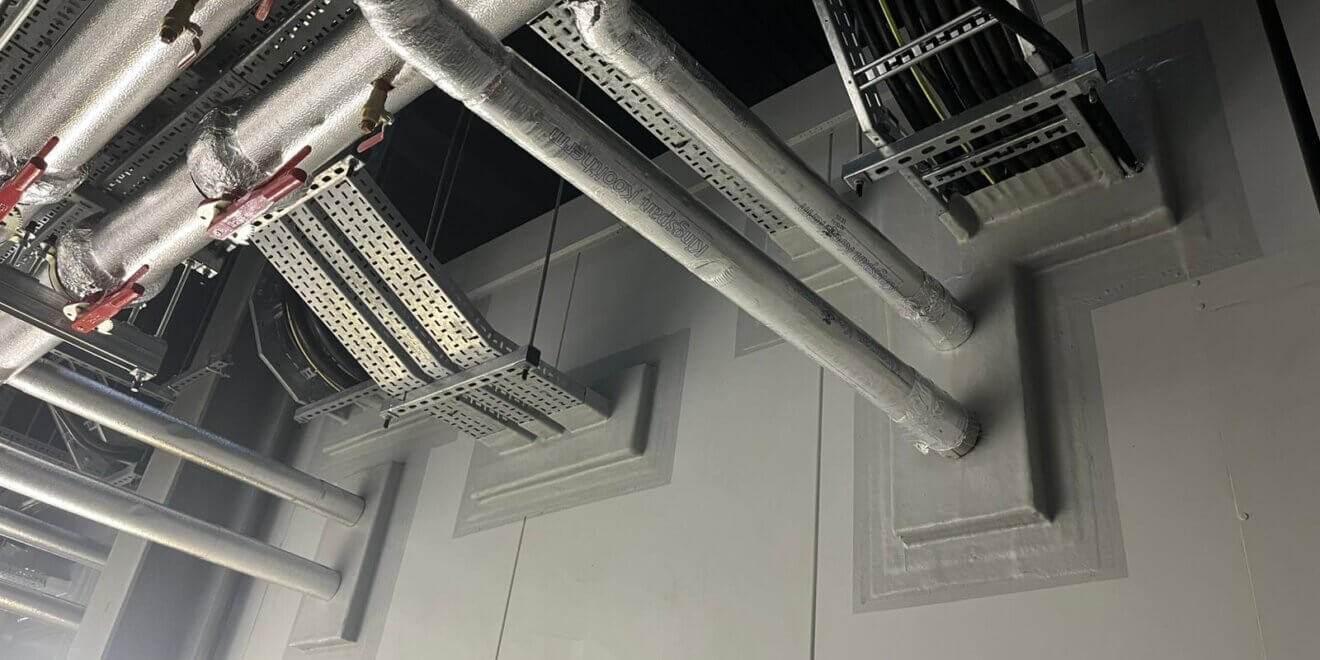
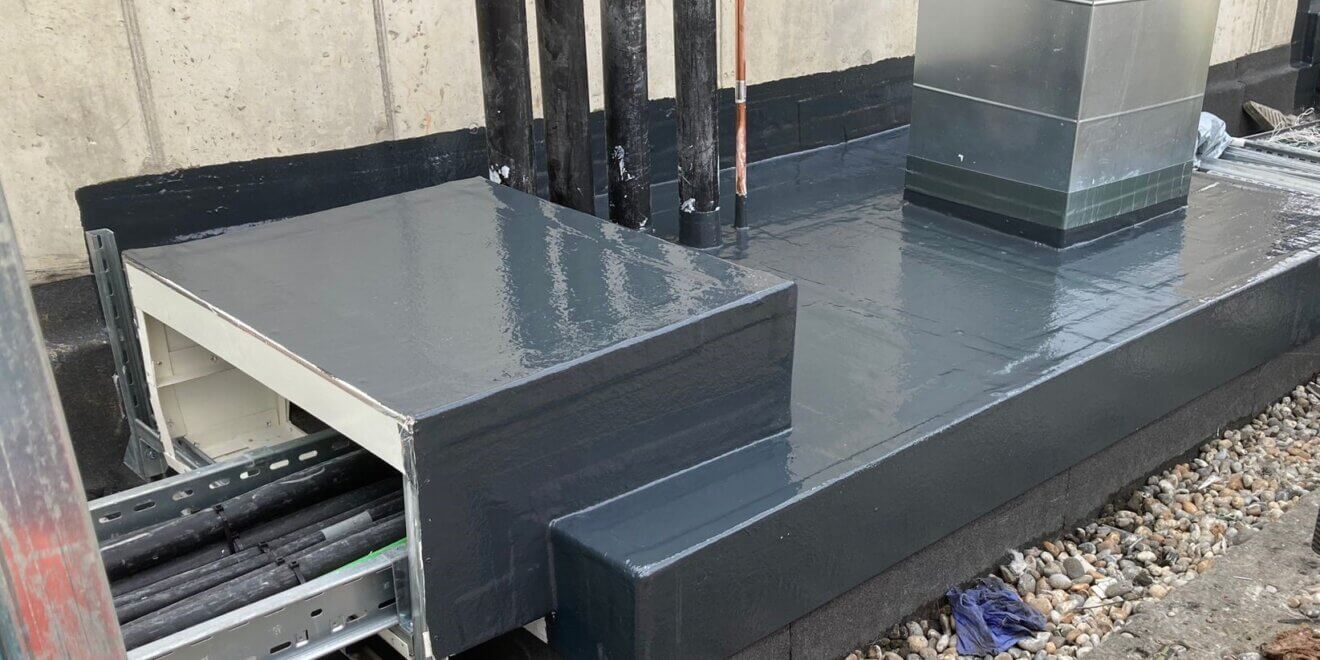
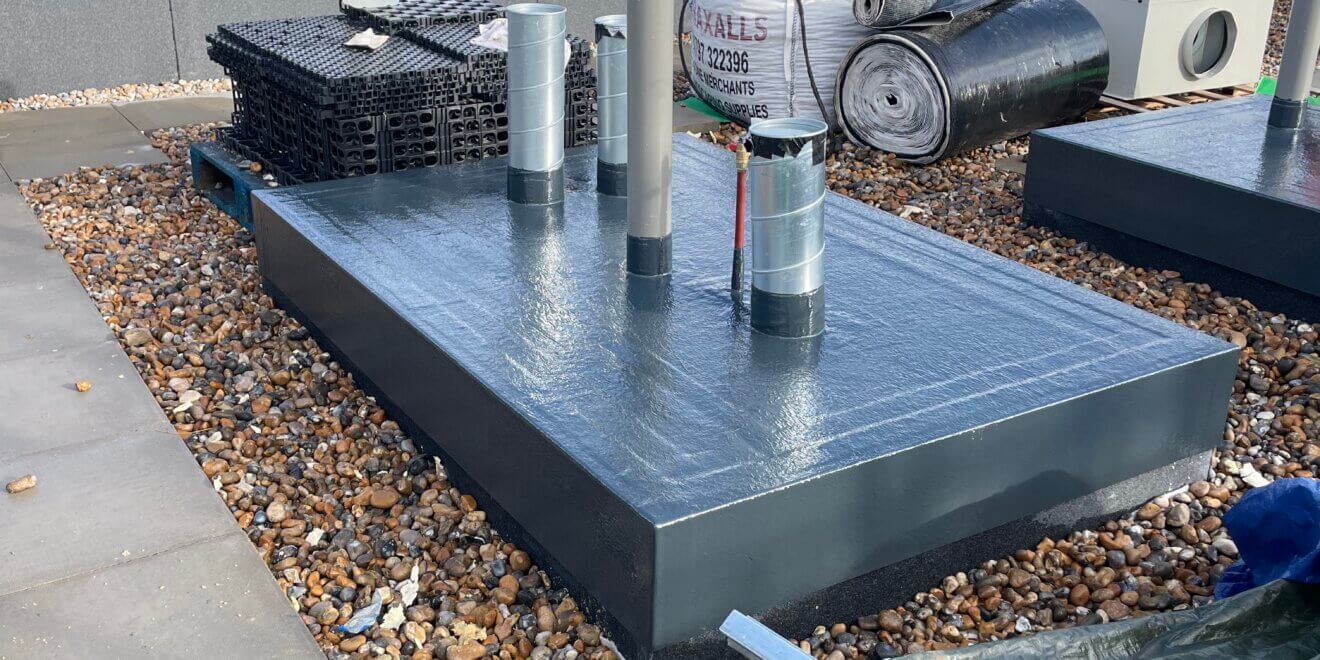
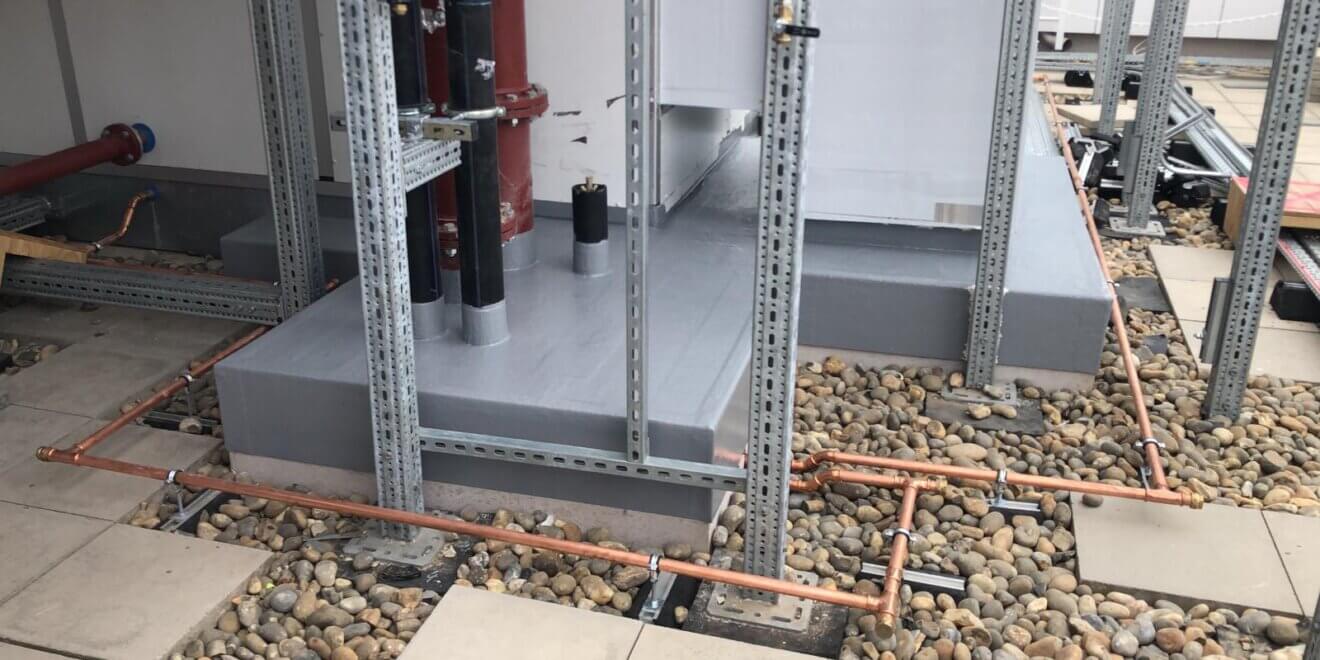
Complex service riser weatherproofed in London
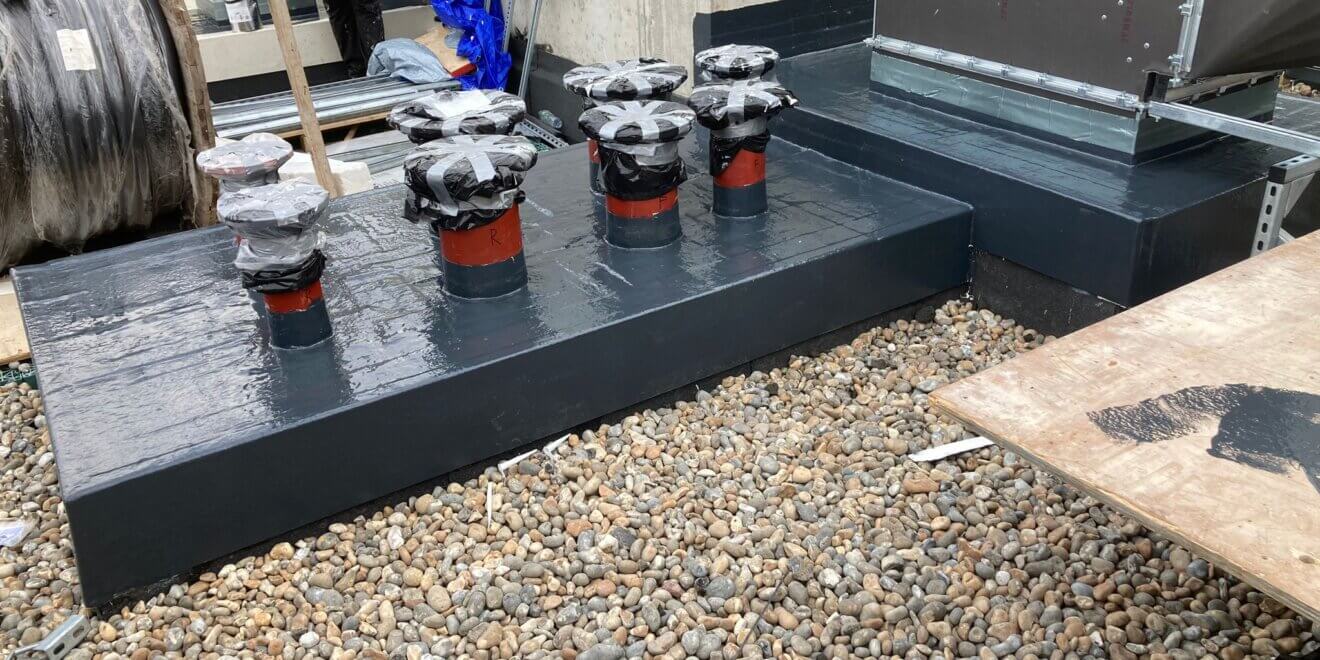
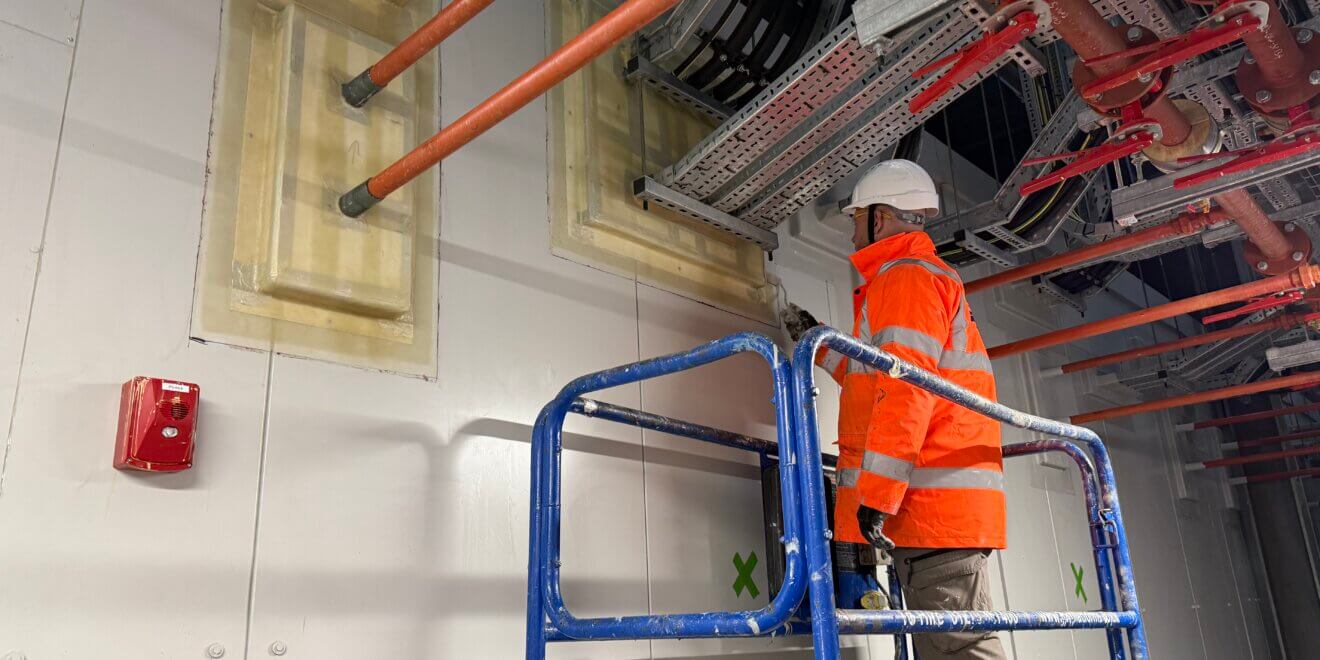
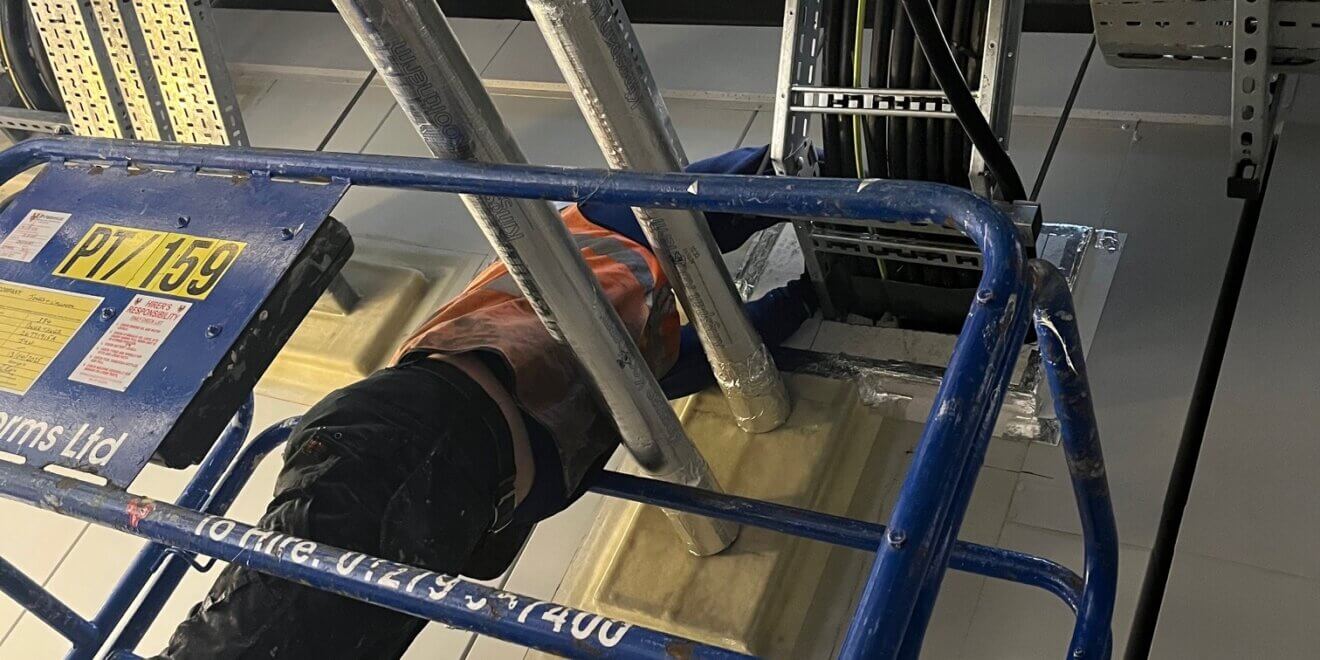
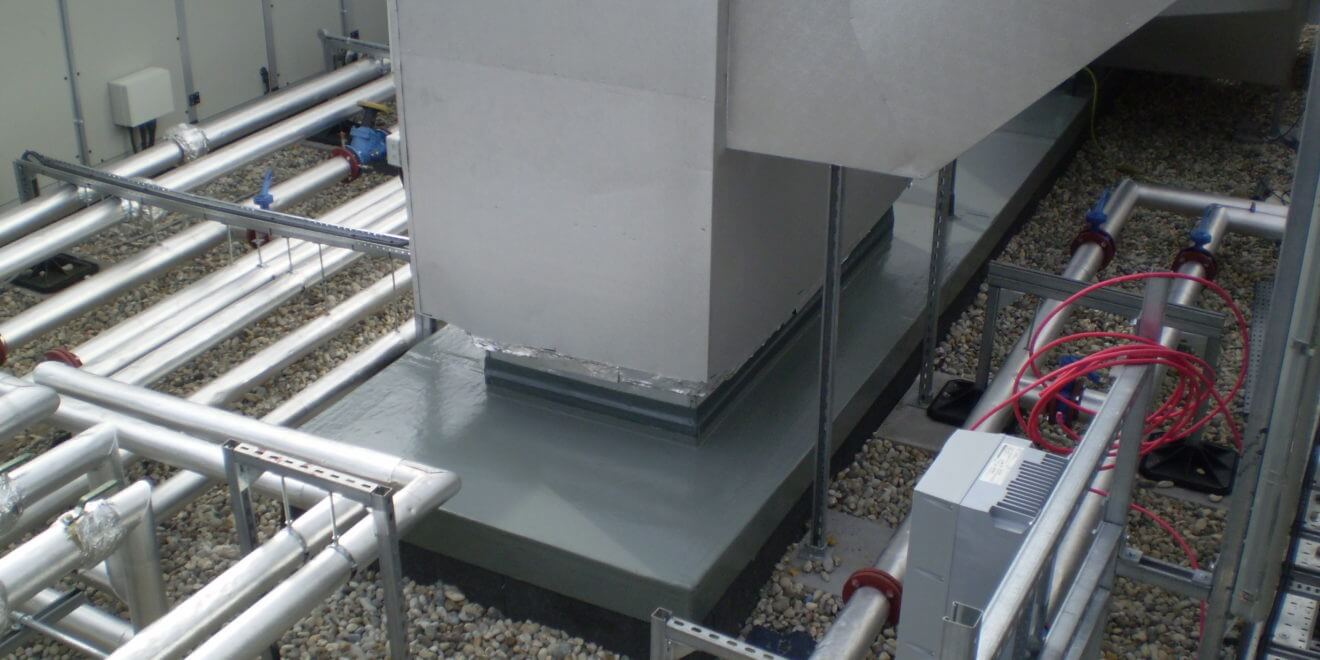
installed weatherproof system which connects to service riser


How does the Jones Weatherproofing system work?

Question: How does the Jones Weatherproofing system work?
Answer: Jones Weatherproofing uses a cold-applied liquid to create a durable, continuous and weather-tight seal around service risers.
In contrast to dog-kennel-style weatherproofing, which uses rigid enclosures around the roof penetration, the Jones Weatherproofing method allows services to run vertically. It also uses less roof space, simplifies maintenance access, can more easily adapt to changes in roof layout or service requirements and can be colour matched to specific project requirements.

When should weatherproofing service risers be considered during a project?

Question: When should weatherproofing service risers be considered during a project?
Answer: As early as possible. For best results, the weatherproofing of service risers and other building penetrations should be planned from the early design stages.

In many cases, weatherproofing isn’t considered until a project is nearing completion. However, this can lead to poor detailing and an increased risk of water ingress.

Leaving weatherproofing to the end of a project can also make access more difficult. Penetrations may be under other building elements or otherwise inaccessible and some elements may need to be removed to gain access, causing delays and additional costs.
Early planning can help determine the best layout for service riser openings; ensure service risers are accessible when the weatherproofing team arrives, reduce on-site disruption and limit the risk of water ingress.

Where can I find out more about service riser weatherproofing?

For more information about service riser weatherproofing, including specification advice and installation considerations, contact the Jones Weatherproofing team. We can answer technical queries, advise on project programming and arrange site visits to determine the best weatherproofing strategy for your project.

Dispelling myths about service riser weatherproofing

Share page here

As the mechanical and electrical loads of buildings have increased – particularly in data centres – the specification and installation of service riser penetrations has become even more complex.

While many advancements have been made in building design with regards weatherproofing, moisture management and safety, several myths persist about weatherproofing best practices and methods for achieving a weathertight finish around service riser penetrations. For example, there’s the ongoing reliance on “dog-kennel” or “dogbox” style enclosures and the belief that they are the only weatherproofing option for service risers.

Jones Weatherproofing has extensive experience in designing and installing modern weatherproofing systems that offer benefits over traditional dog-kennel detailing – such as reduced space requirements, a more straightforward installation and increased design flexibility. In this blog, we’re going to address some of the outdated assumptions and myths about weatherproofing service risers.

Myth 1: Services must come through horizontally, so dog boxes are the only reliable option

For many years, a common approach to weatherproofing service risers was to place a dog-kennel-style enclosure around the roof penetration, then have the services make a 90-degree bend and exit horizontally through the side.

While this method can create a reliable seal, it also has drawbacks. For example, services don’t just go in a straight line and may need to bend around other fixings, the enclosures can take up a lot of space, and the clustered layout of cabling, pipework and conduits can make future access and maintenance more difficult.

Modern weatherproofing techniques and materials mean that dog kennels and horizontal services are no longer the only option.
With the Jones Weatherproofing system, service risers can be effectively weatherproofed in vertical or horizontal configurations. This simplifies detailing, streamlines installation sequencing and saves space on the roof. It also offers a more flexible approach and can more easily accommodate last-minute changes on site.

Myth 2: Dog boxes are “best practice” for weatherproofing service risers

Dog kennel enclosures are robust, familiar and have been used for decades. It’s understandable that they are often considered best practice by default.

However, there is no single best practice approach, and familiarity should not be the reason for specification.

Dog boxes take up a large amount of roof space, which can affect the layout and maintenance access. Being fixed structures, they also don’t offer flexibility if services need to change, move or be increased on site.

Jamie Sporcic, senior sales manager at Jones Weatherproofing, explains that specifying a dog-kennel type system isn’t wrong, but it’s important to remember that there are other options. “For example, the weatherproofing methods offered by Jones Weatherproofing can achieve the same level of weather-tightness while also offering adaptability and reduced space requirements,” he says.

“Our system uses a cold-applied liquid solution that is compatible with any cladding or roof type, including GRP. It creates a joint-free weatherproof layer, saves space, adapts easily to layout changes or variations in service quantity and is backed by a 25-year warranty,” he adds.

Complex service riser weatherproofed in London


Myth 3: A large weatherproofing enclosure provides better protection

Dog-kennel-style enclosures are typically provided in standard sizes, which can lead to over specification. The thinking is that a too-big box is better than a too-small one, as it leaves space for additional services or future layout changes.

The problem is that large enclosures take up valuable roof space. They can increase wind load, restrict access routes and make future maintenance more complicated. Economically oversized specifications can also be money wasted if the box isn’t utilised to its maximum.

The Jones Weatherproofing method achieves effective weatherproofing without requiring bulky housings. Jamie explains that because the weatherproofing is applied directly around the services, they can be more evenly spaced, rather than bunched together. “This saves space, improves maintenance accessibility and makes it easier to add or adjust services during construction or later in the building’s life,” he says.

Myth 4: Weatherproofing service risers is something to think about at the end of a project

Service riser penetrations are a common failure point in roof systems. Late-stage planning and poor detailing are common culprits that can lead to water ingress, complicated maintenance and invalidated warranties.

Leaving weatherproofing decisions until the end of the programme often results in defaulting to dog-kennel enclosures, simply because they are familiar. In the late stages of a project, there may not be time to consider alternatives – and potentially more effective – options, such as the weatherproofing methods provided by Jones Weatherproofing.

Another problem with leaving the weatherproofing of service risers to the end of a project is access.

Weatherproofing is often treated like finishing work, and teams sometimes assume that it can be addressed after the services are installed – but this can lead to difficulties.

“If you wait until the end of a project to think about weatherproofing, it may become more challenging to access the penetration – particularly if other building elements have been layered above it. There may also be difficulty in accessing the penetration because other trades are also working in the same space,” Jamie warns.

He recommends planning the weatherproofing strategy as early as possible, as this can help to:

  • Determine the size and layout of service riser openings, avoiding the need to re-work them later.
  • Ensure that the penetrations are accessible when the weatherproofing team arrives.
  • Reduce disruption caused by removing or rerouting existing installations.
  • Avoid last-minute delays near the end of the project when the site is busy and schedules are tight.
  • Prevent late-stage delays when space and time are limited
  • Maintain a consistent standard of weatherproofing detailing and quality.
  • Allow time to consider various weatherproofing methods, including Jones Weatherproofing’s cold-applied liquid weatherproofing.

Vertical service penetrations from Jones Weatherproofing

Dog-kennel detailing has its place, and the team at Jones weatherproofing has extensive experience in installing and weatherproofing these types of products, but it’s not the only option for weatherproofing service risers or necessarily the most effective. The Jones Weatherproofing method accommodates vertical service risers with ease, offering on-site flexibility, saving space and providing dependable performance – all at a comparable cost.

Get in touch to find out how we can support the specification of weatherproofing for any upcoming projects.

Why is commercial roof maintenance so important?

Share page here

The roof of a commercial building plays a critical role in protecting a building’s structure and its contents, as well as safeguarding the wellbeing of occupants. Commercial roof maintenance helps to ensure the long-term integrity and functionality of the roof, reducing the risk of leaks, water damage and structural deterioration. Maintenance can also prolong the lifespan of the structure, minimise repair costs and support business continuity.

So what is involved in a commercial roof maintenance regime and how can you take steps to ensure a commercial roof is being adequately maintained? Let’s take an in-depth look at what is required, what can be expected and how a maintenance plan can extend the life of a commercial roof.

What is the life expectancy of a commercial roof?

Depending on factors such as the roof build-up, the quality of installation and the local climate conditions, the life expectancy of a commercial roof can range from 10 to 60 years. With regular inspections, suitable maintenance and timely roof repairs, the expected lifespan of a commercial roof can be extended significantly.

What types of roof maintenance are typically required?

The maintenance needed for a commercial roof will depend on the type of roof in question, but all roofs will require regular cleaning to remove debris, dirt and organic growth from the roof surface and drainage channels. Inspections should also be carried out at least twice a year to check for signs of damage or deterioration.

A commercial roof maintenance plan should also include:

  • Checking the roof covering for cracks, bumps or loose edges.
  • Inspecting seals, flashings, upstands and curbs around roof penetrations such as chimneys, vents, access hatches and rooflights.
  • Inspecting rooftop equipment such as solar panels and HVAC plant to ensure they are in good working order, well supported and secured in place.
  • Checking the condition of guardrails, anchor points, walkways and other safety features.

Problems found during routine inspections can often be dealt with quickly and easily before they become bigger issues. For example, Jones Weatherproofing’s cold-applied liquid waterproofing can enhance the durability and weather resistance of a commercial roof with minimal disruption.

It’s important to keep detailed records of all maintenance that is carried out, as well as findings from inspections. This will help to keep track of the roof’s condition and requirements and provide a useful source of information.

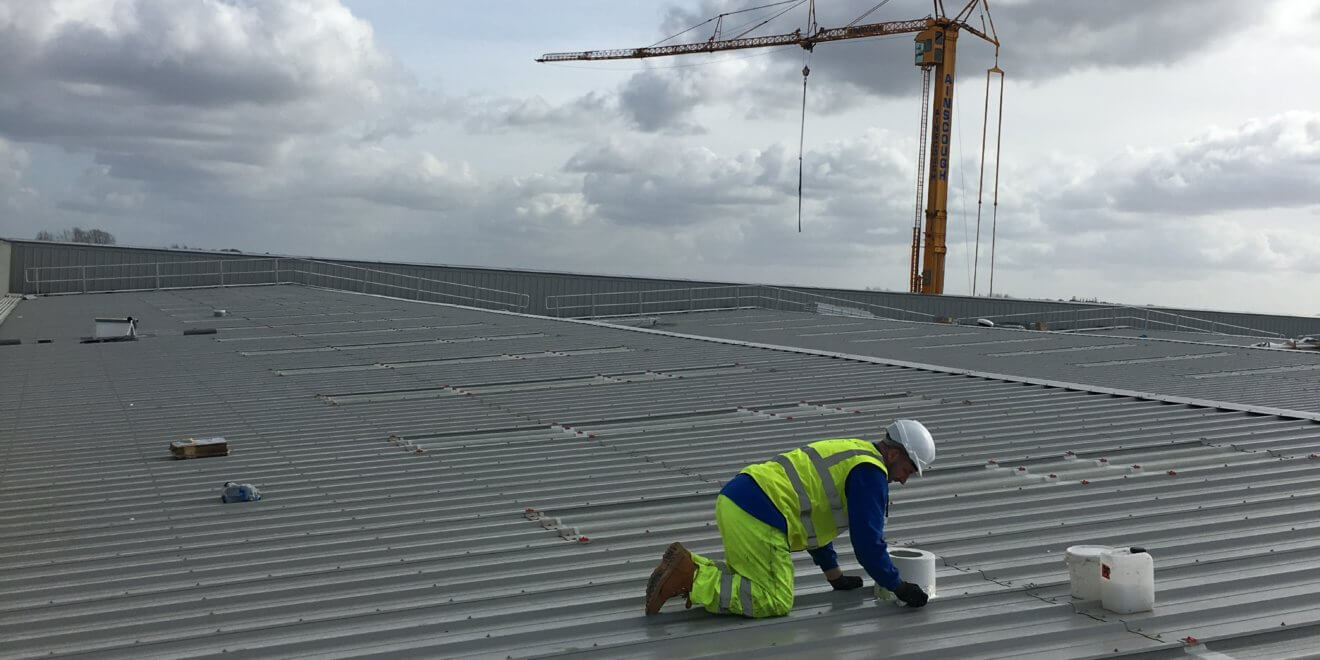
roof penetration being weatherproofed on a modular building

What are the implications of not carrying out commercial roof maintenance?

Proactive commercial roof maintenance is essential for preserving the integrity and weather resistance of the roof, and the entire structure. Filing to maintain and regularly inspect a commercial roof can result in structural and financial consequences as well as safety hazards and potential legal repercussions.

Neglected roofs are prone to leaks, and water ingress can damage the building structure, interior and contents. Leaks can also quickly worsen over time, so it’s important to catch leaks early and repair them quickly. Common problems that are caused by inadequate roof maintenance include:

  • Structural damage – Water infiltration can compromise a building’s structural integrity, including the roof structure, walls and even the foundations. This can lead to safety hazards or potentially catastrophic failure of the building.
  • Damp, mould and mildew – If water permeates the building, it can lead to the growth of mould and mildew, which can damage building materials and cause health risks to occupants.
  • Safety hazards – Leaking roofs can lead to wet, slippery floors, or allow water to get into machinery, which could endanger operators. If the rooftop is used for access, damage to the roof surface can also create trip hazards or other safety risks.
  • Damage to building contents – From factories and warehouses to offices, shops and restaurants, commercial buildings are full of contents that are necessary for business continuity and expensive to replace.
  • Decreased energy efficiency – Cracks, gaps and other commercial roof damage cause draughts and cold bridges, leading to heat loss in the winter or heat gain in summer. HVAC systems will then need to work harder to maintain indoor temperatures, thereby increasing energy consumption and running costs.

The damage caused by inadequate commercial roof maintenance can reduce the property value, as potential tenants or buyers may be deterred from investing in a property that may require extensive repairs.

Neglecting commercial roof maintenance may also lead to other financial or legal implications. For example, the roof systems warranties could become void, meaning the building owner would have to pay the full cost for any necessary repairs or replacements. Safety violations caused by insufficient roof maintenance could lead to legal repercussions, and insurance claims may be denied if roof-related damage is found to have occurred due to poor maintenance.

If you’re not sure what roof maintenance and repairs are required, an expert site survey can help you better understand the current state of your commercial roof.

Extend the life of your commercial roof: maintenance services from Jones Weatherproofing

Regular maintenance is key for ensuring the structure has a long lifespan and performs as expected. This includes roof inspections, cleaning and repairs where needed.

As approved installers of cold-applied liquid waterproofing, Jones Weatherproofing has extensive experience in commercial roof maintenance. Our specially developed cold applied repair solution for GRP roofing systems can be used to repair all types of flat or pitched roofs, and we offer comprehensive maintenance plans to help protect and extend the life of your roof.

To discuss creating a commercial roof maintenance plan for your building please get in touch.

What is GRP roofing and what is the best way to repair GRP roof damage?

Share page here

GRP roofing is a popular choice for many types of buildings, but what exactly is GRP roofing? And how can it be repaired if it suffers damage?

Here at Jones Weatherproofing, we offer a quick and reliable method for repairing GRP roof damage. Our cold applied repair solution is solvent-free, quick to apply and creates a strong protective coating over any damage.

Now, let’s answer some common questions about GRP roofs.

What is a GRP roof?

A GRP roof is a roof that is covered with GRP (also known as glass-reinforced plastic or fibreglass). This strong yet lightweight material comprises glass fibres mixed with plastic.

GRP roofing is applied in layers comprising GRP matting and resin, then finished with a topcoat. It can be used on a wide range of substrates and roof types.

In addition, GRP roofing elements can be pre-moulded to create upstands, architectural mouldings and decorative features such as domes, fascias, canopies and waves.

What are the benefits of GRP roofing?

GRP roofing is durable, weather-resistant, reliable and requires minimal maintenance. It also offers a long lifespan and resistance to mould, rot and fire. If it becomes damaged, simple flat roof repairs can be carried out.

What type of building are GRP roofs suitable for?

GRP roofs are suitable for a wide range of new build and refurbishment projects, from domestic applications like small garden sheds, garages and house extensions, all the way through to massive commercial buildings like sports stadia, warehouses and shopping centres.

While it is most commonly used for flat roof constructions, GRP roofing can also be used on pitched roofs.

GRP Fibreglass Flat Roof
GRP-Linings commercial build
GRP-Linings repair on a commercial property
designing and building GRP architectural mouldings

How is GRP roofing repaired?

When a GRP roof needs to be repaired, a quick solution is essential. After all, water and wind can cause a lot of damage in very little time.

Jones Weatherproofing’s GRP roof repair service involves the application of a cold-applied liquid that forms a bond with most substrates, including GRP roofing. The result is a strong and durable coating that protects the damaged section from wind uplift and moisture ingress.

Since our roof repair formula can be applied over existing GRP roofing, there’s no need to remove the old roofing materials before carrying out flat roof repairs. The results are UV-stable, durable and reliable.

Our GRP roof repair services are suitable for remedying a wide range of roof damage and roof problems, including:

  • Leaks
  • Moisture ingress
  • Membrane buckling
  • Membrane cracks
  • Ponding
  • Damaged flashing
  • Broken tiles
  • Failing seals around roof penetrations

How long will a GRP roof last?

Thanks to the robust materials and minimal maintenance requirements of glass-reinforced plastic, GRP roofing can provide years of reliable service. If problems do occur, repairing GRP flat roofs can be a quick process with minimal disruption.

GRP roofs: repairs and weatherproofing from Jones Weatherproofing

Here at Jones Weatherproofing, our team has extensive experience in repairing GRP roofs and we have worked on a wide range of projects, from large commercial buildings to private homes.

We are committed to providing a high level of service to every one of our customers. To discuss the repairs of your GRP roof using our cold applied weatherproofing solution, please get in touch.

Everything you need to know about roof upstands

Share page here

When it comes to weatherproofing roof penetrations, there’s a lot to think about – and roof upstands are an important consideration. Whether it’s for a rooflight or an access hatch, HVAC equipment or industrial machinery, getting the roof upstand right can help to prevent water ingress and prolong the life of the roof.

While roof upstands may not be the most prominent element of a roof, getting them right is crucial. In this post, we’ll look at them in detail so you can ensure your roof penetrations are fully weatherproofed and meet the necessary standards.

What is a roof upstand?

Also known as roof curbs, a roof upstand is a structure that raises, supports and weatherproofs installations such as rooflights, access hatches, HVAC equipment and other machinery that may be installed on a roof.

Typically made of timber or GRP (glass-reinforced plastic), roof upstands are like frames around a roof opening. They are usually at least 150mm high and are most commonly found on flat roof constructions, but they may also be used on pitched roofs.

Once installed, roof upstands are weatherproofed along with the rest of the roof, using materials such as liquid GRP or flashing.

Roof upstands and access hatches on top of a white roof
weathertight roof upstands and access hatches shown on top of a building
weathertight Roof ventilation
rof upstand pitched roof

Why do you need a roof upstand?

If you’re wondering why roof upstands are so important, it’s because they help to ensure thorough weatherproofing around a roof penetration.

Roof upstands are particularly effective at mitigating rainwater ingress during very heavy storm conditions. Without a roof upstand around a roof penetration, rainwater can pool or build-up, and it is then more likely to find its way into the roof structure – usually around the edges of a roof penetration. A roof upstand will help to ensure the building elements are not flooded and they can also help protect against rainwater that splashes up from the finished roof surface.

As well as weatherproofing, roof upstands can also provide structural support and stability, helping to ensure the roof can support the weight of the installation.

What standards do roof upstands need to meet?

When it comes to roof upstand best practice and compliance, the main consideration is BS 6229:2018, the code of practice for flat roofs with continuously supported flexible waterproof coverings.

Roof upstands must comply with BS 6229 for building control approval and to meet the requirements of third-party insurers such as the National House Building Council (NHBC). Failure to achieve the standard could also void any building warranties.

BS 6229 states that all abutments to the waterproof layer should be “turned up to a level not less than 150mm above the adjacent finished roof system”. In other words, the roof upstand should be at least 150mm high, measured from the top of the roof finish – whether it’s GRP roofing, felt a green roof system or something else.

Doors and thresholds can have a roof upstand measuring only 75mm high, but other measures must be taken to mitigate water ingress. Meanwhile, in some specific cases, roof upstands may not be necessary, such as with roof windows that are designed to sit flush with the roofline.

Roof upstands and weatherproofing from Jones Weatherproofing

As experts in weatherproofing and roof penetrations, Jones Weatherproofing can design, build and install load-bearing and non-loadbearing upstands for a wide range of applications.

Whether it’s for rooftop plant and machinery on a commercial building or a rooflight on a home extension, our team will work with you to ensure the finished roof upstand is weatherproof, meets standards and looks good.

To discuss the roof upstands for your next project please get in touch.
Nicholson Roofbox® vs Jones Weatherproofing’s solution

Share page here

The Nicholson Roofbox® is a weatherproofing solution for building services, and an alternative to Jones Weatherproofing’s own weatherproofing system for service risers. The two approaches to weatherproofing building services are very different. The Nicholson Roofbox® showcases an off-the-shelf solution, while Jones Weatherproofing provides a bespoke approach to preventing water ingress.

As an off-the-shelf product, the Nicholson Roofbox® undoubtedly represents a convenient solution. However, that convenience must be balanced against whether it is the right solution for an individual project. Does the Roofbox® align with the building’s architectural vision? And is it better for the project overall to engage a weatherproofing specialist earlier in the design process

What is the Nicholson Roofbox®?

The Nicholson Roofbox® is a factory-made cabinet, available in different sizes and specifications to accommodate service penetrations. The various models of Roofbox® can accommodate multiple pipework and duct runs.

Instead of weatherproofing multiple service penetrations, only the Roofbox® itself needs weatherproofing. Once installed, it allows access for running and inspecting the services within, making for a convenient solution that carries little risk of water ingress.

What is Jones Weatherproofing’s weatherproofing system?

At Jones Weatherproofing, we create safe and reliable covers and seals of any shape or size, including clusters of multiple services. We insulate and weather service risers at curb level, directly to the services. Our solution is seamless, doesn’t restrict the direction of the services, and removes the requirement for ‘dog kennel’ style detailing.

Standard weatherproofing details are available on our website, which can be employed at any stage of a project to help achieve the right level of integration between building envelope and services. And we are often called on in an emergency, to address a problem that has arisen on site.

We can provide in-situ weathering for service risers in existing buildings. However, an even better way is for us to be involved from the early stages of projects. We work with clients to develop solutions for new build projects and can provide a vital connection between different members of the project team.

Complex service riser weatherproofed in London
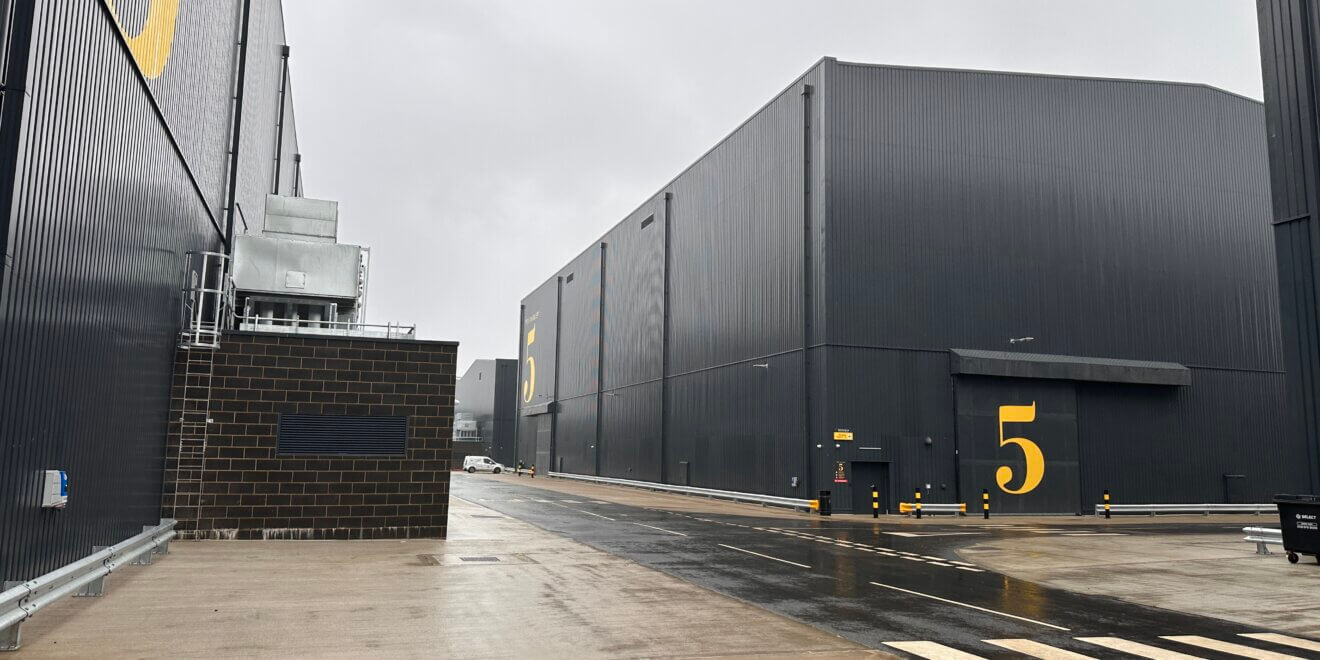
service riser installed at sky studios elstree
Service-Risers weathering system
Service-Risers installed

What disadvantages are there with the Nicholson Roofbox®?

Where a system like Jones Weatherproofing’s looks to minimise the impact of service penetrations on the performance of the building envelope, the same may not necessarily be said of the Roofbox®.

Roof cabinets, like the Roofbox®, are marketed on the basis that the building services design is not usually known in the early stages of a project. The ability to accommodate more services than might be anticipated is therefore promoted as an advantage.

However, the larger the cabinet, the larger the penetration through the building envelope, creating a significant thermal bridge. Cabinets are insulated, but compared to modern roof U-values they are still a comparative weak point in the thermal envelope.

For building envelope efficiency, thermal bridges should be kept to a minimum rather than being made bigger ‘just in case’. But if you don’t make a roof cabinet bigger ‘just in case’ then you are left with a restrictive solution that doesn’t allow services to be added after installation. Jones Weatherproofing’s service has no restriction on services coming through the plant deck, and services can even be added after installation.

And as an off-the-shelf solution, the Roofbox® is not designed with the aesthetics of the specific project in mind. They are, of course, very well finished, but designed to be a universal solution to an issue that is unique on each building. They are purchased and installed to perform a function; not to align with the architect’s vision for the finished building.

This leads into another drawback that applies to roof cabinets generally, as Matthew Jones, Sales Director at Jones Weatherproofing explains: “Roof boxes and cabinets are often installed and weatherproofed crudely, so the finish is not as good as it could be. It also means the sealants and fixings are more prone to water ingress and associated issues, which is precisely what the roof box is supposed to guard against.”

Using a design and build service compared to a Nicholson Roofbox®

Improvising solutions on site, or relying on off-the-shelf solutions, can spoil the architectural vision of a building and have a negative impact on the building envelope performance. 

By contrast, Jones Weatherproofing can be part of the design team. Starting at the concept stage, our early involvement enables us to design and manufacture a high-performance weatherproofing system that works with the building.

Our cold-applied liquid GRP system can accommodate any type of roof system, can be applied to horizontal or vertical penetrations, and it is backed by a 25-year warranty to reduce risk and offer greater peace of mind.

Early involvement also means we can offer a dependable schedule of service and a high degree of installation flexibility that works with the sequencing of the project, helping to deliver on time and to budget. The principal contractor therefore enjoys the confidence of knowing their programme schedule is less likely to be disrupted.

Cost may also be something else worth considering. Whilst it could be assumed that purchasing an off-the-shelf solution would be cheaper than a more bespoke weatherproofing service, this may not be the case. Once you factor in the purchase of the product, the delivery and installation of the roof box, the overall cost is very comparable to a bespoke solution such as Jones Weatherproofing’s. Additionally, roof boxes usually come with a five-year warranty as standard whereas a Jones Weatherproofing solution is backed by a robust 25-year warranty which offers significant benefits and highlights the confidence a bespoke solution can afford a project.

To find out more about Jones Weatherproofing’s weathering system for service penetrations, contact us about how we can help on your next project.

Roof access hatches – what you need to know

Share page here

Roof access hatches are an important installation on commercial buildings where safe access to the roof is required. When looking to specify an access hatch, consideration should be given to how the hatch will integrate into the roof structure without compromising the building envelope performance. The hatch must be fully weatherproofed, and the installation carried out in a safe manner while ensuring compliance with regulations covering working at height.

Commercial building flat roofs frequently support services for the building including heating, ventilation and air conditioning (HVAC) as well as water cisterns and associated piping. Installing one or more roof access hatches provides a safe and easy way to reach these services to perform checks and any required maintenance. An access hatch may also be used if any works on the roof are being carried out.

Roof access hatches for commercial roofs

A roof access hatch is usually a fabricated metal enclosure, made from insulated panels. The lid can be either a solid, insulated panel or alternatively can be finished with a clear panel, enabling the space below to benefit from natural daylight whilst maintaining the functionality of the hatch. Where required, for example if a roof access is needed above a plant room, a hatch with fire rated properties can be specified.

The size of the hatch can vary from a small square, wide enough for a person to pass through, to a larger hatch allowing room for the movement of tools and equipment onto the roof.

When specifying a roof access hatch, consideration must be given to whether access to the roof is required only to perform occasional maintenance or more frequently for other reasons. The hatch must be large enough to allow tools and equipment to be carried onto the roof if required and be located where it is most needed. An important requirement of an access hatch is that it should be capable of being safely opened and closed by one person.

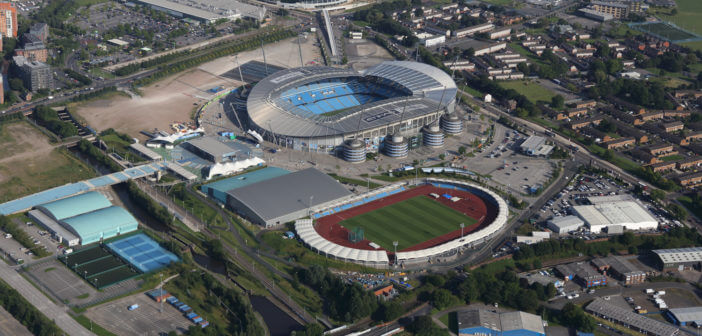
Olympic stadium Waterproofing and access hatch installation
Bilco access hatch with a white walkway on a weatherproofed roof
weathertight roof upstands and access hatches shown on top of a building
weathertight Roof ventilation
Access hatch commercial roof

Small access hatches are usually installed with a fixed vertical ladder to allow the user to reach them. The ladder must be constructed in line with BS 4211:2005 and installed opposite the hinge of the hatch to ensure access is not obstructed. Larger access hatches installed to allow tools and equipment to be carried onto the roof may require a fixed staircase to ensure ease and safety of use.

Finally, a roof access hatch must be installed to work holistically with the desired performance of the rest of the roof. A lot of time and effort goes into the calculations of a commercial flat roof to ensure relevant U-values, as well as other metrics, are accurate and adhere to relevant building regulations and standards. An access hatch effectively becomes a potential thermal bridge and if not correctly installed and weatherproofed can detrimentally affect the performance of a roof, and so should be considered at the early stages of design where possible.

If an access hatch is specified later in the building’s construction, then an installer should be employed that understands the needs of the commercial flat roof and how to install a roof access hatch without compromising the build envelope’s overall performance.

Jones Weatherproofing’s roof access hatches

Jones Weatherproofing is a leading installer of roof access hatches for all roof types, and when installed, are sealed to the upstand to form an effective barrier against water ingress and the elements. Our access hatches also contain a layer of high-performance thermal insulation so as not to compromise the thermal performance of the roof.

We supply and fit a wide range of roof access units. Our standard product range includes Bilco hatches, as well as a range of aluminium hatches that can be supplied with your choice of polycarbonate domes or pyramids. The hatch is finished with a flat, thermally insulated, aluminium lid. In addition to this, we can provide bespoke large plant access panels, as well as weathering systems and covers for service risers.

Jones Weatherproofing are a UK company based in the West Midlands, since 1979, they have been providing roof penetrations, weathering and GRP Mouldings solutions. As approved expert installers of cold-applied liquid fibreglass roofs, Jones Weatherproofing can provide a complete roofing service from initial site surveys through to the design and installation of the roofing system.

To discuss using a fibreglass roof on your next project or any of our other solutions please get in touch here.

Fibreglass roof vs Felt roof – which is best?

Share page here

When looking to specify a weatherproofing system on your commercial flat roof project to protect it from the elements, there are several different membrane types available. Here we look at two popular choices – a more traditional felt based system, or a more durable fibreglass roof solution. It is worth noting that a fibreglass roof is more commonly known as a glass-reinforced plastic (GRP) roof and for the purposes of this blog we will refer to this type of roof this way.

Each of these has their own benefits and ultimately the system selected will be determined by the specific needs of the project. Installing a glass-reinforced plastic roof, however, generally offers more design freedom, is safer to install, with no requirements for hot works, and is more durable, offering increased longevity. Fibreglass also has increased resistance to fire spread which is an important consideration in any flat roof specification.

Felt covered commercial flat roofs

A traditional felt covered commercial roof uses a bituminous felt membrane which is hot applied using a flame – more commonly referred to as a torch-on application. The weatherproofing membrane is usually made up of three layers of material – one or two layers of bitumen felt – and a finishing layer of mineral felt.

A gas torch is passed over the underside of the bitumen layer, causing it to become an adhesive. A roller is then used to apply pressure to the layer so that it bonds to the roof surface. The felt is applied in sections leaving a seam where the sections meet. The seam is the weak point of the roof’s weatherproofing layer and tends to be where failure may occur first.

For many project types, particularly domestic and smaller commercial roofs, a traditional felt weatherproofing membrane is a popular choice and offers several benefits including:

  • Cost – Compared to a GRP roof, a felt weatherproofing membrane is usually cheaper, although in the long term, the increased lifespan of fibreglass can more than make up for this.
  • Lifespan – A properly installed felt roof covering can typically be expected to last for eight to ten years.
  • Ease of transport – Felt used for roofing is supplied as a roll which is compact and reasonably lightweight, allowing easy transport to site.
  • Flexibility – Roofing felt is a very flexible material and can be easily moulded and shaped to fit the roof structure it is being applied to.
Fibreglass Flat Roofs With Roof Light
GRP Fibreglass Flat Roof
Fibre-Glass-Flat-Roof install
GRP fibreglass architectural mouldings commercial clients
flat roof repair and replace

Glass-reinforced plastic (GRP) covered commercial flat roofs

Glass-reinforced plastic makes a great choice for use as a weatherproofing layer. The membrane is applied to the roof using a resin adhesive and bonded to the roof surface giving it a strong, protective layer with no seams which tends to be the first point of failure in more traditional weatherproofing membranes, including felt.

To install a GRP weatherproofing membrane, a layer of resin that has been mixed with a catalyst is applied to the roof deck, a sheet of fibreglass mat is then laid onto the resin followed by a finishing layer of resin. This forms a tight, weatherproof seal with high UV light resistance. A glass-reinforced plastic roof also has excellent resistance to fire, making it a safer alternative to traditional felt based systems. Pigment can be added to the final coat of resin meaning the roof can be finished in a colour to match any design requirements.

When considering GRP as the weatherproofing membrane for your roofing project, it can be useful to learn the benefits that this system can provide.

  • Safer to install – A glass-reinforced plastic roof is cold applied; therefore, no flame (hot works) is required for installation.
  • Longevity – Research shows that a properly maintained roof of this type can last for 30 years or more.
  • Maintenance – GRP roofs are easily maintained. Occasionally, leaves and debris should be removed, and the surface given a wash with a mop.
  • Visual appeal – The top layer of a GRP roof can be coloured to match any aesthetic requirements.
  • Durability – This type of roof has no seams which tend to be the weak points of a traditional felt based covering.
  • Fire resistance – Fire safety is of paramount importance in all construction and GRP benefits from increased resistance to fire spread.
  • Strength – A glass-reinforced plastic roof offers excellent resistance to the effects of foot traffic and impact from debris including tree branches, hail and dislodged masonry. Additionally, this type of roof is more tolerant to the effects of UV light.
  • Seamless finish – The surface of a GRP roof is a continuous layer with no seams or joints, this makes the roof much less susceptible to damage from water ingress and gives a more visually pleasing finish.

Is GRP the most suited weatherproof layer for commercial flat roofs?

Commercial building flat roofs tend to be large areas which, if finished using a traditional felt weatherproof membrane, will have multiple seams or joints where the layers meet, increasing the potential for water ingress and failure. GRP roofs are applied with no seams making them a much more durable solution.

Glass-reinforced plastic can be easily moulded to form complex shapes and the final layer of resin can have pigment added to create a coloured finish.

A traditional felt roof contains bitumen which is flammable whereas GRP has an increased resistance to fire making it a much safer product for use in roof weatherproofing. The installation process for a felt roof requires the use of a flame torch, some projects – notably schools and hospitals – may have restrictions on the use of torch-on systems and a cold-applied finish such as glass-reinforced plastic is usually the preferred solution.

Jones Weatherproofing are a UK company based in the West Midlands, since 1979, they have been providing roof penetrations, weathering and GRP Mouldings solutions. As approved expert installers of cold-applied liquid GRP roofs, Jones Weatherproofing can provide a complete roofing service from initial site surveys through to the design and installation of the roofing system.

To discuss using a GRP roof on your next project or any of our other solutions please get in touch here.

What are the benefits of fibreglass roofs?

Share page here

Fibreglass roofs (also referred to as GRP roofs) are a popular choice for commercial buildings. On a traditional flat roof build-up, a fibreglass weatherproof layer offers numerous benefits over alternative solutions, such as single ply and bitumen-based layers, to name a few. These benefits include:

  • Increased durability
  • Lower maintenance requirements
  • Easier to repair
  • A stronger weatherproofed seal
  • Increased energy efficiency
  • Broader aesthetic design

Fibreglass (GRP) is made from thin strands of glass woven into a mat. The fibres are combined with a resin and form a strong, flexible product which can be easily moulded into a variety of shapes. This makes Fibreglass (GRP) an excellent choice where complex detailing is required. Pigment can also be added to the resin to create a wide range of colours.

Compared to a traditional bitumen-based and single ply weatherproofing layer, fibreglass offers higher resistance to foot traffic and impact from objects including, but not limited to, hail, dislodged tiles from neighbouring buildings or tree branches. The ease of maintenance and life expectancy of over 30 years, with correct installation and maintenance, makes fibreglass flat roofs a very attractive specification option for commercial buildings.

What is the durability of a fibreglass roof?

Fibreglass is a durable and long-lasting material that can withstand harsh weather conditions such as extreme temperatures (both hot and cold), wind, rain and hail strikes. In addition, fibreglass has high resistance to the effects of UV light. A fibreglass flat roof is installed with no seams, creating a continuous surface which is highly resistant to water ingress. A properly installed fibreglass roof will have a long lifespan and require minimal maintenance.

Research shows that a properly maintained fibreglass roof can last for 30 years or more compared to around 20 years for a traditional bitumen felt based roof covering.

How much maintenance does a fibreglass roof need?

As with all roofing systems, to ensure that they perform as intended for the life of the building and look their best throughout the years, they should be regularly inspected. Reputable flat roof weatherproofing installers may offer warranties that cover their products and installation. These warranties can be very beneficial and long-term (up to 25 years in some cases), however, regular inspections, with around one a year, may be required to maintain this benefit.

Because of the durability and longevity of GRP fibreglass, however, the only expected maintenance typically required for fibreglass flat roofs is to keep them clean – this helps the surface maintain its striking finish. Cleaning fibreglass flat roofs simply involves removing debris, such as leaves, tree branches, moss, or other growth and giving the surface an occasional wash with a mop.

Fibreglass Flat Roofs With Roof Light
GRP Fibreglass Flat Roof
GRP fibreglass for curves installed on a building
Fibre-Glass-Flat-Roof install
Fibre Glass Flat Roof with a railed off window on the right-hand side

Are fibreglass roofs difficult to install?

Fibreglass is a lightweight material that is cold applied meaning no torch or flame is required to heat the membrane. This can reduce the installation time and avoids the need to use bottled gas and torches (hot works). The fibreglass layer is applied using a roller and a resin topcoat provides the tough, final finish. An easier installation saves considerably on time and costs.

Is a fibreglass roof more expensive than a traditional system?

The belief that fibreglass is a more expensive system is a misconception when looking at the overall long-term picture. The lifespan of a fibreglass membrane itself is typically longer than that of felt or single ply solutions. The higher initial cost of a fibreglass finish is offset by the longer lifespan of the roof. This means that overall, there is a long-term cost benefit to using fibreglass.

Fibreglass roofs and fire performance

Fibreglass has high resistance to the spread of fire which is an important consideration when specifying a roof. A roof must satisfy the requirements of the Building Regulations Approved Document Part B which applies to fire safety in construction. Section B4 covers the requirement of the external walls and roof of a building to adequately resist the spread of fire over the walls and roof of the construction, as well as from one building to another. The full document can be freely downloaded here for more information.

We provide a complete roofing service from initial site surveys, as well as design and installation of a roofing system, through to aftercare and are approved installers of cold-applied liquid fibreglass roofs.

To find out more, please visit the fibreglass roofs solutions page and contact us for any project requirements around fibreglass roofs.

How much maintenance do fibreglass roofs require?

Share page here

As with all roofing systems, fibreglass roofs should be regularly inspected to ensure that they perform as intended for the life of the building and look their best throughout the years. Reputable flat roof weatherproofing installers may offer warranties that cover their products and installation. As these warranties can be beneficial, and in some cases long-term (up to 25 years).

Because of the durability and longevity of GRP fibreglass the only expected maintenance typically required for fibreglass flat roofs is to keep them clean – this helps the surface maintain its striking finish. Cleaning fibreglass flat roofs simply involves removing debris, such as leaves, tree branches, moss, or other growth, and giving the surface an occasional wash with a mop and soapy warm water.

How often should a fibreglass roof be checked?

It’s a good idea to carry out a visual check on a fibreglass roof at least once a year and after any severe weather, particularly hail and high winds. This check can be carried out by the building owner/inspector or a professional roof covering installer for greater peace of mind. Any damage that has occurred can therefore be addressed before it becomes a bigger problem. If there are trees located close to the building, these can cause issues with cleanliness and should be trimmed regularly. Additionally, any blocked drains and gutters should also be regularly checked and cleaned out.

Fibreglass Flat Roofs With Roof Light
GRP Fibreglass Flat Roof
flat roof repair and replace
Fibre-Glass-Flat-Roofs with obstructions
GRP fibreglass architectural mouldings commercial clients

How frequently should a fibreglass roof be cleaned?

Cleaning a fibreglass roof should be carried out at least once a year and can be part of a standard maintenance regime, without the need for specialist help. However, depending on the roof structure, building height and access requirements, maintenance may require an expert. This is particularly true for commercial and industrial applications. Drainage points and gutters should be cleared of any material such as leaves and debris to ensure water is able to freely flow from the surface and avoid build-up.

Fibreglass roof maintenance and safety

When working at height, such as on a roof, it’s important to ensure safe practice, and working at height precautions must be taken. Guidance regarding working safely on roofs is provided in the Health & Safety Executive document HSG33 which can be found here.

Jones Weatherproofing, established in 1979 and based in the West Midlands, provides roof and vertical penetrations, access hatches, upstands, weatherproofing and GRP moulding solutions. Jones Weatherproofing provide a complete roofing service from initial site surveys, as well as design and installation of a roofing system, through to aftercare and are approved installers of cold-applied liquid fibreglass roofs.

To find out more, please visit the fibreglass roofs solutions page and contact us for any project requirements around fibreglass roofs.