How liquid-applied weatherproofing preserves a building’s architectural vision

Share page here

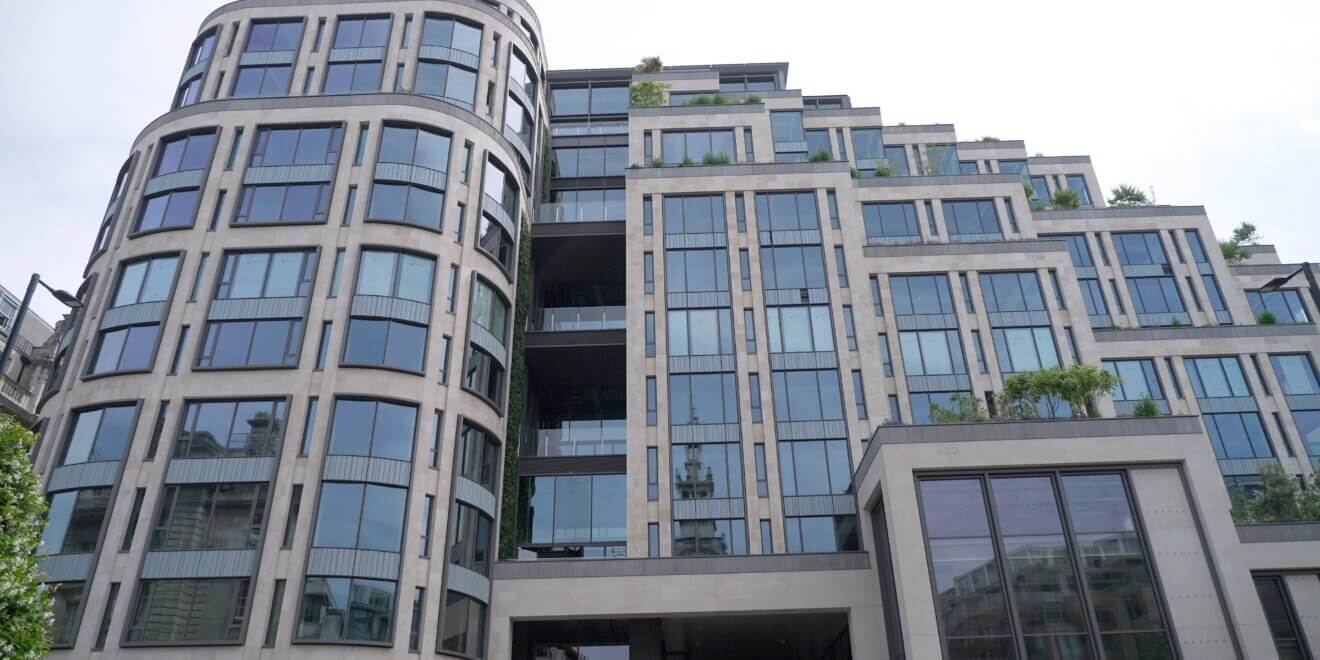
Maintaining architectural intent throughout a construction project can be challenging – particularly around roof and vertical penetrations as well as other interfaces.

Whether vertical or at roof level, these complex details can disrupt clean lines and carefully considered aesthetics if they are not properly planned and installed. If weatherproofing is not carried out effectively, it can also impact building performance and durability.

A well-designed weatherproofing strategy plays a key role in preserving a building’s architectural vision. At Jones Weatherproofing, our liquid-applied weatherproofing provides an effective, visually unobtrusive way to protect the building fabric while supporting the overall design intent.

Why some weatherproofing methods may compromise design intent

Weatherproofing may seem like a straightforward part of a build, but it can be surprisingly complex, especially when buildings contain multiple penetrations, such as:

  • Service penetrations
  • Cable trays
  • Plant and equipment
  • Flues and chimneys
  • HVAC equipment and terminals
  • Roof access hatches and service walkways
  • Rooflights
  • Structural supports

As services pass in and out of the building envelope, they can disrupt the visual appearance – penetrating cladding in undesirable locations or introducing obtrusive, inconsistent detailing.

Meanwhile, roof penetrations can create visible interruptions to the roofline. They may look cluttered or bulky, depending on the type of weatherproofing that’s used. For example, traditional dog-kennel-style rooftop enclosures take up a lot of space and are typically prefabricated, so they are unlikely to blend in with the rest of the building’s design.

The role of liquid-applied weatherproofing in maintaining design intent

At Jones Weatherproofing, our liquid-applied weatherproofing system is flexible and versatile, making it suitable for use with all types of roofing materials, including GRP.

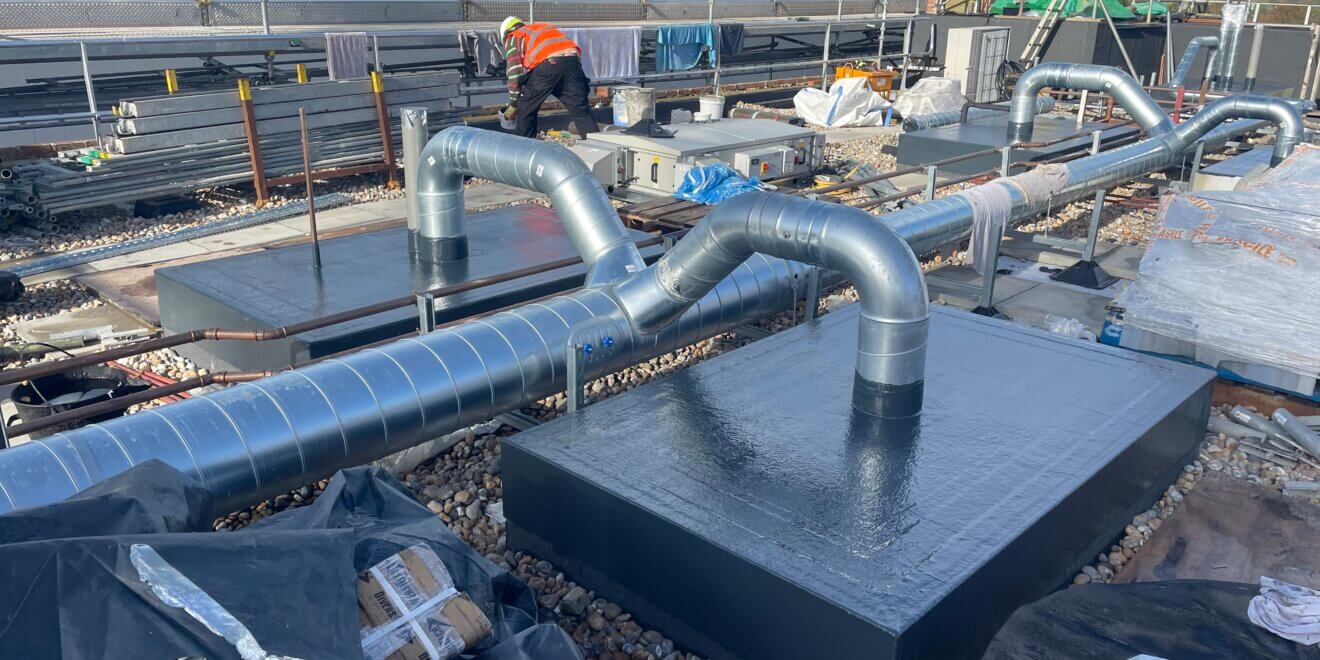
Because it is applied in situ and fully bonded to the substrate, the liquid-applied weatherproofing can be tailored to match complex shapes and layouts, without relying on prefabricated components or standardised details.

This allows each penetration or interface to be treated individually, while also providing a consistent, seamless finish across the whole roof area.

A liquid-applied approach allows each penetration or interface to be treated individually, explains Matt Jones, commercial director at Jones Weatherproofing, “Every penetration is different. With our liquid-applied weatherproofing system, we can form the detail around the penetrations, rather than forcing the penetrations into a standard system.”

Jones Weatherproofing also offers a colour-matching service, which means the waterproofing finish can be specified to blend in with surrounding materials or provide a deliberate contrast. This is ideal for retail outlets or other projects that require visual consistency and brand identity.


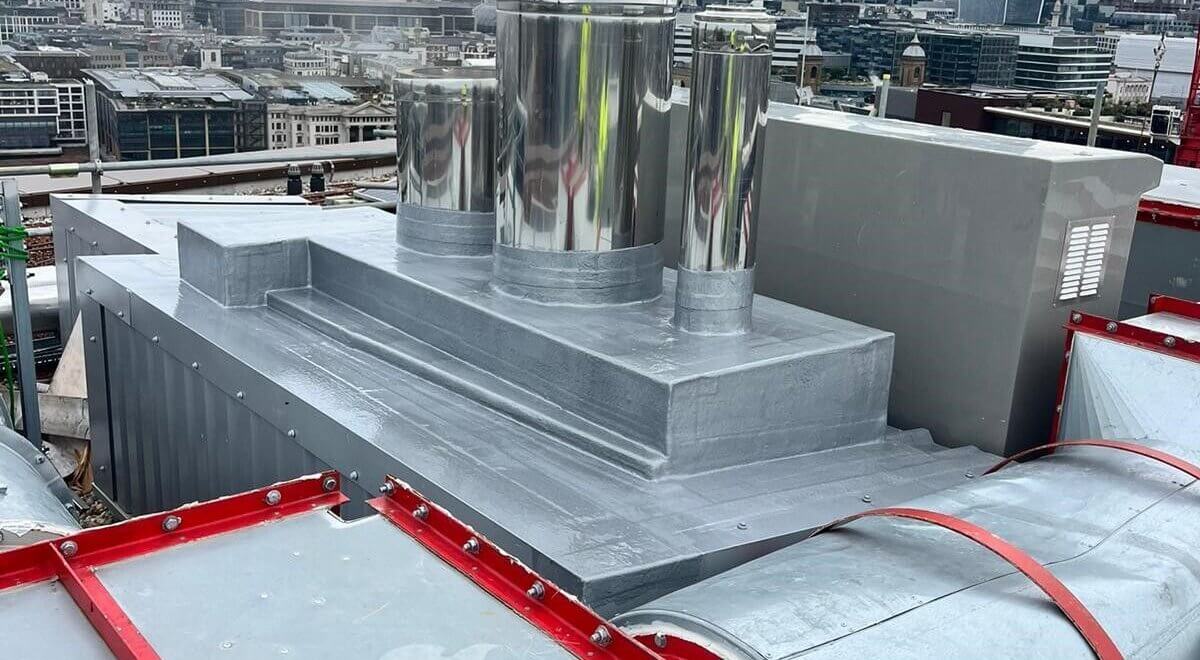
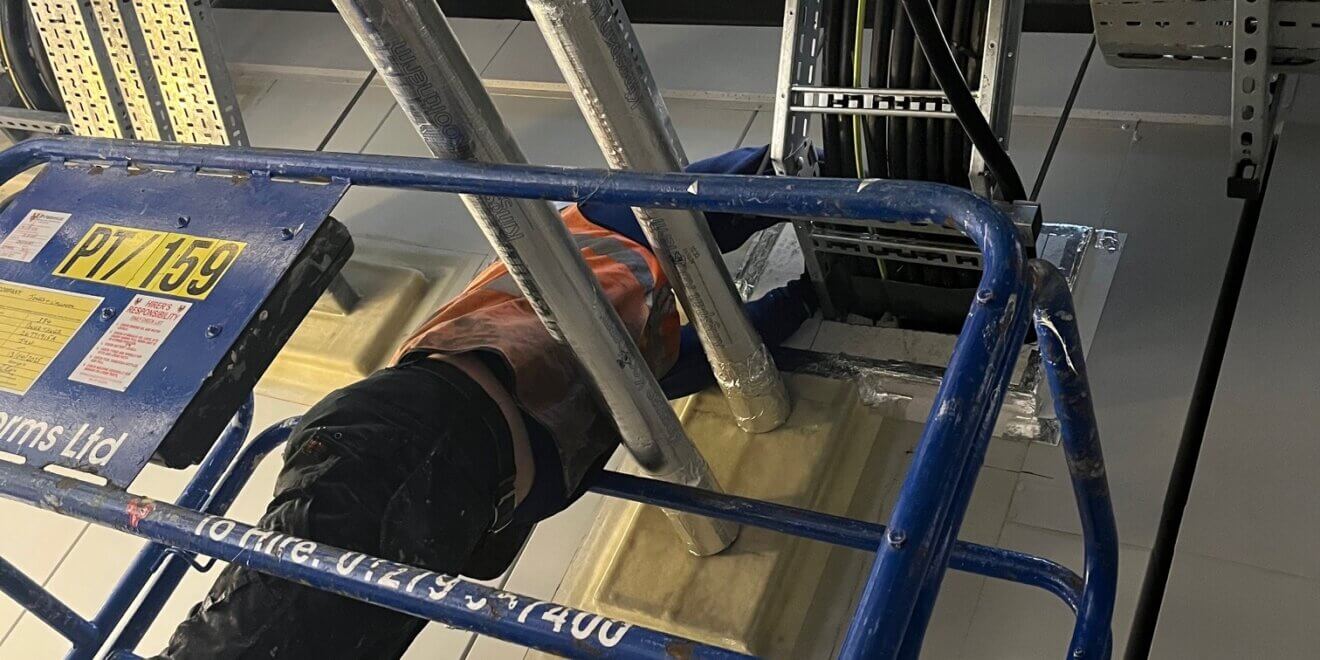
Complex service riser weatherproofed in London


The importance of early engagement in preserving design intent

Although weatherproofing is often left until the end of a project, the best results can be achieved when the weatherproofing team is consulted from the planning phase.

In the early stages of a project, the Jones Weatherproofing team will work closely with architects and designers to provide weatherproofing expertise – covering everything from weatherproofing methods and upstands to penetration layouts and project programming. This helps to avoid costly changes later on and reduces the risk of compromising the design.

As Matt explains, “The earlier we’re involved, the easier it is to align the weatherproofing with the architectural intent.”
He warns that holding off on weatherproofing may lead to remedial work or compromises. “We’re often brought in late, when other installations are blocking access to the penetrations or open penetrations are already experiencing water ingress. In these cases, installations may need to be removed, damage may need to be repaired, and compromises may need to be made.”

Maintaining your architectural vision with liquid-applied weatherproofing

As a globally trusted partner for weatherproofing, Jones Weatherproofing understands the importance of effective weatherproofing for building performance – and that visual impact also matters.

Our team works closely with architects and specifiers to develop tailored weatherproofing strategies that support both performance and design.

Get in touch to discuss how we can support the design of the weatherproofing for your upcoming projects.

Why weatherproofing needs to be part of the building design process

Share page here

Effective weatherproofing protects the building envelope, reduces risk and prevents costly repairs and disruption. While weatherproofing is often considered late in a project, the best strategy is to make it part of the building design process – including early engagement with a weatherproofing specialist.

Working with a weatherproofing specialist from the design stage:

  • Gives a better understanding of the building’s penetrations, their placement and weatherproofing requirements.
  • Provides an early opportunity to flag potential problems and find workarounds.
  • Enables improved on-site sequencing and collaboration with other trades.
  • Helps to keep the project on schedule and within budget.

In this post, we’ll cover some of the most frequently asked questions about early engagement with a weatherproofing specialist.

When should weatherproofing be considered in the building plan?

The best time to consider weatherproofing in a building project is as early as possible. At the design stage, the exact requirements for building penetrations may not be fully understood, but working with a weatherproofing specialist can provide valuable insight.

The Building Safety Act (BSA) 2022 introduced three gateways covering planning, pre-construction and pre-occupation. Weatherproofing must be considered at every stage, starting at design. Poor weatherproofing can compromise a building’s structural integrity and the safety of people and equipment. Good advice and high-quality weatherproofing are therefore critical for high-risk buildings, such as high-rise structures, and mission-critical facilities like data centres.

If the project is past the design stage and work has started without consulting a weatherproofing specialist, the principal contractor can mitigate risk by bringing in an expert at this stage. Although this may reveal the need for remedial work or highlight other issues, it’s better to identify and address these problems as soon as possible rather than letting them become more complex and costly.

What are the benefits of early engagement with a building weatherproofing specialist?

Engaging early with a building weatherproofing specialist gives you a better idea of what the weatherproofing will entail and when it should be implemented. The specialist can work with you to understand project objectives and advise on blending the weatherproofing with complex penetrations without compromising the building’s aesthetics.

The specialist can also advise on achieving compliance with national standards and compile the technical information needed to maintain the golden thread of building safety.

Other benefits to early engagement include:

  • Avoiding water damage during construction, preventing damp, mould, mildew and rot.
  • Improving on-site scheduling, collaboration with other trades and project sequencing.
  • Avoiding the need for remedial works.
  • Clarifying liability.
  • Keeping project delivery on track.
  • Ensuring work is backed by a warranty.


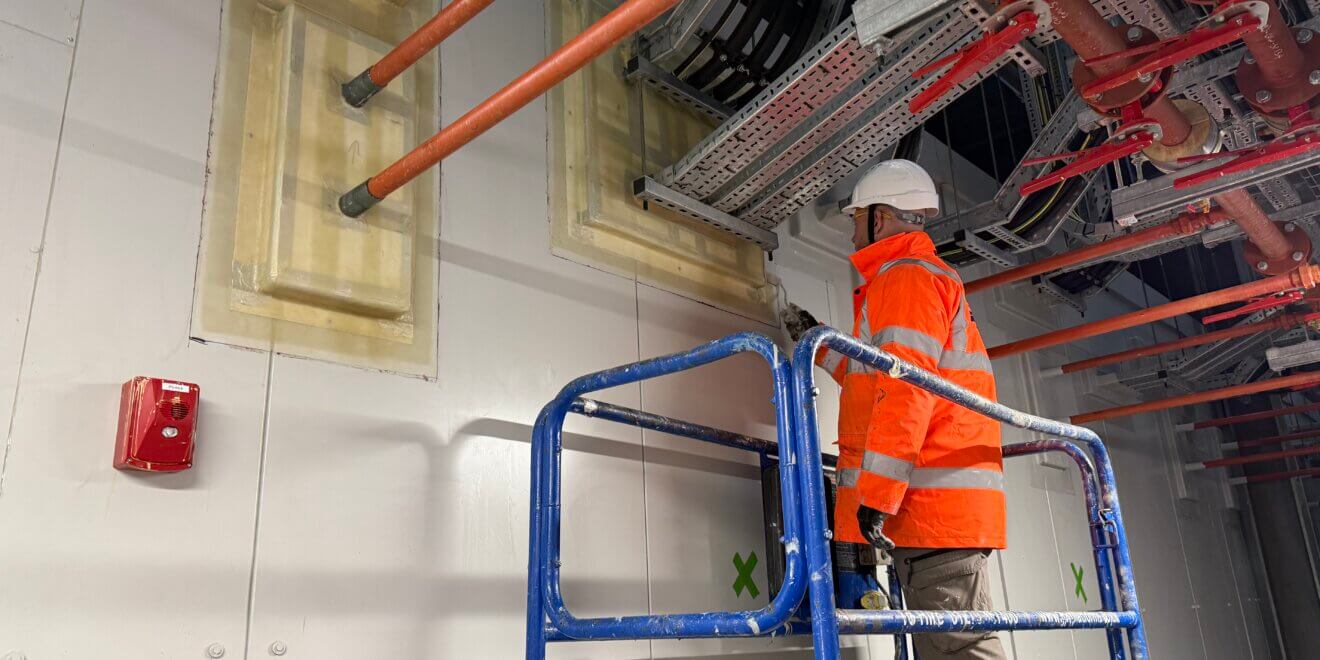
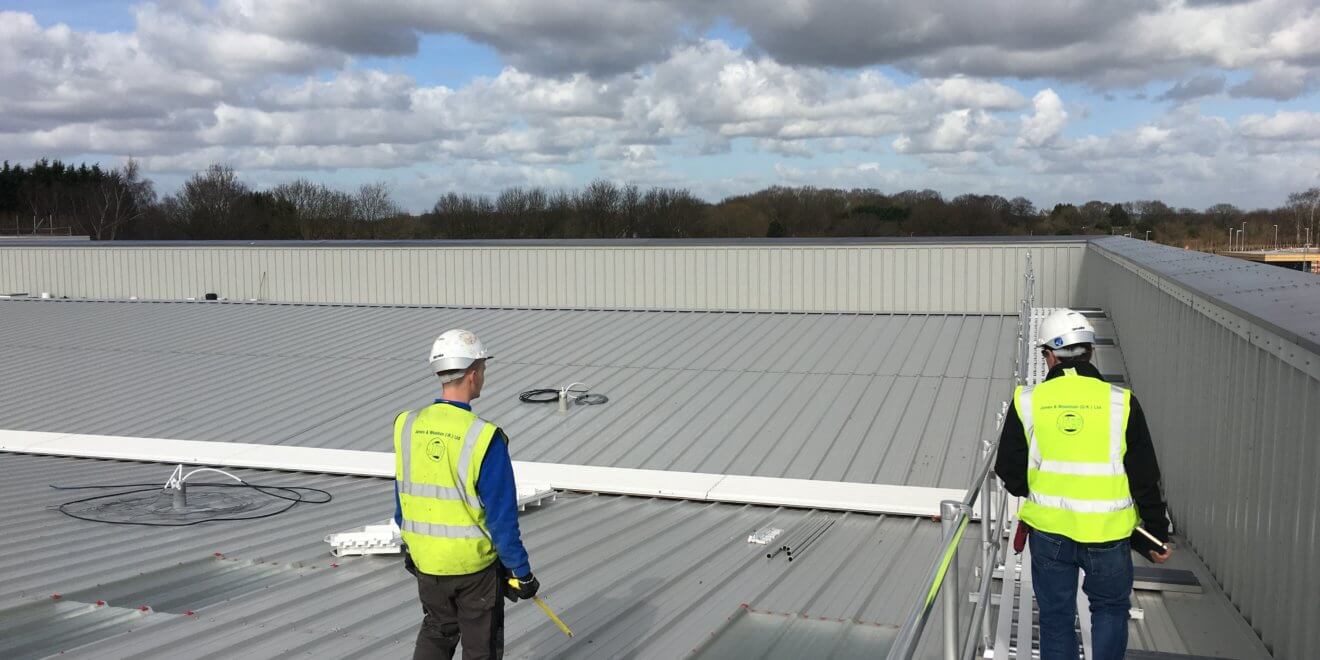
Three technical leads examining roof details for a roofing project


What are the risks of treating weatherproofing as an afterthought?

When weatherproofing is treated as an afterthought, projects often face costly remedial work to fix leaks, damp or water ingress. In many cases, building elements installed over the penetration must be removed to allow the weatherproofing team access. Remedial work may also compromise the original design intent.

Other risks include:

  • Compromised structural integrity due to prolonged exposure to moisture.
  • Increased likelihood of mould, mildew and rot affecting the building and its occupants.
  • Project delays and increased costs.
  • Potential health and safety issues for workers and future occupants.

Who is responsible for installing and weatherproofing building penetrations?

Building penetrations and their weatherproofing are often treated as afterthoughts because responsibility for them can be unclear. Engaging a specialist weatherproofing contractor early helps eliminate this ambiguity, ensuring that penetrations are correctly installed and sealed, and that work is coordinated with other trades.

How should weatherproofing be coordinated between trades?

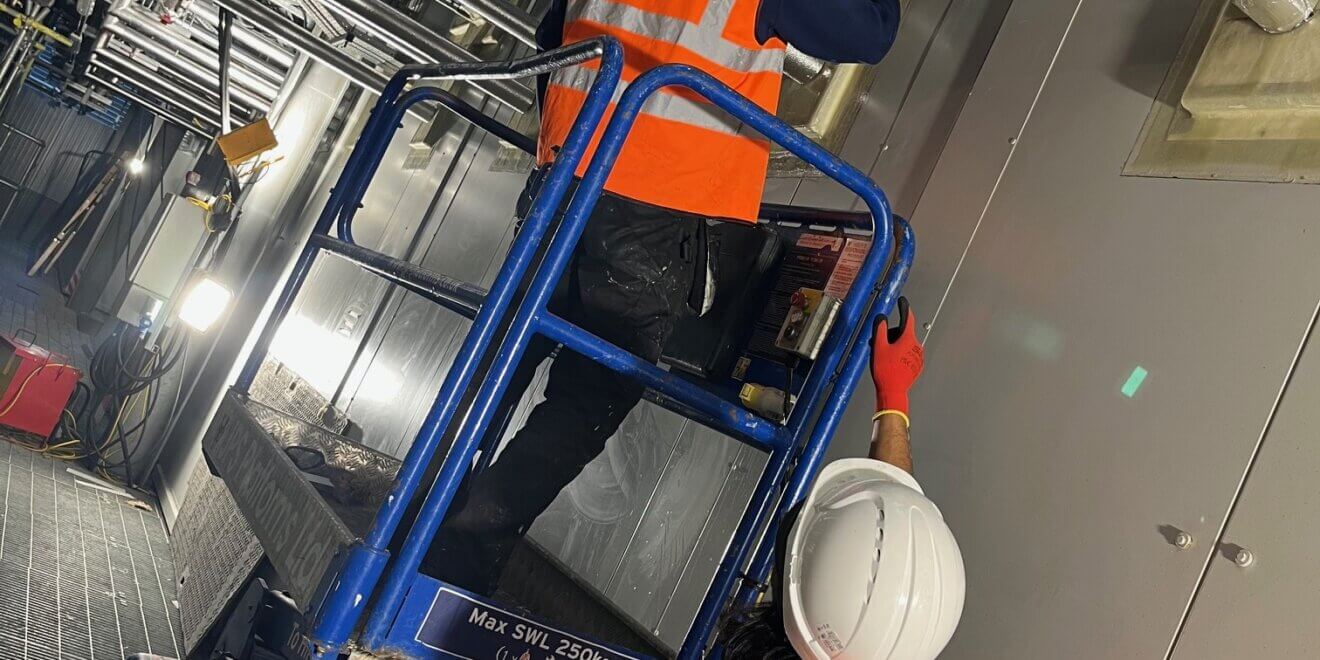
With early engagement, weatherproofing contractors can coordinate with architects and specifiers, as well as all on-site trades, including M&E contractors, roofing contractors and cladding installers, to ensure that weatherproofing is carried out at the right time.
By installing and sealing penetrations in the correct sequence alongside other building elements, the weatherproofing contractor can prevent water damage and access the penetration easily, without having to remove completed installations that could otherwise be in the way. Early coordination also helps to reduce congestion on site, especially towards the end of a project when multiple trades are vying for limited space on the roof.

What happens if there are last-minute changes to the penetrations’ design and weatherproofing?

Early engagement with a weatherproofing specialist doesn’t mean that all decisions made at the design stage are set in stone. A building’s penetrations and weatherproofing requirements can change as a project progresses, and the weatherproofing contractor will work with you throughout the project, adjusting the plan as necessary.

Here at Jones Weatherproofing, we offer a completely bespoke weatherproofing system that allows for last-minute changes to be accommodated easily – without compromising performance, the project schedule or compliance.

What’s the most flexible way to weatherproof building penetrations?

Traditional penetration weatherproofing methods primarily rely on roofing cabinets and ready-made fittings. These don’t provide the flexibility that’s often required in real-world projects or to accommodate last-minute changes.

At Jones Weatherproofing, we use a liquid weatherproofing solution that provides flexibility and long-term durability. It can be applied directly to, and around building penetrations, and is compatible with most roofing materials, including GRP.

Because it is a cold-applied liquid, our system provides a bespoke finish that fits around any building details. Once cured, it forms a continuous and fully bonded layer that is UV-stable and requires minimal maintenance.

How do I start planning a weatherproofing strategy?

To create a robust weatherproofing strategy, architects should engage with an expert early in the design process. By specifying a Jones Weatherproofing solution, you can have peace of mind that your design vision will be fully respected and that the building is protected against water ingress and other risks.

Get in touch to discuss how we can support the weatherproofing for any upcoming projects.

A guide to liquid weatherproofing penetrations on mission-critical buildings

Share page here

In mission-critical buildings, effective penetration weatherproofing is crucial. From data centres and healthcare facilities to transport hubs, power stations, water treatment works, emergency services, military facilities and government buildings, there is zero tolerance for failure.

These structures must protect occupants, as well as the systems, services and specialist equipment they contain – supporting commercial continuity, public safety and national security. That’s why effective and reliable liquid waterproofing is key. Even a small amount of water ingress can cause issues, compromising the building fabric, disrupting operations and, in the worst cases, posing safety risks or causing loss of service.

In this guide, we will take a comprehensive look at liquid waterproofing – or liquid weatherproofing, which is a more accurate description – covering what it is, why it’s important and how to ensure that a building’s penetrations are fully protected from the elements.

Beyond waterproofing – what liquid weatherproofing really means

Liquid waterproofing or liquid weatherproofing? The two terms seem like they mean essentially the same thing. However, in mission-critical buildings, treating them as interchangeable could mean the difference between a dry, reliable facility and one where water ingress causes operational disruption, safety risks and costly damage.

Matt Jones, commercial director at Jones Weatherproofing, explains the difference between liquid weatherproofing and liquid waterproofing: “Liquid waterproofing typically aims to protect a single element of a building from water ingress, stopping water under standard conditions.

In contrast, liquid weatherproofing takes a more holistic approach, considering how water can move across surfaces, as well as through joints and – particularly relevant to Jones Weatherproofing – building penetrations. The purpose of liquid weatherproofing is to protect the building, its occupants and its systems, helping to ensure performance and continuity over the long term.”

Liquid weatherproofing vs liquid waterproofing

Liquid waterproofing

  • Applied to a single surface or building element
  • Prevents water from permeating the surface it’s applied to
  • Stops water at the point of application

Liquid weatherproofing

  • Accounts for complex wall or roof build-ups, including penetrations
  • Considers rain, wind-driven rain, snow, thermal fluctuations and building movement
  • Takes a holistic approach to stopping water ingress

Why liquid weatherproofing is essential for mission-critical buildings

Mission-critical buildings must be resilient, reliable and continuously operational. They often contain high-tech and highly sensitive equipment that cannot tolerate water ingress. In addition, occupant safety and wellbeing are critical – poor working conditions such as damp, draughts and poor air quality can undermine operational continuity.

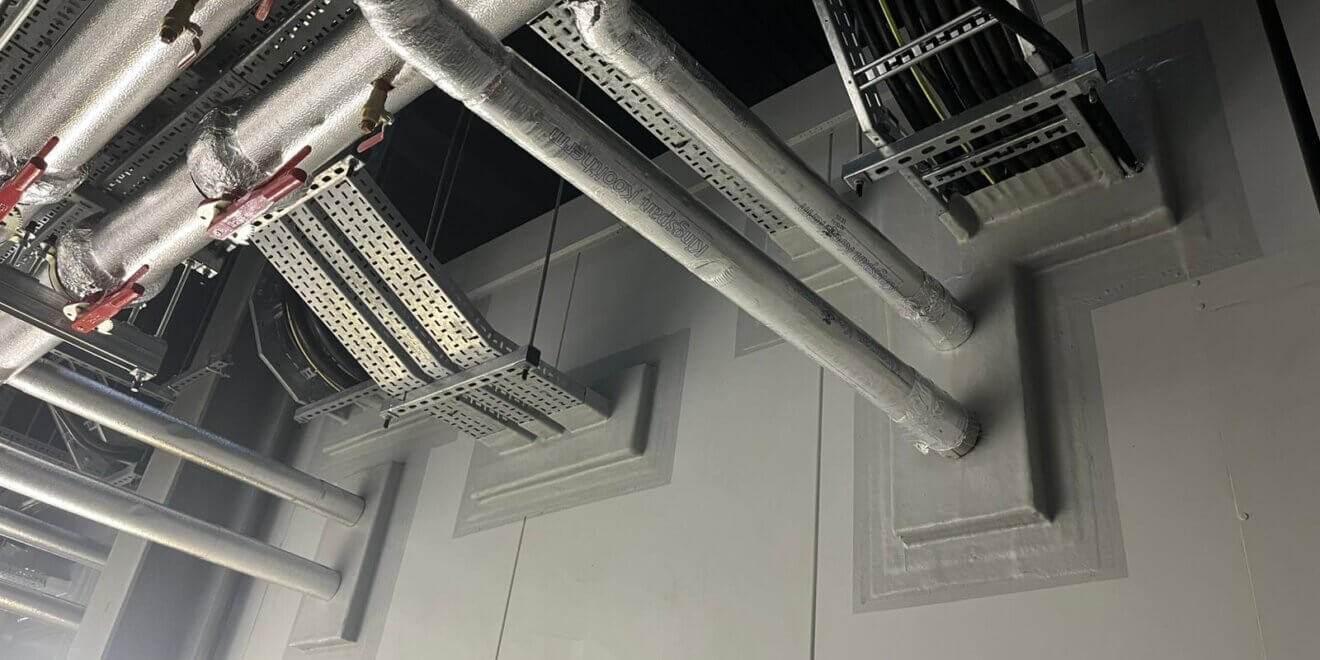
Liquid weatherproofing addresses these risks by forming a seamless and reliable barrier across the building penetrations – including service risers, cable trays, pipes, ductwork, ventilation shafts and access hatches. This provides long-term protection against water ingress and helps mission-critical buildings perform safely and reliably for years to come.

The potential consequences of poorly weatherproofed buildings

Matt notes that in any building, minor leaks can quickly escalate into serious issues such as interior damage, rot and deterioration of the building fabric. He adds: “In mission-critical buildings, water damage cannot be allowed to start or escalate. Even minor water ingress can disrupt essential services, damage equipment and compromise the building’s ability to operate safely.”

When a building and its penetrations are not suitably weatherproofed, the problem goes far beyond physical damage. In mission-critical buildings, operational disruption can cause downstream problems for customers and users while also damaging the facility’s reputation.

There are safety hazards caused by poor indoor air quality, water on the floor causing slip hazards, and the potential for damaged elements of the building to fall and cause damage to property or people. Inadequate weatherproofing and leaks may also reduce the energy efficiency of the building envelope, making it more expensive to maintain a comfortable temperature.

In addition, the cost of repairs, including the long-term damage caused by undetected leaks, should be considered. For example, if a leak goes unnoticed in a wall, riser or roof, it can lead to hidden corrosion, rot or deterioration. By the time these issues are discovered, repairs are often even more complex, disruptive and expensive than addressing the weatherproofing risk properly from the outset.


Effective liquid weatherproofing and the benefits of early engagement

For mission-critical buildings, the most effective approach to weatherproofing is to start at the very beginning. Bringing a specialist such as Jones Weatherproofing into the project at the planning stage means better detailing, smoother programme coordination and reduced risk, helping to avoid last-minute design changes or costly remedial works further down the line.

Matt explains: “Early engagement with the weatherproofing team allows for thorough surveys and site reviews, as well as improved coordination between the design team and on-site trades.”

That said, architects and contractors shouldn’t feel like all hope is lost if weatherproofing issues are discovered later in a project. While earlier involvement offers many advantages, the most important step is to involve specialists as soon as a potential risk is identified.

Matt continues: “We’ve had many projects where we were invited to site late in the project. Often, in those cases, water damage had already started, and layers of the structure or external fittings had to be removed so we could access the penetration. That adds cost and causes delays. While those issues could have been avoided with earlier involvement, we were still able to assess the situation and carry out the liquid weatherproofing before further damage occurred.”

When weatherproofing expertise is brought in early, it becomes part of the overall construction strategy rather than a problem-solving exercise near the end of the build. This supports the building’s long-term performance and reduces avoidable disruption.

Bespoke vs traditional approaches to penetration weatherproofing

Many penetration weatherproofing methods fall under the “traditional’ heading. These include metal flashings, banding and caulking, mortar, mastic sealants and ‘dog-kennel’ style enclosures.

Traditional weatherproofing is typically applied reactively, and they often rely on standard products to address each penetration on an individual level. They may not accommodate the large or complex penetrations that are common in mission-critical facilities, and they may not perform reliably where there is building movement or thermal fluctuations. Regular inspections are essential to identify failures early, while maintenance and repairs are often required.

In contrast, Jones Weatherproofing’s bespoke liquid weatherproofing uses a liquid-applied solution that is applied directly to and around building penetrations. It is cold-applied, UV-stable and solvent-free, making it compatible with most roofing materials, including GRP.

Because it is applied as a liquid, our liquid weatherproofing can be used around complex details and irregular openings, forming a continuous and fully bonded layer once cured, meaning that minimal maintenance is required.

Instead of forcing standard details to fit in traditional weatherproofing materials, bespoke liquid weatherproofing is designed to suit the building and its specific requirements. Penetrations can be effectively integrated into the overall building strategy, and changes to layouts and services can be accommodated more easily – both during construction and throughout the building’s lifespan.

Comparing bespoke liquid weatherproofing and traditional approaches

Bespoke liquid weatherproofing

  • Liquid-applied resin that is cold-applied, UV-stable and solvent-free
  • Can work around complex shapes and irregular openings
  • Treats penetrations as part of the whole building system
  • Can be proactively coordinated from early design to avoid problems
  • Designed for long-term performance with minimal maintenance

Traditional approach

  • Includes metal flashings, banding and caulking, mortar, mastic sealants or ‘dog-kennel’ style enclosures
  • Relies on standard details and generic products
  • Often addresses each penetration individually
  • Typically applied late in a build as a reaction to an identified problem
  • Requires regular inspections and may require ongoing repairs and maintenance

How liquid weatherproofing helps prepare for the changing climate

In the UK and around the world, we are already experiencing the effects of climate change. In July 2025, the Met Office warned that weather records and extremes are now the norm for the UK climate. The State of the UK Climate report highlights how the UK’s climate has warmed steadily from the 1980s onwards, and how heavy rainfall has also increased.

For buildings, heavy rainfall, extreme weather events and wider temperature fluctuations all place greater strain on the envelope, particularly around penetrations, joints and interfaces.

Mission-critical buildings are especially vulnerable to these conditions due to their complexity and large number of building penetrations. Increased rainfall and heavy winds increase the risk of water being driven into the building fabric. Meanwhile, temperature changes can cause building materials to expand and contract, putting stress on seals and increasing the risk of water ingress.

Liquid weatherproofing can help prepare mission-critical buildings for climate extremes, creating a barrier against moisture that is resilient to temperature fluctuations and movement. This contributes to the operational continuity of the building and its operations.

Establishing an effective liquid weatherproofing strategy

An effective liquid weatherproofing strategy combines specialist knowledge, on-site coordination and careful installation. To ensure best results, architects, specifiers and main contractors should consider penetration weatherproofing as early as possible, proactively treating weatherproofing as part of the building design rather than a reaction to a problem.

Jones Weatherproofing works closely with project teams to provide effective liquid weatherproofing for building penetrations. From early-stage surveys and design guidance through to professional installation and excellent customer support, we tailor our weatherproofing to the specific requirements of mission-critical buildings. All work is covered by our 25-year warranty.

To learn more about how Jones Weatherproofing can support penetration weatherproofing on a current or upcoming project, please get in touch with the team to start the conversation early.