What is BROOF(t4)? A guide to roof fire classification and compliance

Share page here

Fire safety is a critical consideration for all buildings. As regulations and specifications have tightened in recent years, so has the need to demonstrate compliance. For roofs, fire safety standards have taken several forms, including the BROOF(t4) classification.

What is BROOF(t4)?

BROOF(t4 )is a fire classification that assesses a roof’s resistance to external fire sources, including burning embers and nearby fires. It is the highest classification for UK roof performance. It indicates that a complete roofing system – the combination of deck, vapour control layer (VCL), insulation, underlay, finishes and other treatments – has passed stringent testing.

What does BROOF(t4) testing involve?

External fire performance of roofs is assessed using test methods defined in CEN/TS 1187, with results classified in accordance with BS EN 13501-5. Testing must be carried out by an accredited third-party organisation.

There are four different tests defined by CEN/TS 1187. These tests use a burning brand – a standardised burning object – as the flame source. During each test, samples are exposed to realistic fire scenarios that simulate external fire conditions, such as airborne embers or flames from adjacent structures.

  • t1: Burning brands
  • t2: Burning brands with wind
  • t3: Burning brands with wind and supplementary radiant heat
  • t4: A two-stage exposure incorporating burning brands, wind and supplementary radiant heat

Classification is based on a range of performance criteria observed during testing under defined conditions. These include flame spread, fire penetration and burn characteristics.

The t4 test is commonly used in UK guidance, with BROOF(t4) being the highest classification achievable under EN 13501-5 for the external fire performance of roofs. This indicates that the roof system has demonstrated a high level of resistance to external fire spread under the specified test conditions. C, D, E and F classifications may also be granted to a roof system. FROOF(t4) is the lowest rating and indicates that no performance was determined.

Systems must be tested as a complete build-up. Any changes to the specification will require the complete roof system to be re-tested.

Is BROOF(t4) a requirement in the UK?

BROOF(t4) is the classification most commonly referenced in UK guidance and specifications. BROOF(t1) is often used in other countries or for specific applications.

A classification of BROOF(t4) demonstrates compliance for applications where roof coverings must meet specific performance standards. It is commonly used within fire safety guidance across the UK, including Approved Document B: Fire Safety (England).

Requirement B4 of Approved Document B (Volumes 1 and 2) states that the external envelope of a building should not:

  • Contribute to undue fire spread from one part of a building to another part.
  • Provide a medium for the spread of fire to adjacent buildings.
  • Be readily ignited by fires in adjacent buildings.

For a roof system to be considered “unrestricted” in use, Approved Document B states that it must achieve the BROOF(t4) classification. This applies across most building types, particularly those where proximity to other properties or increased fire risk requires the highest level of fire performance.

Similar guidance exists for the rest of the UK, including Approved Document B: Fire Safety (Wales), the Technical Handbooks (Section 2: Fire) in Scotland and Technical Booklet E: Fire Safety (Northern Ireland).
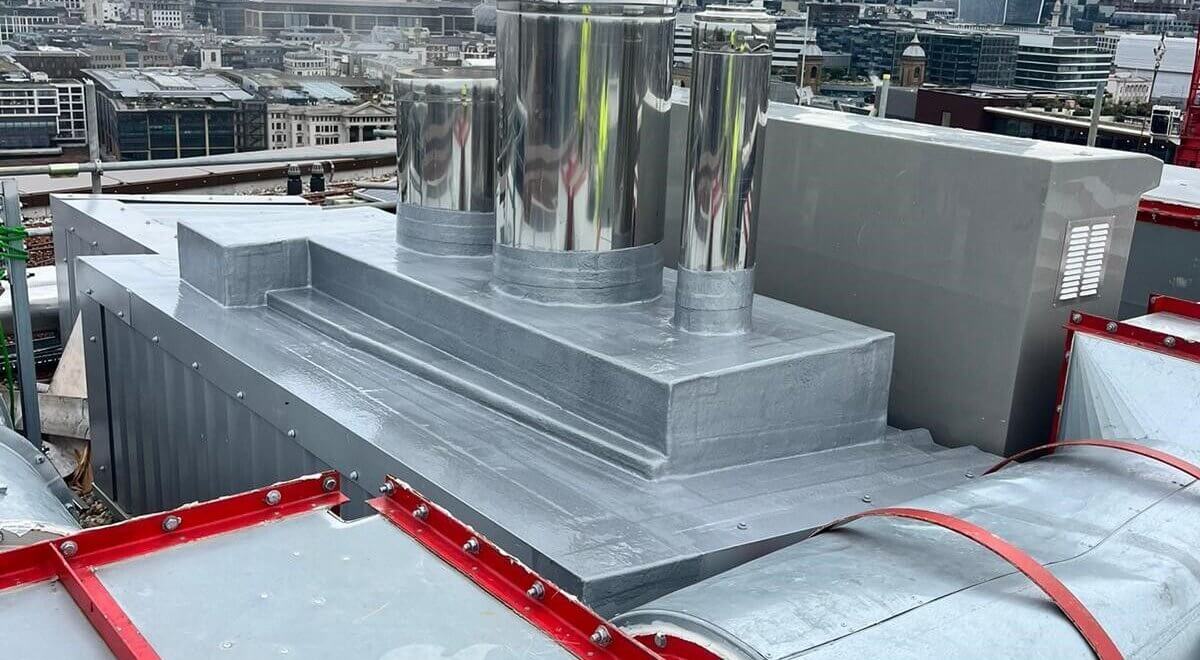
 

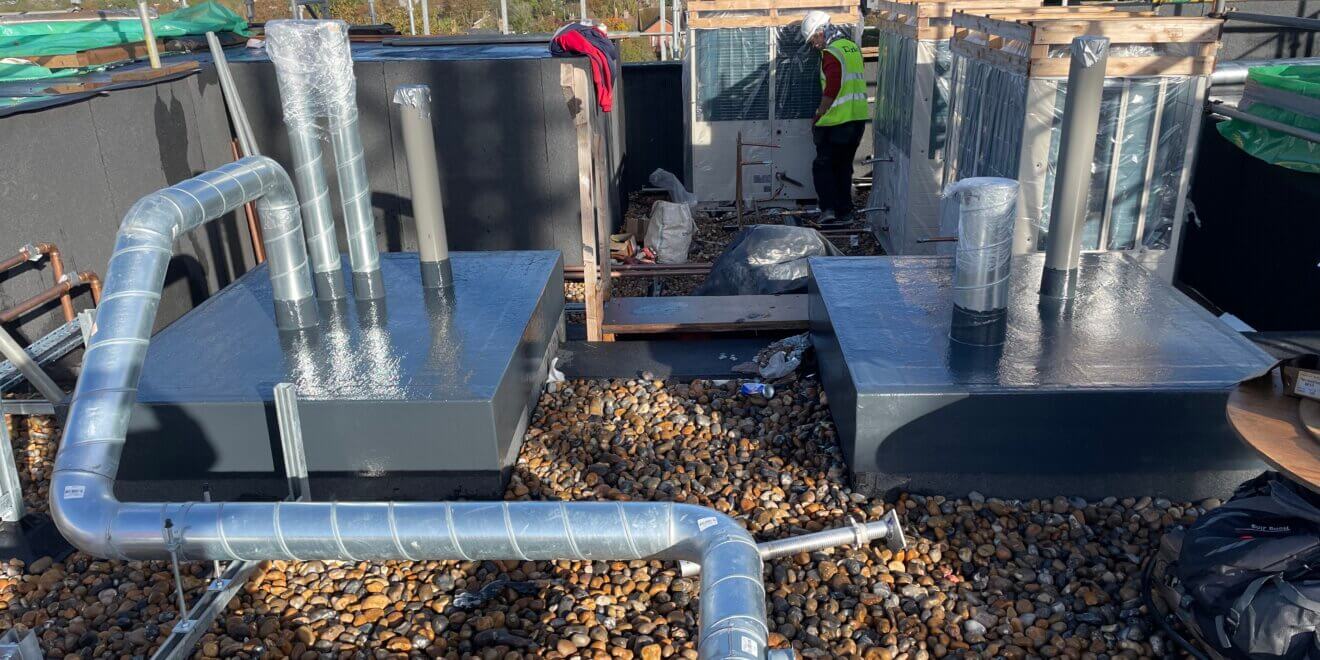
Complex service riser weatherproofed in London


Is BROOF(t4) the same as a Euroclass or Class 0 rating?

It is a common misconception that BROOF(t4) is interchangeable with the Euroclass B rating. However, they are not the same.

  • Euroclass B is a product classification under BS EN 13501-1. It measures the reaction to fire of individual materials.
  • BROOF(t4) is required by BS EN 13501-5 and assesses the external fire resistance of a complete roof system.

As has been demonstrated in real-world fire events and full-scale testing, an individual product’s fire performance does not always reflect how a complete system will behave in a fire. The interaction of materials is a critical consideration – and that is why BROOF(t4) testing is so important.

Class 0 is an older fire classification based on testing methods in BS 476. It was used to assess surface spread of flame and fire propagation characteristics on individual building materials and was widely referenced in earlier guidance. However, it does not assess reaction to external roof fire exposure, and it has largely been superseded by other fire classification systems.

What does BROOF(t4) mean for localised weatherproofing?

As already discussed, BROOF(t4) classification applies to a complete tested roof system, rather than to individual components or localised detailing.

Penetrations, joints and interfaces, along with their weatherproofing treatments, are therefore not typically assessed during fire testing. Instead, they must perform in a way that is compatible with the overall roof build-up.

Products used for detailing, such as liquid-applied weatherproofing systems, should be selected to ensure they are compatible with the wider roof assembly and do not negatively impact its external fire performance.

One way to do this is to use products that have been used within roof assemblies that achieve BROOF(t4) classification. This provides confidence that the detailing is compatible with compliant roof systems, provided it is installed in accordance with the tested build-up and relevant application guidance.

Does the Jones Weatherproofing system have BROOF(t4) classification?

As fire performance depends on the complete roof system, including the substrate, insulation and configuration, each application must be considered individually.
Jones Weatherproofing systems have been tested as part of complete roof assemblies that have achieved BROOF(t4) classification in accordance with BS EN 13501-5:2016.

These test results demonstrate that Jones Weatherproofing systems can form part of roof assemblies achieving BROOF(t4) when installed as part of a tested configuration.
For complex environments such as data centres, where high service densities and late-stage design changes require adaptable detailing, Jones Weatherproofing can help ensure appropriate specification and integration with the wider roof system.

To discuss the fire performance of the Jones Weatherproofing system in more detail, review our test reports or learn how we can support the weatherproofing of an upcoming mission-critical projects such as data centres, please get in touch.

A complete guide to BS 6229:2025

Share page here

Flat roofs are often used in the built environment, and they are a common feature in mission-critical projects such as data centres, transport hubs, hospitals and research facilities. In these locations, performance, reliability and durability are essential – any failure can have serious consequences.

That’s where BS 6229 comes in. This British Standard provides best-practice guidance for the design, construction and maintenance of flat roofs, helping to reduce risk and improve performance.

The standard was updated in 2025 to reflect changes in construction methods, materials and performance requirements. At Jones Weatherproofing, we keep a close eye on developments like these, and we are committed to ensuring our liquid-applied weatherproofing system is in line with the latest industry recommendations.

In this guide, we take a close look at BS 6229:2025 – what it is, what changed in the latest update and what those changes mean for architects, designers, contractors and weatherproofing teams.

What is BS 6229:2025?

BS 6229:2025 is the code of practice for flat roofs with continuously supported flexible waterproof coverings.

It provides guidance about how flat roofs should be designed and constructed. and it aims to mitigate risks such as poor drainage, inadequate ventilation and ineffective vapour control. Because BS 6229 considers the complete lifecycle of a flat roof, it also includes guidance on inspection and maintenance.

The guidance included in BS 6229 will be useful for anyone involved in the design, specification, installation or maintenance of flat roofing, including:

  • Architects and designers
  • Specifiers
  • Contractors and installers
  • Weatherproofing specialists
  • Maintenance service providers
  • Building owners
  • Construction product manufacturers and suppliers

What types of roof constructions are covered by BS 6229:2025?

The standard applies to all flat roofs that use continuously supported flexible waterproof coverings. This includes roofs supported by:

  • Heavy structures such as concrete slabs
  • Lightweight decks (metal or timber)

It also covers curved roofs with a pitch of up to 10 degrees.

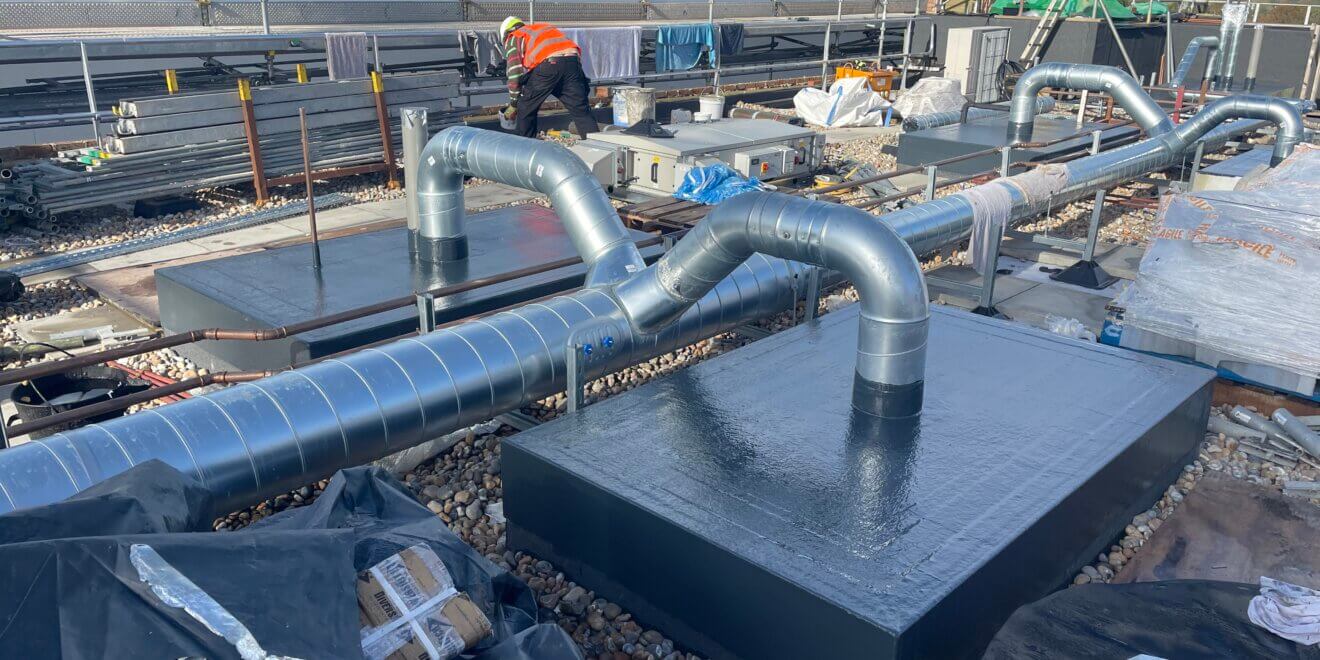
Service risers being weatherproofed on The Apex Tribecca


What has changed in the BS 6229:2025 update?

Following a five-year review process, which involved input from across the roofing sector, the latest version, BS 6229:2025, was published in December 2025. It replaced the previous version, BS 6229:2018.

The update aims to improve flat roof performance, determine responsibilities and increase safety. It includes revisions to Clause 4 (design), Clause 5 (materials) and Clause 7 (care and maintenance). Terminology and definitions have also been clarified to help improve understanding across the roofing sector.

Matt Jones, commercial director at Jones Weatherproofing, explains that some of the changes are critical to the weatherproofing, “In terms of flat roof weatherproofing, some of the key changes to BS 6229 are about deck preparation and surface quality,” he says.

Deck preparation and documentation

The updated standard highlights the importance of careful deck design and preparation. It now requires a level survey and documented handover for decks or slabs

“This helps ensure that defects are identified early and that responsibility is clearly defined,” Matt says. “Knowing the condition of the roof deck can affect the way we approach weatherproofing, so the information these surveys provide can be instrumental in keeping the structure and its contents protected,” he adds.

Surface regularity

The surface quality is another important factor in long-term roof performance and weatherproofing.

Matt explains, “Uneven roof surfaces can lead to ponding or cause stress points in roofing membranes, so the surface quality of a roof is key in how weatherproofing performs long-term.”

Surface regularity (SR) classes describe how flat a roof deck is, based on defined tolerances. SR1 is the highest standard, while SR2 is generally acceptable for most roofing applications. The updated standard places greater emphasis on specifying and verifying surface regularity.

“An irregular surface doesn’t necessarily mean a roof can’t be effectively weatherproofed,” Matt adds. “The SR classes help the weatherproofing team better understand the flat roof’s specific requirements.”

Other changes to the new BS 6229:2025 include:

  • Roof falls and drainage – To support drainage on flat roofs, there is now a minimum 1:80 finished fall for general roof areas and internal gutters. The standard gives additional detail about prefabricated and site-formed falls. It also clarifies responsibility for back falls, which should help to improve installation practices and ensure that flat roofs don’t have unintended back falls.
  • Blue roofs – Blue roofs are designed to temporarily store rainwater and release it in a controlled way. BS 6229:2025 provides new guidance based on recent blue roof innovations and flat roof water management.
  • Thermal performance – The new guidance includes a 2.5% insulation increase for inverted warm roofs. This aligns with other energy efficiency targets, such as Approved Document L: Conservation of Fuel and Power.
  • Condensation control – The updated standard addresses condensation risk in accordance with BS 5250:2021, the code of practice for the management of moisture in buildings.
  • Fire safety – Fire performance has been reinforced in line with building regulations, including updated combustibility requirements within the roof build-up and clearer expectations for assessing fire performance. The revised standard also states that cross-laminated timber (CLT) decks should be avoided where possible, due to concerns around its fire behaviour, as well as moisture management and long-term durability. Where CLT is used, careful design and risk management are essential.

The update also highlights the importance of:

  • Efficient information exchange between project teams
  • High-quality installation standards
  • Effective maintenance planning

Together, these changes should help to improve the quality and performance of flat roofs across the UK.

Learn more about BS 6229:2025

To view the full version of the BS 6229:2025, the standard can be purchased from the British Standards Institute. The National Federation of Roofing Contractors (NFRC) has also produced a 16-page guide to the updated standard.

At Jones Weatherproofing, our team has implemented the changes to BS 6229:2025 across all of our projects, and our weatherproofing experts are available to provide advice and guidance on meeting the latest requirements.

Get in touch to discuss how Jones Weatherproofing can support the weatherproofing of your upcoming projects.